Autumn and your kitchen cupboards: keeping mice out without fuss
The first cool evening of autumn has a smell of its own in my kitchen: rice steaming, the window open a crack, the air finally lighter after summer. So when I opened the cupboard under the sink one October and caught something sharp and stale beneath it, I knew a mouse had moved in for the season before I saw a single dropping.
If you live around Dallas or Fort Worth, one local pest control company describes its rodent work at https://www.rodentretreattexas.com/. This piece covers the quieter side of the problem: what mice and rats do to the air and the food in a home, how to clean up after them safely, and the small seasonal habits that make a kitchen far less inviting.
Why mice come indoors when the nights cool
Mice and rats want three things: warmth, water and food. In Kyushu they start testing the edges of houses as the nights turn cool, and in north Texas the pattern is much the same, with the added push of long, hot summers and heavy storms that send them looking for shelter at other times of year too. A house offers all three needs at once, and a mouse can squeeze through a surprisingly small gap, often not much wider than a pencil.
The signs are usually small before they are obvious:
- Dark droppings, rather like grains of rice, along the back of a cupboard or behind the cooker
- Gnawed corners on packets of rice, pasta, cereal or pet food
- A sharp, stale smell, a little like ammonia, in a closed cupboard
- Scratching or light running sounds in the walls or ceiling at night
- Greasy smudges along skirting boards where an animal has run the same route many times
None of these means the house is dirty. A tidy flat can still have a gap where a pipe goes through the wall. It simply means the house has an open door you have not found yet.
What a rodent problem does to the air and the food
The smell is the first thing most people notice, and it is worth taking seriously rather than covering up. Public health agencies treat rodent droppings and urine as a genuine hazard, because they can carry infections that spread through contaminated food and, once the droppings dry, through the fine dust that rises when they are disturbed. Mouse allergens are also a known trigger for asthma in people who are sensitive to them, children included.
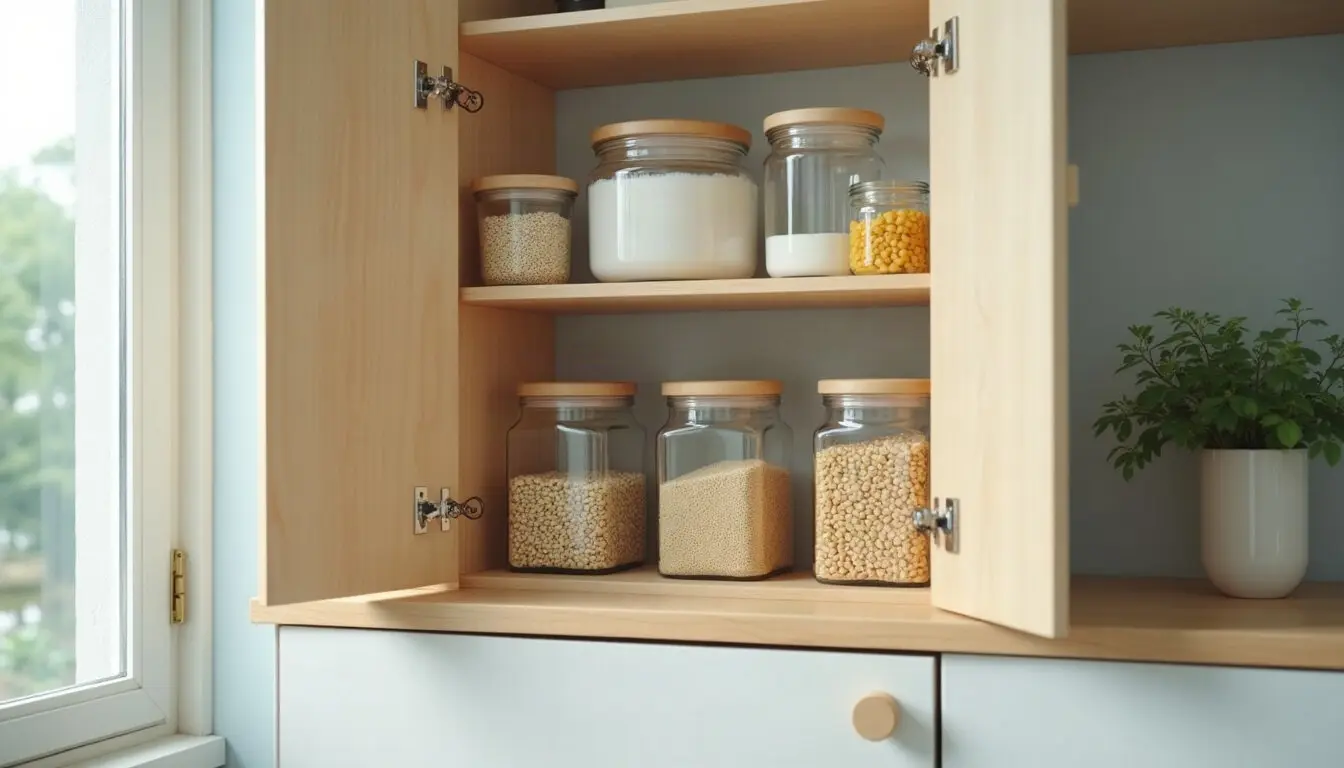
This is where the Japanese kitchen has a quiet lesson to offer. Many homes here keep rice in a lidded bin, dried beans and seaweed in tins or jars, and very little in open packets. It was never really about pests; it was about damp in the rainy season and keeping food fresh. But a sealed container does both jobs, and it removes the easiest meal in the house.
If you find signs of mice, throw away any food in packets that has been gnawed or soiled, and wash anything in hard containers before you open it.
Cleaning up safely
The instinct is to grab a brush or the vacuum cleaner. Please don't, at least not for the droppings themselves. Sweeping or vacuuming dry droppings stirs that fine dust into the air you are breathing. The general advice from public health bodies runs along these lines:
- Open the windows and let the cupboard or room air for a while before you start.
- Put on rubber or disposable gloves. A well-fitting mask is sensible if there is a lot to clear.
- Spray the droppings and any nesting material with a household disinfectant, or a bleach solution made up as the bottle directs, until they are thoroughly wet. Leave it to soak for a few minutes.
- Wipe everything up with paper towels and put them straight into a plastic bag. Tie it and put it in an outdoor bin.
- Wipe the area again with disinfectant, then wash your gloved hands, remove the gloves and wash your hands properly with soap.
Never mix bleach with other cleaners, especially anything containing ammonia or acids, and keep children and pets out of the room while you work. Open a window first, always.
If you find a large nest, dead animals, droppings in the loft or in many rooms, or the smell comes from inside a wall, that is the point to stop and call a professional rather than reaching further in.
What about peppermint oil?
As the person on this site who looks after the aroma corner, I am asked about peppermint oil more than almost anything else in autumn. The idea is that mice dislike the smell, so a few cotton balls in a cupboard will send them elsewhere. The honest answer is that the evidence is weak. The scent fades within days, mice adapt, and none of it closes the gap they came through.
Peppermint oil is also not as gentle as its reputation. It is irritating to skin and eyes when used neat, and cats and dogs can react badly to concentrated essential oils. If you enjoy the smell in your kitchen, use a diffuser briefly with the window open, keep it well away from pets and small children, and think of it as a pleasant scent rather than a defence. The real work is sealing food, clearing clutter and finding the way in.
A seasonal check for the kitchen and the house
Japanese homes have a rhythm of seasonal cleaning, the big one being osoji, the year-end clean in December. You do not need to scrub the whole house to keep mice out, but a short check as each season turns does a great deal.
| Season | What to look at | Why it helps |
|---|---|---|
| Spring | Behind the fridge and cooker, under the sink, the back of low cupboards | Crumbs and old droppings collect where you rarely reach |
| Summer | Dripping taps, leaking pipes, pet bowls and bins left outside | Water and easy food draw animals in during hot spells and storms |
| Autumn | Gaps where pipes and cables enter, door sweeps, the garage door | This is when most animals start looking for a warm way in |
| Winter | The loft, stored boxes, cupboards you have not opened for weeks | Quiet, undisturbed corners are where nests are built |
In the Texas heat, the summer row matters as much as the autumn one. A slow drip under a sink is a reliable water source in a dry spell.
When to see a doctor, and when to call a professional
Most clean-ups pass without any trouble. Still, see a doctor if, in the weeks after clearing droppings or nesting material, you develop a fever, muscle aches, a bad headache, a cough or any shortness of breath. Mention that you have been cleaning up after rodents, because it changes what the doctor will think about. Breathing difficulty is always a reason to seek help promptly.
A bite or scratch from a mouse or rat should be washed well with soap and water and then looked at by a doctor or nurse. If anyone in the house has asthma and it seems worse at home than elsewhere, or a child starts wheezing at night, that is also worth raising, along with the fact that you have had mice.
On the house side, call a pest control professional if droppings keep reappearing after you have cleaned, if you hear animals in the walls or ceiling, if you see signs in several rooms, or if you suspect rats rather than mice. A good company will look for where the animals are getting in, not only deal with the ones already inside, and should explain how any traps or treatments are kept away from children and pets. Ask them that question directly.
Yojo habit: Each time the season turns, take ten quiet minutes with a torch to look under the sink and behind the cooker, and decant one open packet into a lidded jar.
The one thing to remember
A stale, sharp smell in a cupboard is information, not something to mask. Find where it comes from, clean it up wet rather than dry, and close the way in, because a kitchen with nothing to eat and no gap to enter through is the one mice pass by.

The writer
Philippa is a British writer who has lived in Japan for many years and has blended essential oils at home for two decades. She looks after the Aroma corner and never writes a recipe without the dilution.