What a Japanese home can teach you about the floor beneath your feet
On a winter evening I stand at my stove for most of an hour making oden, the slow pot of daikon, eggs and fish cakes that simmers in a light broth. By the time it is ready my kitchen smells wonderful, and my feet and lower back are reminding me that I have been standing on a hard floor in thin socks the whole time.
That ache is ordinary, and it says something about the floors we spend our days on. If you're researching flooring installation Aurora CO for a kitchen or living room, it helps to think about your body as well as the look of the boards. This piece is about how Japanese homes treat the floor as part of daily comfort, what a floor asks of your feet, knees and back, and how to choose and care for one with that in mind.
In a Japanese home, the floor is part of the furniture
The first thing you do in a Japanese home is take your shoes off at the genkan, the small sunken entry by the front door. From there on, the floor is something you touch all day: in socks, in house slippers, or barefoot on the tatami mats of a traditional room. Many families still eat at a low table, sit on flat cushions called zabuton, and sleep on a futon laid straight on the floor.
Living that close to the floor changes how you think about it. A floor is not just a surface to walk across on the way to a chair. It is where you kneel to fold laundry, where children play, where an older relative steps carefully on the way to the bathroom at night. In my family's house in Fukuoka, my grandmother judged a room by how it felt under her feet in January, long before she noticed the color of anything.
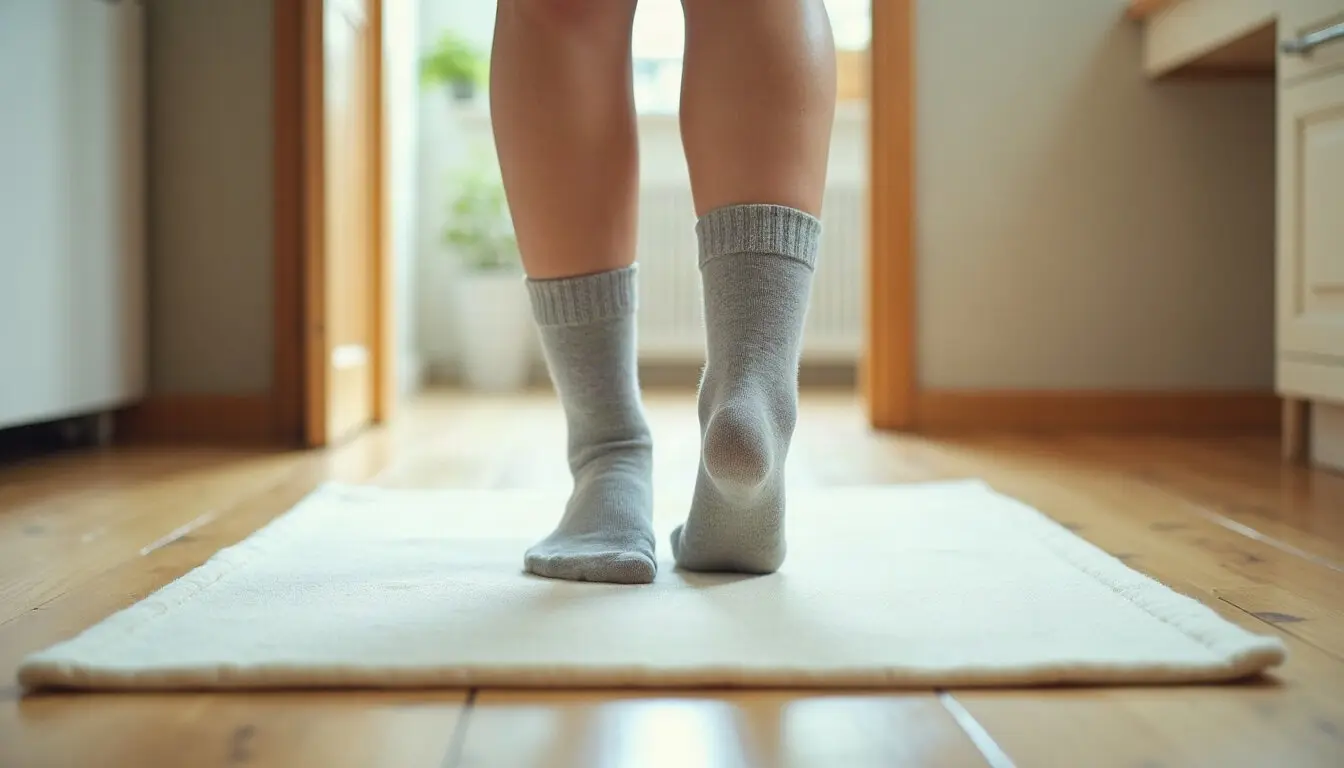
You don't need tatami or a low table to borrow this way of seeing. Walk through your own home in socks and notice which floors feel cold, which feel hard, which feel slippery, and which ones you simply enjoy standing on. That small survey tells you more about what to change than any catalog.
What your feet, knees and back notice
Our bodies are surprisingly honest about floors. Standing still for a long time, as you do at a counter while chopping vegetables or washing dishes, asks the muscles of your legs and back to hold you up without much movement. On a very hard surface, some people feel that sooner, in the soles of the feet, the knees or the lower back.
Temperature matters too. Japanese has a word, hiesho, for the feeling of persistently cold hands and feet, and older relatives often blame a cold floor for it. Whatever the cause in a given person, a floor that stays chilly through winter can make a room feel less welcoming, and people tend to move less in a room they do not enjoy being in.
Then there is the question of grip. Kitchens and entryways are where water, oil and melted snow end up on the floor. A smooth, glossy surface can look lovely and still be a slipping risk when wet, especially for small children and older people.
Sound is the last thing people think about, and one of the first they notice after moving in. A floor that echoes or creaks with every step makes a home feel restless, while a quieter one lets a kitchen or living room settle in the evening, which is exactly when most of us want to slow down.
None of this means one kind of flooring is right for everyone. It means the best floor for a room depends on what you do there, who uses it, and how long you stand still on it.
Matching the floor to the room
Here is how I think about the main rooms of a home, in plain terms. It is a starting point for a conversation with an installer, not a rulebook.
| Room | What the body asks of it | Things to ask about |
|---|---|---|
| Kitchen | Long periods of standing, spills, dropped dishes | How the surface feels underfoot, how it handles water, grip when wet |
| Entryway | Wet shoes, grit, snow in winter | Easy cleaning, grip, a clear place to sit and remove shoes |
| Living room | Sitting, playing, stretching on the floor | Warmth underfoot, comfort for kneeling, how quiet it is |
| Bedroom | Bare feet first thing in the morning | Warmth, softness with a rug, a clear path to the door |
| Stairs and halls | Night trips, carrying laundry | Even surfaces, no loose edges, good contrast at step edges |
In a dry climate with snowy winters, like the one around Denver and Aurora, the entryway and kitchen often take the most punishment. Boots bring in grit and slush, and dry indoor air can make some wood floors move a little with the seasons. A good installer will talk about these things for your particular rooms, explain how different materials behave, and point out what will be easy or hard to keep clean.
Ask how the new floor will meet the old ones too. A raised edge between two rooms, even a small one, is exactly the kind of thing a sleepy foot catches at night. Smooth transitions between rooms are one of the quiet kindnesses a careful installation can offer.
Small changes that help even before you renovate
A new floor is a big decision, and it may be months away. In the meantime, a few kitchen-counter habits from Japanese homes can make the floor you have kinder to your body.
At the stove and sink
- Lay a washable cotton mat where you stand longest, and make sure it has a non-slip backing so it cannot slide.
- Wear supportive house slippers or thick socks in winter rather than standing barefoot on a cold floor.
- Shift your weight from foot to foot while you cook, and rest one foot on a low step or the bottom of a cupboard now and then.
- Wipe up water and oil as soon as they hit the floor, not at the end of the meal.
Around the house
- Keep a small bench or stool by the front door so nobody has to balance on one leg to remove boots.
- Put a rug with a non-slip underlay next to the bed for the first steps of the morning.
- Clear cords and baskets from the route between the bedroom and the bathroom.
- Add soft lighting along that route for night-time trips.
These are the same instincts that make a Japanese home pleasant to live in barefoot: warmth underfoot, nothing to trip over, and a clean, dry floor you are happy to sit on.
When aches and falls need a doctor
Tired feet after a long day of cooking are normal, and they usually settle with rest. But some signs point to something more than a hard floor, and they deserve a proper look from a doctor rather than a new mat.
Please see a doctor if you notice:
- foot, knee or back pain that keeps getting worse, or that wakes you at night;
- numbness, tingling or weakness in the legs or feet;
- swelling, redness or warmth in a joint;
- pain after a fall, especially in an older person, or a fall with a knock to the head;
- pain together with fever or feeling generally unwell.
If someone in your home has fallen more than once, mention it to their doctor even if they were not hurt. Repeated falls are worth looking into, and the answer may involve both their health and the floors and lighting around them.
Yojo habit: Each evening while dinner simmers, stand on a soft mat at the stove and slowly shift your weight from heel to toe and side to side for a minute. When you take it up again after the meal, check that the kitchen floor is dry before anyone walks across it in socks.
The one thing to remember
The floor is the part of your home your body touches most, so choose and care for it the way a Japanese family would: by how it feels underfoot in every season, not only by how it looks.

The writer
Naoko is a food and nutrition writer from Fukuoka who studied nutrition before she took up writing. She covers gut health and everyday eating, and most of her ideas start at the kitchen counter.