Do posture correctors work? What a brace can and can't do
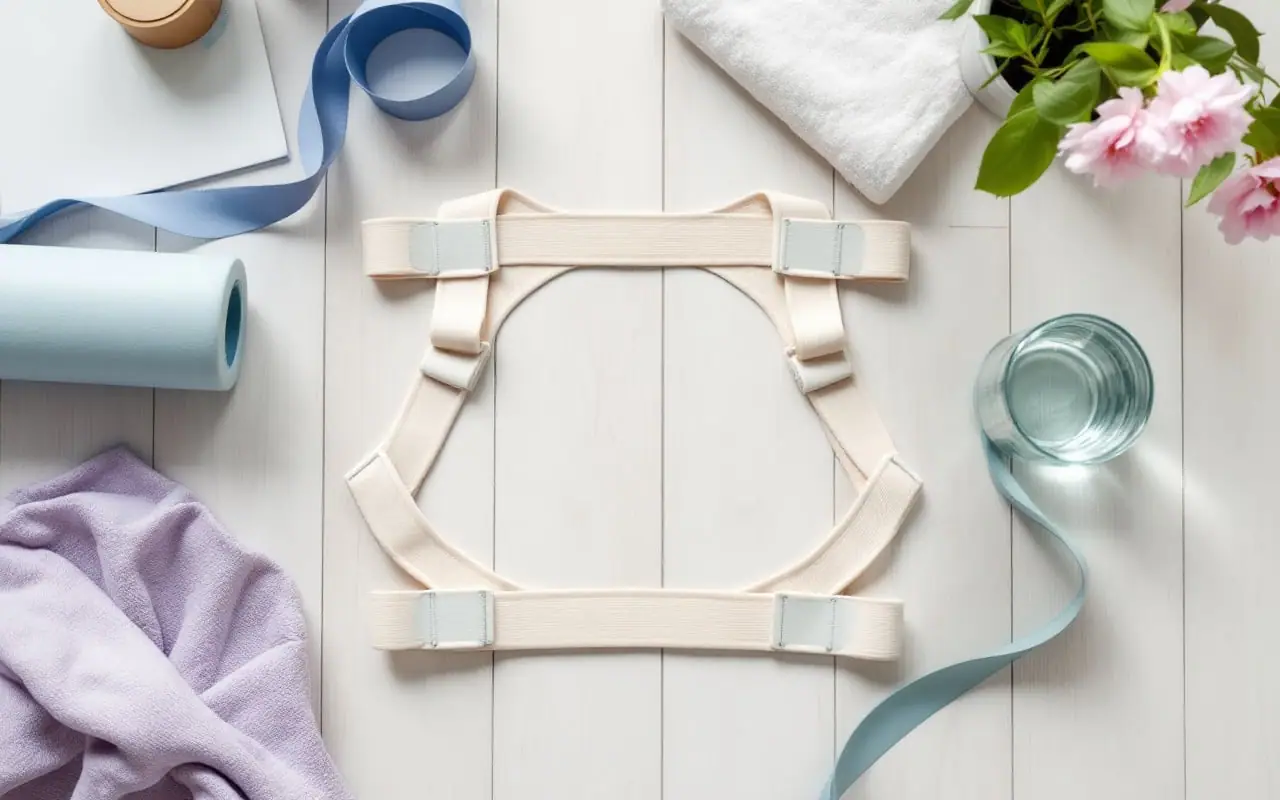
Every so often on the train into Kitakyushu I spot a tell-tale outline under someone's shirt: two straps looping round the shoulders and crossing between the shoulder blades. A posture corrector. Japanese drugstores stock them next to the shoulder patches, sold as a cure for nekoze, literally "cat's back", the everyday word here for a slouch. Online they come with before-and-after photos and promises of a straighter back in days.
So, do posture correctors work? Short answer: they can work as a reminder, and some people find them comfortable for short spells. They do not strengthen anything, they are not a reliable fix for back or neck pain, and the research on them is thin. This guide is for desk workers, phone scrollers and anyone who has caught their rounded shoulders in a shop window and felt tempted. It covers what a brace can and can't do, what to look for if you buy one anyway, and the exercise and desk changes I would put first.
What a posture corrector can and can't do
I spent years as a sports-massage therapist before I moved to Japan, and the most useful thing I learned about posture is that bodies like variety. There is no single correct way to sit or stand that protects you from pain. People with textbook posture get sore backs, and people who slouch happily for decades often do not. What seems to matter more is holding any position for a long time without moving.
With that in mind, here is the honest list.
A posture corrector can:
- give you a physical nudge. When you round forward, the straps tug, and you notice.
- shift your shoulder position a little while you are wearing it.
- feel supportive, which some people find reassuring during a long day.
A posture corrector can't:
- build the muscles of the upper back and shoulders. Straps take the load; muscles get stronger by doing the work.
- change the shape of an adult spine.
- keep a change going once it comes off, unless your habits changed too.
- replace getting up and moving.
You will often read that braces make your muscles "lazy". There is no good evidence either way for a corrector worn for short spells, but there is no reason to wear one all day either.
What the evidence says
Research on over-the-counter posture correctors is sparse. The studies that exist are mostly small and short, and some are funded by makers. They tend to show modest changes in shoulder or upper back angle while the brace is on. They say very little about what happens after it comes off, or about pain.
For the lower back, the UK's National Institute for Health and Care Excellence (NICE) is unusually direct. Its guideline on low back pain advises against offering belts or corsets for managing it, and recommends exercise instead.
Kinesiology tape has been studied more. Reviews for muscle and joint pain have generally found it does little better than sham taping, with any benefit small and short-lived. As a reminder strip across the upper back, it may still nudge you to sit up, much like a brace.
Wearable reminder devices have a few small studies showing people slouch less while the device buzzes at them. Whether that reduces pain is not known.
Medical braces are a different thing altogether. Teenagers with scoliosis that is still progressing may be fitted with a rigid brace, and a large trial found that bracing reduced the chance of curves worsening to the point of needing surgery. Specialists prescribe and fit those braces. A strap from a drugstore shelf is not a lighter version of the same thing.
What matters when choosing
If you still want one, and plenty of sensible people do, these are the points that make the difference between a useful reminder and a strap you abandon in a drawer.
- What you want from it. A reminder to sit up is a reasonable aim. Treating pain is not something a brace can promise. If pain is the reason, see a doctor or physiotherapist first.
- Fit and pressure points. Straps that cross under the armpits can press on nerves and blood vessels there. Tingling or numbness in the hands means it is too tight. Measure your chest and follow the maker's size guide rather than guessing.
- How long you will wear it. Short sessions during focused desk work, following the maker's wear-time advice, make more sense than all-day use. Never sleep in one.
- Comfort, skin and heat. Look for breathable, washable fabric and soft edges. In a Japanese summer, a padded vest under a work shirt is miserable by ten o'clock. If you react to latex or adhesives, check the materials.
- Whether it fits your day. A brace that shows under your clothes, or that you need help to put on, will not get worn.
The options
Exercise and set-up first: a ten-minute routine
Two or three times a week is enough to start, and research on long-running neck pain gives the most support to exactly this kind of strengthening. Go slowly, and stop anything that causes sharp pain, tingling or numbness.
- Band pull-aparts. Hold a light band at shoulder height with straight arms. Pull your hands apart, squeezing your shoulder blades together, then let them come back slowly. 10 to 15 times.
- Band rows. Loop the band round something solid, such as the handle of a closed door. Pull your elbows back past your ribs, pause, return slowly. 10 to 15 times.
- Upper back over the roller. Lie with the roller across your upper back, not your lower back or neck. Support your head with your hands, let your upper back drape over it for a few breaths, then shuffle a few centimetres and repeat. A minute or two in total. Skip this one if you have osteoporosis.
- Chin tucks. Slide your chin straight back as if making a double chin, hold for a few seconds, release. 5 to 10 times.
- Doorway chest stretch. Forearms on either side of a door frame, step through until you feel a stretch across the chest. 20 to 30 seconds.
Between those sessions, get up every 30 to 60 minutes, even just to fetch a glass of water. My earlier guide on how to fix your posture goes through the reasoning in more detail, and the piece on desk posture for home workers shows how to raise a laptop with what you already own.
If what you are really after is something to lie on in the evening, I look at spiky mats separately in what acupressure mats do.
If you buy a posture corrector anyway
- Use it as a cue, not a crutch. Wear it for a short spell, notice how upright feels, then take it off and try to keep the feel without it.
- Take it off at once if your hands tingle or go numb, if it leaves marks that do not fade, or if it restricts your breathing.
- Ask a doctor first if you have osteoporosis, a heart or lung condition, or are pregnant.
- Pair it with the exercises above. A brace on its own changes how you look in the mirror for an hour; muscles change how you sit for years.
When to see a doctor or physiotherapist
A rounded back is usually a habit. Some signs point to something else and need a proper look:
- numbness, tingling or weakness in the arms or legs
- loss of bladder or bowel control, or numbness around the groin, which needs emergency care
- pain after a fall or an accident
- pain that wakes you at night or does not ease with rest
- fever, or weight loss you cannot explain, alongside back pain
- an older person whose back is becoming more rounded, or who is losing height, which can be a sign of spinal fractures from osteoporosis
- a teenager with one shoulder higher than the other, or a rib hump that shows when they bend forward, which can mean scoliosis
- pain that has not improved after several weeks of sensible changes
In Japan you can usually go straight to an orthopaedic clinic (seikei geka) without a referral. In the UK, many areas let you refer yourself to an NHS physiotherapist; the NHS site explains how in your area.
How the products here were chosen
The options above are types of product, not a ranking. Where a sentence names an item, the choice is based on specifications, materials, maker information and published information about it. We have not used or tried any of these products ourselves, and nothing here should be read as a test. Exercise and desk set-up come first in this guide for a reason: they are what the evidence supports.

The writer
Neil worked as a sports-massage therapist in Yorkshire before moving to Kitakyushu. He writes about stiff shoulders, backs, desks and floor sitting, in plain words and without selling you a gadget.