Sitting on the floor: seiza, zabuton and a happier lower back
The first time I sat seiza (the formal kneeling position) for a long stretch was at a family memorial service, not long after I moved to Kitakyushu. About forty minutes in, my feet had gone from tingling to absent. When everyone rose, I rose too, took one step on legs that had stopped reporting for duty, and was caught by an elderly relative half my size. Nobody said anything. Everyone noticed.
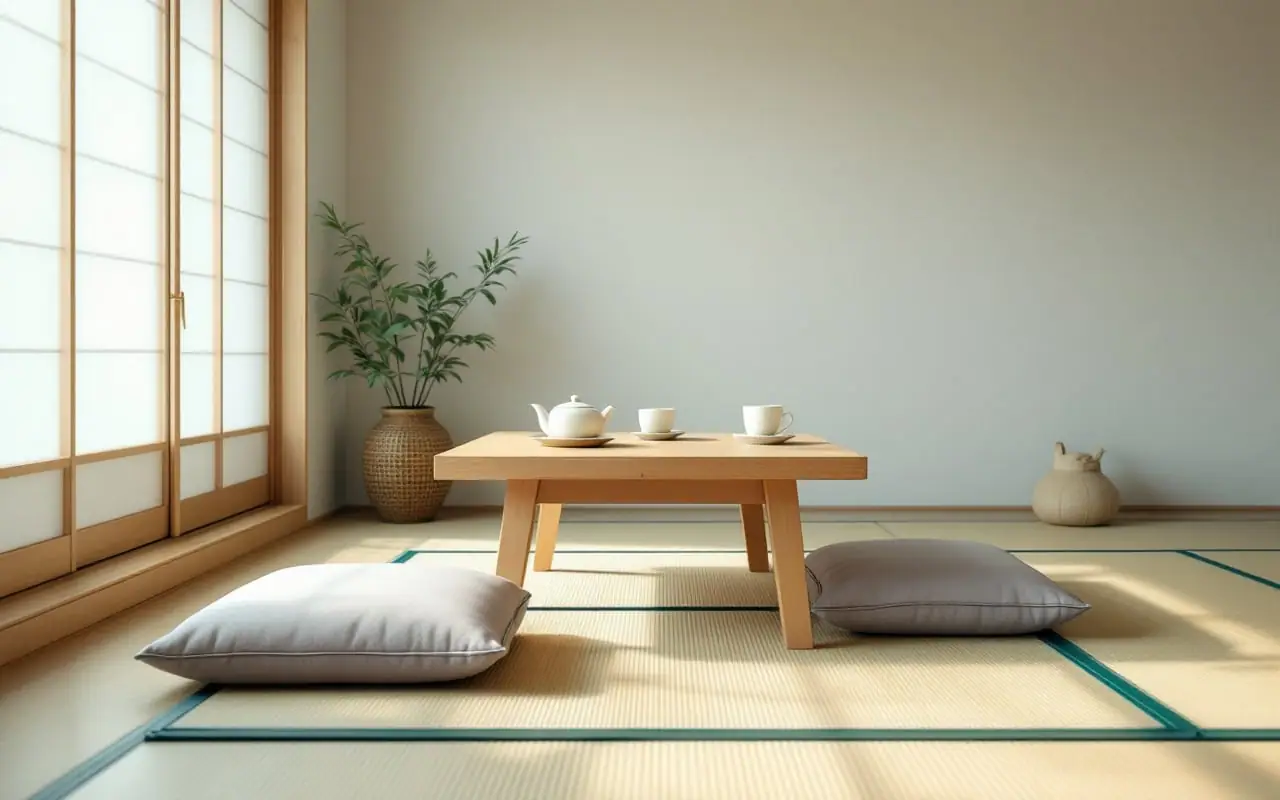
Floor sitting is still very much part of life here: tatami rooms, low dining tables, the kotatsu (a low table with a heater underneath and a quilt over the top) all winter, zashiki seating in restaurants, temple visits, New Year at the in-laws'. If you are new to it, or getting older, or your back has opinions, these are the questions people ask me most.
Is sitting on the floor bad for your back?
Not in itself. Plenty of people sit on the floor their whole lives without trouble, and there is very little research suggesting floor sitting as such causes back pain. There is also little proving it prevents it, whatever you may read. The problems tend to come from three things: staying in one position too long, positions that let the lower back slump into a deep curve, and the business of getting down and up again for people with stiff hips or knees.
One point in its favour: floor sitting makes you fidget. You shift, swap legs, lean, stretch out. That constant change is kinder to the spine than sitting perfectly still in an expensive office chair. The trick is to work with that instinct rather than fight it.
What exactly is seiza, and why do my feet go numb?
In seiza you kneel with your knees together, the tops of your feet flat on the floor, and your bottom resting on your heels, back upright. It is the polite position for ceremonies, tea gatherings, formal meals and martial arts.
Your body weight presses on the nerves and blood vessels around the ankles and lower legs, which is why the feet fall asleep (ashi ga shibireru, as people say here). Some things that help:
- Keep your knees slightly apart, about a fist's width, which spreads the load.
- Cross one big toe over the other and swap from time to time, shifting your weight a little.
- Put a firm cushion, or a small kneeling stool (sold in Japan as a seiza chair), between your heels and your bottom. This takes most of the pressure off the feet and ankles, and nobody minds.
- Sit up tall rather than sinking back into your heels.
Most important, do not stand straight up on numb feet. That is how ankles get sprained. Instead, tuck your toes under so you are kneeling on the balls of your feet, wait while the feeling comes back (unpleasant but brief), then rise.
Very long spells of kneeling or squatting can, rarely, press on a nerve near the outside of the knee and cause weakness in lifting the front of the foot. If numbness lasts long after you have moved, or your foot slaps or catches when you walk, see a doctor.
Is cross-legged sitting better for the back?
It depends on your hips. In agura (cross-legged) sitting, people with tight hips find their knees end up higher than their hips. The pelvis rolls backwards, and the lower back rounds into a slump that gets achy within half an hour.
The fix is height. Sit on the front edge of a folded cushion so that your hips are a few centimetres higher than your knees. The pelvis tips forward, the lower back finds its natural curve, and the knees can drop. People who meditate learned this a long time ago.
Other common positions each have a catch:
- Yokozuwari (both legs folded to one side) twists the spine and loads one hip, so swap sides regularly.
- Tatehiza (one knee up, the other leg folded) is comfortable for a while and easy to change, which makes it a good one to rotate through.
- Sitting with the bottom on the floor between the heels and the shins splayed out to the sides puts a twisting strain on the knees. Children do it easily. Adults with any knee trouble should skip it.
- Legs straight out in front with your back against a wall is unglamorous but restful, especially if your hamstrings are not too tight.
What does a zabuton actually do?
The zabuton is the flat, square floor cushion you find in every tatami room. It spreads pressure under the sit bones, keeps the cold off in winter, and folded in half it becomes a simple way to raise your hips. Thicker ones are worth seeking out if you sit on the floor every day.
For longer sits, a backrest makes a bigger difference than any cushion. A zaisu (a legless chair with a back, sold in most Japanese furniture shops) lets you lean back and rest the lower back muscles. A wall works too. In a restaurant, take the seat with a wall behind it if you get the choice.
A good everyday arrangement is two zabuton: one flat on the floor for your legs, one folded under your hips, with your back against something solid.
How do I get down and up without a fuss?
This is the half-kneel method. It works for most people, including those with stiff backs, and it is the same way physiotherapists teach people to get up from a fall.
Getting down:
- Stand close to where you plan to sit, with something stable to hold if you like: a wall or a sturdy table, not a light folding table or a sliding door.
- Step one foot back and lower that knee gently to the floor, so you are in a half-kneel.
- Bring the other knee down beside it.
- Put one hand on the floor to the side, ease your bottom down onto the cushion, and arrange your legs.
Getting up:
- Turn onto your hands and knees.
- Bring one foot forward and place it flat on the floor, so you are back in a half-kneel.
- Put both hands on that front thigh, or on your support, lean forward and push up through the front leg.
- Stand still for a moment before walking off, especially after a long sit or a warm kotatsu, because standing up quickly can make you lightheaded.
What about low tables and the kotatsu?
Eating at a low table is fine. Working at one for hours is another matter, because you end up leaning forward over the table with a rounded back. If you use a laptop on a low table, raise it on books and change position often (the same principles apply as in desk posture without the gadgets).
The kotatsu is one of the great pleasures of a Japanese winter, and also a trap. It is warm and cosy, so nobody moves for three hours, and people slide further and further under the quilt until they are lying on their necks. Set yourself a rule: get out and move at least every half hour, if only to put the kettle on. Do not fall asleep in it. Warnings about dehydration and low-temperature burns from dozing under a kotatsu come round in Japan every winter. People with reduced feeling in their feet, for example from diabetes, should be especially careful with the heat.
The same slow, supported way of standing helps with the low stools in the washing area at a hot spring, which catch out plenty of visitors (more on that in onsen etiquette and health).
Who should be careful?
- After a knee replacement. Deep kneeling is uncomfortable or impossible for many people after knee surgery, and advice differs by surgeon and implant. Ask your surgeon or physiotherapist before trying seiza. A zaisu or an ordinary chair is a perfectly good answer.
- With knee arthritis or a damaged meniscus. Seiza puts the knee into full bend under body weight. Use a cushion between heels and bottom, or sit with your legs out straight against a backrest.
- After a hip replacement. Many people are told to avoid deep bending and crossing their legs for a period after surgery, which rules out most floor positions for a while. Follow the advice your own surgical team gives you.
- With other hip problems, such as arthritis. Cross-legged sitting can pinch at the front of the hip. Raising the hips on a cushion often helps; if it does not, choose a chair.
- In pregnancy. Hormonal changes loosen the ligaments around the pelvis, and some people develop pelvic girdle pain. Change position often, keep the knees fairly level rather than twisted to one side, use the half-kneel to get up, and ask your midwife or doctor if floor sitting becomes painful.
- If your balance is unsteady. Getting up is the risky moment. Keep a stable support nearby.
When is it more than stiffness?
A stiff back after a long dinner on tatami is normal and wears off once you move. Some things are not normal. See a doctor promptly if you have:
- numbness or pins and needles that does not wear off within a few minutes of changing position, or keeps coming back
- weakness in a leg or foot, such as tripping, or a foot that slaps down when you walk
- back pain with a fever, after a fall, or that wakes you at night and does not ease when you shift position
- a knee that locks, gives way or swells after kneeling
Seek urgent help (in Japan, call 119) if back pain comes with new difficulty passing urine, loss of bladder or bowel control, or numbness around the genitals, buttocks or inner thighs. These can mean pressure on the nerves at the base of the spine, which needs treatment quickly.
Before your next evening on the floor
- Fold a zabuton under your hips so they sit higher than your knees.
- Pick the seat with a wall behind you.
- Change position every 15 to 20 minutes, even slightly.
- Wiggle your toes and tuck them under before you stand.
- Rise through a half-kneel, with a hand on something solid.
If neck and shoulders are the bigger complaint, the piece on katakori covers that, and the posture and body care section has the rest.

The writer
Tom worked as a sports-massage therapist in Yorkshire before moving to Kitakyushu. He writes about stiff shoulders, backs, desks and floor sitting, in plain words and without selling you a gadget.