Onsen etiquette and health: bathing safely in Kyushu's hot springs
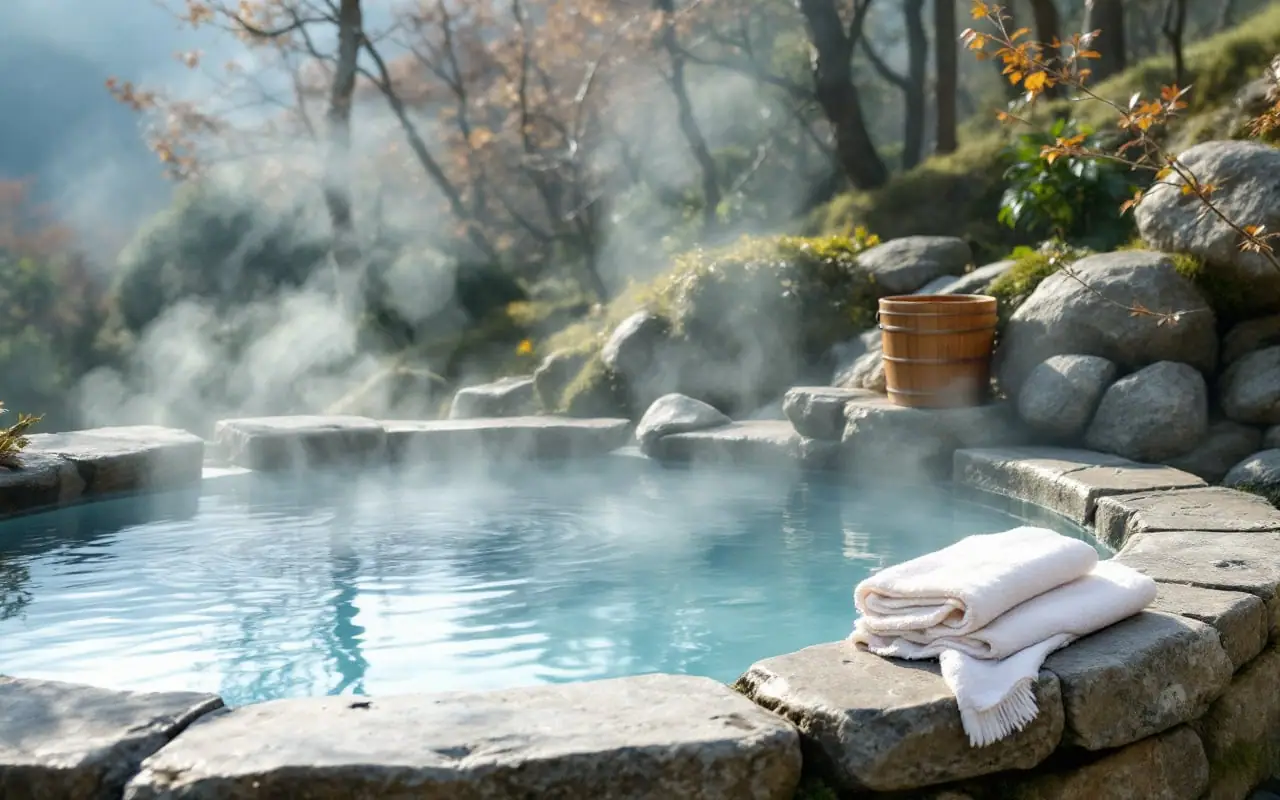
Kyushu sits on a chain of volcanoes, and the heat underneath shows up everywhere: steam drifting from roadside vents in Beppu, warm sand on the beach at Ibusuki, small riverside baths in the hills of Kumamoto. Oita Prefecture is usually counted as having more hot spring sources, and more hot water flowing from them, than any other prefecture in Japan.
Soaking in an onsen (hot spring) is one of the real pleasures of living here, and of visiting. It also means very hot water, wet stone steps and big swings in temperature, often with a cold beer within reach. Here are the manners first, then the health questions people tend to ask, including who should check with a doctor before going in.
Kyushu's hot spring country
Beppu, on the coast of Oita, is the big one. It is a city of steam with eight hot spring districts, cheap public bathhouses, sand baths, mud baths, and the jigoku ("hells"), boiling pools of colored water that are for looking at, not bathing in. Few places offer so many kinds of water within one town.
Yufuin, a short drive inland, is quieter: inns in the fields below Mount Yufu, with mist lying over the valley on cool mornings.
Kurokawa, in the mountains of northern Kumamoto near Aso, is a small village of inns along a river, known for its rotenburo (outdoor baths). Visitors can buy a wooden pass, the nyuto tegata, which lets them try the baths at three different inns.
Ibusuki, near the southern tip of the Satsuma Peninsula in Kagoshima, is famous for sunamushi, sand bathing. You lie on the beach in a cotton robe while staff shovel sand warmed by hot spring water over you, usually for 10 to 15 minutes. It is heavier and hotter than it looks.
There are many more: Unzen in Nagasaki, Kirishima in Kagoshima, Takeo and Ureshino in Saga, and Nagayu in southern Oita with its fizzy water. More local pieces are collected under Japan & Kyushu.
Etiquette, in the order you need it
- Find the right entrance. Men's and women's baths are marked by noren (cloth curtains), often blue for men and red for women. At some inns the two baths swap over between evening and morning, so check again the next day.
- Undress completely in the changing room. Clothes go in a basket or locker, and swimsuits are not worn in most baths. Take only a small towel in with you.
- Wash before you soak. Sit on a stool at the washing station, shower, shampoo and rinse off every trace of soap. Then scoop some bath water over yourself (kakeyu), starting at the feet and working up, which also lets your body adjust to the heat.
- Keep the towel out of the water. Fold it on your head or leave it on the edge. Tie long hair up so it does not touch the water.
- Get in quietly. No swimming, splashing or diving, and keep your voice low. Cameras and phones stay in the changing room.
- Dry off before going back to the changing room. A quick wipe with the small towel keeps the floor dry for everyone.
- Decide whether to rinse. With gentle water, many people leave the minerals on their skin. With acidic or strongly sulfurous water, or if your skin is sensitive, rinse with fresh water before dressing.
Tattoos
Many baths have long refused people with tattoos, because of an old association with organized crime. Policies now vary: some places welcome everyone, some accept small tattoos under a skin-colored patch, and some still say no. Japan's tourism authorities have encouraged operators to find ways to accommodate visitors, and many inns in Kyushu have kashikiri-buro or kazoku-buro, private baths you can reserve by the hour, which settle the question. Check the policy before you travel rather than at the door. Japan's national tourism organization has general visitor advice on its website.
The health side, in questions
How long should I stay in?
Less than you think, especially at first. The standard bathing notes posted at Japanese hot springs suggest starting with soaks of a few minutes up to about 10, and only one or two baths a day for the first couple of days. Very hot water, around 42°C (about 108°F) and above, puts more strain on the heart and circulation. For safe bathing at home in winter, Japan's Consumer Affairs Agency advises water at 41°C or below and getting out within 10 minutes, which is a sensible ceiling at an onsen too.
Regular bathers talk about nobose (feeling flushed and light-headed from the heat) and yuatari (feeling tired, achy or slightly unwell after several days of heavy bathing). Both are signals to stop, cool down and rest.
Do I really need to drink water?
Yes. You sweat in hot water even though you cannot feel it, and a long soak can leave you mildly dehydrated, which makes dizziness more likely. Drink a glass of water or tea before going in and again afterward. A bottle of cold milk after the bath is a fond tradition at public bathhouses, but water does the actual rehydrating.
What about a drink at dinner, then another soak?
This is the combination to avoid. Alcohol widens blood vessels and lowers blood pressure, and so does hot water. Together they make fainting, falls and drowning more likely, and alcohol dulls your sense of how hot you are getting. An inn stay makes it easy to drink sake at dinner and then wander down to the bath at 11 p.m. Take your evening bath before dinner and save the next soak for the morning. The posted bathing notes also say not to bathe straight after a large meal, so give it 30 minutes to an hour.
Why do people get dizzy getting out?
Heat opens up the blood vessels in the skin, and the pressure of the water helps push blood back toward the heart while you are in it. Stand up suddenly and that support disappears: blood pools in the legs and blood pressure dips for a moment. The result can be dizziness, blurred vision or a faint, often on wet stone. Rise slowly, hold the handrail, sit on the edge for a moment, then walk. At the Ibusuki sand baths, sit up first and stand once your head is clear.
Is winter more dangerous?
For older people, yes. Japanese public health bodies warn every winter about what they call "heat shock": sharp swings in blood pressure when someone moves from a warm room into a cold changing room, then into hot water, then out again. Those swings can bring on fainting, a heart attack or a stroke. Government figures in recent years have shown far more older people dying from drowning in the bath than in traffic accidents, mostly at home and mostly in the cold months.
At an onsen the risk turns up in unheated changing rooms and in outdoor baths on frosty mornings, at Kurokawa or Yufuin in January, for instance. Keep warm clothes on until the last moment, use the indoor bath before the outdoor one, choose the cooler pool, keep soaks short, and tell someone when you go. Older people are safer bathing with a companion, and should skip the bath after drinking or after taking medicines that cause drowsiness.
Can a soak help stiff shoulders?
Warmth and buoyancy relax tight muscles, and many people feel looser afterward, though a soak is not a treatment. For the habits that matter more over time, see our piece on katakori, Japan's stiff shoulders.
Who should ask a doctor first
The notices that Japanese hot springs post, which follow Ministry of the Environment guidance, list general reasons not to bathe: illness with fever or in an active phase, serious heart or lung disease that leaves you breathless with little effort, severe kidney disease with swelling, active bleeding, and marked physical weakness. Beyond that list, talk to your doctor before an onsen trip if you have:
- heart disease, including angina, heart failure or a recent heart attack
- high blood pressure that is not well controlled, or a past stroke
- a pregnancy: Japan removed pregnancy from the official list of reasons not to bathe in 2014, finding no basis for a blanket ban, but heat, dehydration and slippery floors still matter, and health services in some countries advise pregnant women to avoid getting very hot, especially in early pregnancy
- diabetes with reduced feeling in the feet, since burns and cuts can go unnoticed
- epilepsy or a history of fainting, where bathing alone is a risk
- medicines that lower blood pressure or cause drowsiness
- open wounds or a flare of eczema, which acidic or sulfur water can sting
If you feel chest pain, sudden weakness on one side, a severe headache or confusion in or after the bath, get out, ask for help and call 119. Knowing your own blood pressure before a trip is useful; our guide to check-ups in Japan explains where it appears on your results.
Spring types in plain words
Under Japan's Hot Springs Act, water counts as an onsen if it comes out of the ground at 25°C or above, or carries enough of certain listed minerals or gases. Springs that meet stricter standards are classed as therapeutic springs and sorted into ten types. Each bath has to display its water analysis, along with the conditions the water is said to suit (tekiosho) and the cautions (kinkisho). These are the types you meet most often, with an honest note on each.
| Type | What you notice | What signs often claim | Honest note |
|---|---|---|---|
| Simple spring | Clear and gentle, little smell | Fatigue, sore muscles | Low in minerals; the benefit is mostly warmth and rest |
| Chloride (salt) spring | Slightly salty; you stay warm afterward | Poor circulation, feeling cold | A salt film may slow heat loss a little; little research |
| Hydrogen carbonate spring | Smooth, slippery feel | Smoother skin | The slip is the water reacting with skin oils; moisturize if skin feels dry later |
| Carbon dioxide spring | Fine bubbles on the skin, often lukewarm | Circulation | Gas absorbed through the skin does widen small vessels; long-term effects unclear |
| Sulfur spring | Smell of rotten eggs, often cloudy | Skin conditions | Can irritate dry or sensitive skin and tarnishes silver |
| Acidic spring | Stings small cuts | Skin conditions | Rinse afterward and keep it out of your eyes |
| Iron spring | Turns rusty brown in the air | Anemia, when drunk | Stains towels; not something to rely on for anemia |
Ureshino in Saga is one of Kyushu's best-known smooth, slippery waters, and Nagayu is known for carbon dioxide springs cool enough to sit in for a long time. In volcanic areas such as Unzen and parts of Beppu, follow the posted signs closely: hydrogen sulfide gas can collect in hollows and enclosed spaces. Drink spring water only from taps marked for drinking, never from the bath.
Reviews of bathing therapy studies, many of them from Japan and Europe, have found some short-term relief for problems such as knee and lower back pain. The studies tend to be small, and it is hard to separate the minerals from the warmth, the buoyancy, the day off and the change of scene. Treat the posted lists as tradition with some support behind it, not as medical claims.
The one habit to keep
If you remember one thing, make it the slow exit. Rise in stages, sit on the edge, stand with a hand on the rail, then drink some water before you dress. It takes a minute, and it guards against a very common onsen mishap, a dizzy spell on wet stone.

The writer
Shun is a health journalist based in Fukuoka. He reads the guidance published by health ministries and medical bodies and explains how check-ups, seasons and everyday life in Japan touch our health.