Lavender oil: what the research does and doesn't show
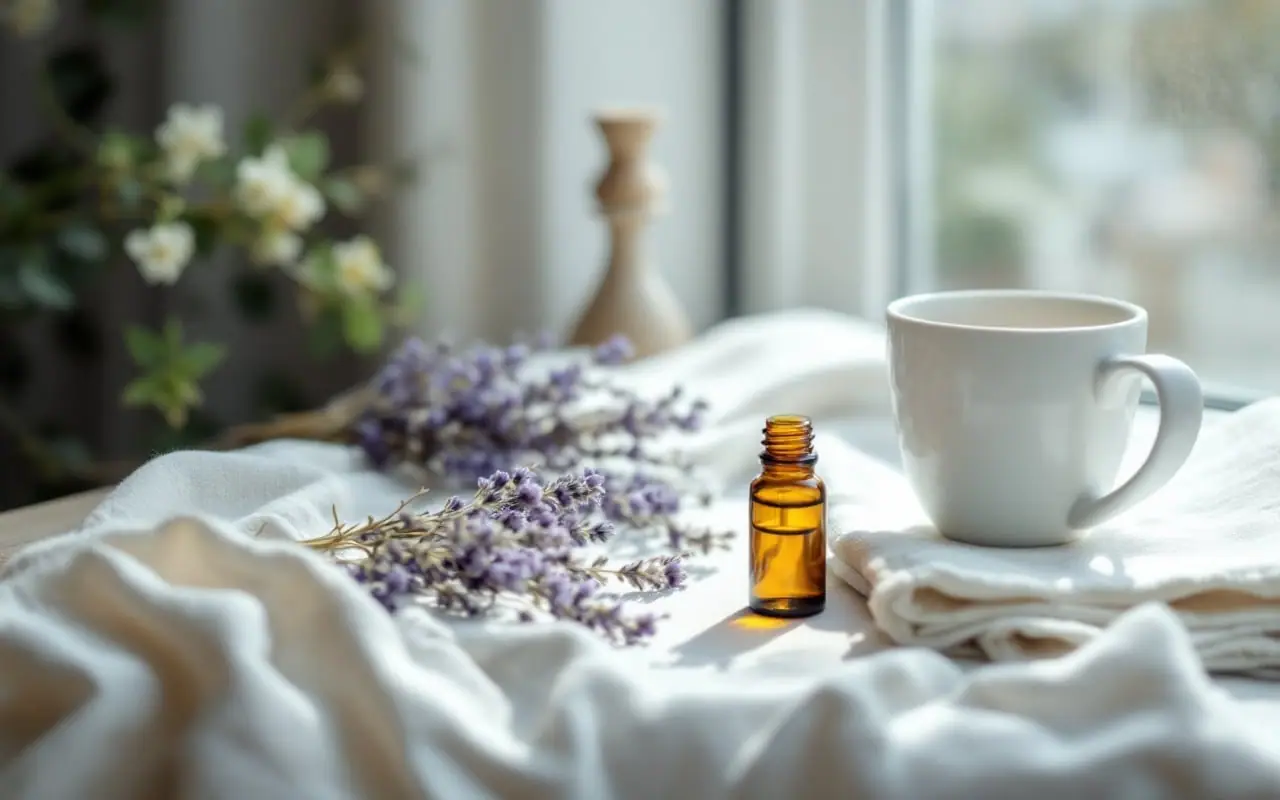
Every July the hillsides around Furano in Hokkaido turn purple and the coach parties arrive. Lavender was grown there for perfume oil after the war. In my own cupboard it is the bottle that runs out first, and the oil friends ask me about most, nearly always with the same question: does it actually do anything?
The honest answer has several parts, because "lavender" can mean different plants, and a gift-shop bottle is not the lavender used in the better studies.
First, which lavender is in the bottle?
Read the Latin name before anything else. The common names overlap and shops use them loosely.
| Botanical name | Usual names | Scent | Notes for home use |
|---|---|---|---|
| Lavandula angustifolia | true lavender, English lavender, fine lavender | soft, floral, a little sweet and hay-like | The lavender used in most research, and the usual choice for skin blends and bedtime |
| Lavandula x intermedia | lavandin (Grosso is a common variety) | sharper, more camphor | A hybrid of true and spike lavender. Cheaper and higher yielding, common in soaps and cleaning products |
| Lavandula latifolia | spike lavender | fresh, camphor and eucalyptus notes | Much more camphor and cineole. Closer to rosemary in character, not a bedtime oil |
| Lavandula stoechas | Spanish lavender, topped lavender | sharp and medicinal | Rich in the ketones camphor and fenchone. Most safety books advise against it in pregnancy, around young children and for anyone with epilepsy |
True lavender is mostly linalool and linalyl acetate, which together usually make up more than half of the oil, with very little camphor. That chemistry is why it smells soft, and why the skin warnings below matter. Bottles labelled "lavender 40/42" are generally a standardised product for the fragrance trade, sometimes adjusted with lavandin or synthetic components: fine for a drawer, not the oil the research is about.
Results from true lavender do not carry over to lavandin or spike lavender. Our essential oil dictionary lists the botanical names of the common oils, and the guide to what essential oils smell like describes how the scent changes from bottle to bottle.
Anxiety: what the trials found, and their weak spots
Inhaled lavender has been tested before dental treatment, before surgery, during labour, in intensive care units, on dialysis wards and with students before exams. A typical trial has a few dozen people, a single session or a few days of use, and a questionnaire before and after. Many of these trials report lower anxiety scores in the lavender group. Reviews that pool them tend to find a modest benefit, while rating the quality of the evidence as low.
Four reasons explain that rating, and they apply to most aromatherapy research.
- Size: small trials are more likely to produce a chance result, and positive small trials are more likely to be published than negative ones.
- Length: most last minutes or days. Anxiety problems that affect daily life tend to last months.
- Blinding: you cannot hide a smell. People know whether they received the pleasant scent or plain water, and the comparison is often nothing at all. Expectation, and the simple kindness of someone bringing you a scented cotton pad before an operation, can lower anxiety on their own.
- Measures: most outcomes are self-rated. Studies that also measured heart rate or blood pressure found less consistent changes.
So the fair summary is this. For situational nerves, such as the dentist or a hard phone call, smelling lavender is a low-risk habit that may take the edge off, and part of the effect is simply enjoying a smell and taking a slow breath. It is not a treatment for an anxiety disorder, panic attacks or depression.
The capsule exception
A specific oral lavender oil preparation, studied under the name Silexan, is licensed in Germany for restlessness linked to anxious mood, and in the UK it is sold as a traditional herbal medicine for the symptoms of mild anxiety. Several randomised, double-blind trials, most of them funded by the manufacturer, found that it lowered anxiety scores more than a dummy capsule. A capsule can be matched with a placebo far more convincingly than a smell can, so these trials are better blinded than the inhalation studies. Even so, the commonest side effect, lavender-flavoured burping, can give the game away.
That is evidence about a manufactured, standardised medicine made and tested to be swallowed. It is not evidence for swallowing drops from a bottle of essential oil. Aromatherapy oils are not made or checked for eating, swallowed oil irritates the mouth and gut, and oils are a real poisoning risk for children. Please do not add essential oil to water, tea, honey or empty capsules. In Japan, essential oils are sold as general goods (zakka) rather than as medicines, which is why the shop labels say nothing about what they do.
If an oral lavender product interests you, ask a doctor or pharmacist first, particularly if you take sleeping tablets, antidepressants or anything else that makes you drowsy, or are pregnant or breastfeeding.
Sleep
Lavender on the pillow is probably the most common home use of any essential oil. The trials look much like the anxiety ones (students, older adults, new mothers, hospital patients), mostly using a sleep-quality questionnaire. Many report better scores, and reviews suggest a possible small benefit with low certainty, for the same reasons as above.
Very few studies measure sleep itself rather than asking people how they slept. One of the few sleep laboratory studies, with around thirty healthy young adults, found small shifts towards deeper sleep on nights with lavender. Interesting, but small, and in a laboratory rather than a bedroom.
The US National Center for Complementary and Integrative Health, which keeps a plain-language page on lavender at nccih.nih.gov, describes the evidence for most uses as limited. That matches my reading.
A bedtime smell can become a cue, the way a cup of hojicha (roasted green tea, low in caffeine) or a warm bath can tell your body the day is over. If you enjoy it, use it. But lavender will not fix sleep apnoea, pain, an overactive thyroid, depression or shift work. See a doctor if poor sleep has gone on for a month or more and is affecting your days, if someone has noticed you snoring loudly and stopping breathing, if you wake gasping, or if you are nodding off at work or at the wheel.
Skin: the problem with old oil
Lavender has a reputation as the gentle oil, the one people dab on neat. That reputation causes trouble.
Linalool and linalyl acetate react with oxygen in the air. As a bottle ages, especially a half-empty bottle opened often in a warm room, they form hydroperoxides, which are far stronger skin sensitisers than the fresh oil. Sensitisation means the immune system learns to react. Once that happens it is usually for life, and reactions can then come from shampoos, perfumes and creams too, because linalool is one of the most widely used fragrance ingredients. European cosmetics rules list it among the fragrance allergens that must be named on ingredient labels.
Patch-test clinics in Europe find reactions to oxidised linalool in a noticeable minority of people being tested for eczema. In Japan, dermatologists reported a rise in positive patch tests to lavender oil during the 1990s, the years when aromatherapy became fashionable here.
What helps:
- Buy small bottles you will finish within about a year of opening.
- Keep the cap tight and the bottle cool and dark. In a Japanese summer, the fridge is the best place, in a closed box so the butter does not end up smelling of lavender.
- Tip the last of a nearly empty bottle into a smaller one, so it sits with less air.
- If the oil smells flatter, harsher or simply different from when you opened it, stop using it on skin.
- Never use it neat. Dilute to 1 to 2 percent for the body (2 to 4 drops in 10 ml of carrier oil) and 0.5 to 1 percent for the face, and patch test first.
The old story of a French chemist rinsing a burned hand in lavender oil is often told, and it has done harm. For a burn, cool the area under cool or lukewarm running water for 20 minutes, then cover it loosely with cling film or a clean, non-fluffy dressing. Get medical help for burns larger than the palm of the hand, burns that look white or charred, burns with blisters on the face, hands, feet or genitals, and burns on babies or children under five.
The hormone question in boys
In 2007 a leading medical journal published reports of three boys, aged 4, 7 and 10, who developed breast tissue before puberty (prepubertal gynaecomastia) while regularly using products that contained lavender oil, or lavender and tea tree oil: a skin balm, scented soap and lotions, and a shampoo and hair gel. In each case it went away within months of stopping the products. In laboratory tests on human cells, both oils had weak oestrogen-like effects and blocked the action of androgens, the male hormones.
A later report in 2019 described further children, including girls with early breast development, and found that several common components of the two oils, linalool among them, had similar effects in cell tests.
There are good reasons for caution, though. Case reports cannot prove cause and effect. A handful of cases sits against millions of children who use lavender-scented products. Nobody knows how much oil the boys were exposed to. Cell experiments use concentrations that may not reflect what reaches the body through skin, and a study in young rats, with lavender oil applied to the skin, found no oestrogen-like effect on the womb. Gynaecomastia before puberty is uncommon, and sometimes no cause is ever found.
So the link is plausible but not proven. I would not worry about an occasional lavender-scented bath, but I would avoid daily, months-long use of skin and hair products rich in lavender or tea tree oil on young children, especially boys before puberty, and keep any dilution for children low. If a child of either sex develops breast swelling, pubic hair, adult body odour or a sudden growth spurt earlier than expected, see a doctor, and take a list of everything that goes on their skin and hair, including "natural" products. In boys who are already going through puberty, small, tender breast buds are common and usually settle, but they are still worth mentioning at a check-up.
Using lavender sensibly
- Check the label for Lavandula angustifolia if you want the lavender the research is about.
- Inhale rather than apply when you can: 1 to 2 drops on a tissue, or a diffuser for 30 to 60 minutes and then off, with a window open a crack.
- On skin, 1 to 2 percent for the body and 0.5 to 1 percent for the face. Never neat, and patch test first.
- Never swallow essential oils, and keep bottles out of reach of children and pets, cats especially.
- Ask a midwife, doctor or pharmacist first if you are pregnant or breastfeeding, have epilepsy or asthma, or take medicines that make you sleepy. Some people with asthma find that strong scents tighten the chest.
- Know when the problem is bigger than a scent. Anxiety that stops you doing ordinary things, panic attacks, low mood lasting more than two weeks or sleeplessness for weeks deserve a doctor's appointment. Thoughts of harming yourself need help the same day, from a doctor or emergency services.
For the dilution and storage basics at a glance, the aroma pocket guide fits on a phone screen. And if you remember one thing from all this, make it the freshness rule: a small, recently opened bottle of true lavender, diluted, is a pleasant thing to have in the house, while an old bottle used neat is how a gentle oil earns a rash.

The writer
Ruth is a British writer who has lived in Japan for many years and has blended essential oils at home for two decades. She looks after the Aroma corner and never writes a recipe without the dilution.