Health check-ups in Japan: what the annual kenko shindan includes
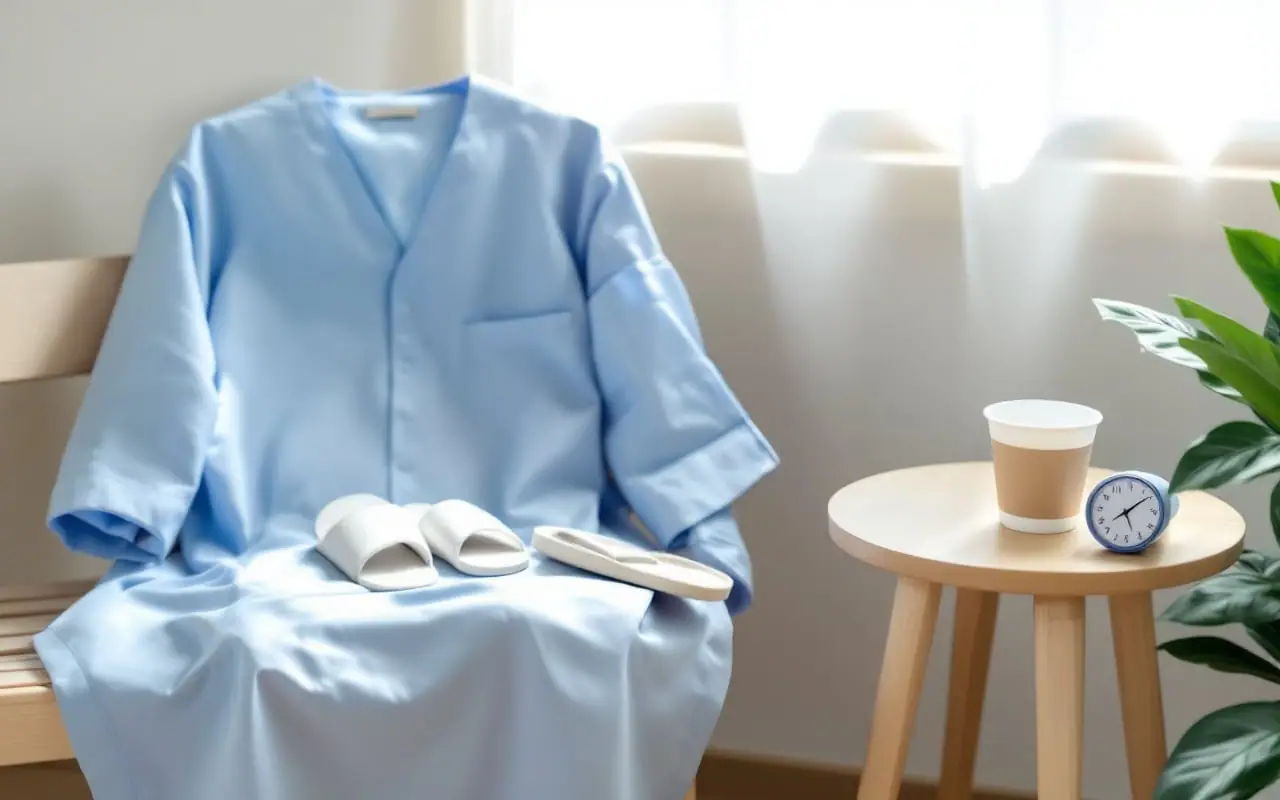
Every spring and autumn, buses fitted with X-ray rooms pull up outside offices and factories across Japan. Staff file in, change into a gown, and move through a set of stations in about an hour. For most working adults this is the kenko shindan (health check-up), and it comes round every year whether you feel ill or not.
People who move to Japan are often struck by how routine it is. The system has several layers, though, run by different bodies under different laws, and it is easy to fall through a gap between them. This is how the pieces fit, based on how Japan's Ministry of Health, Labour and Welfare describes them.
Four kinds of check-up
| Type | Who it is for | Who arranges it | Cost to you |
|---|---|---|---|
| Workplace check-up (teiki kenko shindan) | Employees | The employer, as required by law | Usually nothing |
| Specific health check-up (tokutei kenshin) | People aged 40 to 74 in public health insurance | Your health insurer | Free or low cost, depending on the insurer |
| Cancer screening (gan kenshin) | Residents in the recommended age groups | Your city, town or ward | Often a small fee, set locally |
| Ningen dock | Anyone who chooses one | You, at a hospital or clinic | Usually paid yourself, sometimes partly subsidized |
The workplace check-up
Japan's Industrial Safety and Health Act requires employers to give workers a general health check when they are hired and then once a year, and workers are expected to take it. People on regular night shifts and in certain hazardous jobs are checked more often. Part-time staff are covered if they work at least three quarters of full-time hours on an ongoing basis.
The items are set out in regulations. A standard annual check covers:
- a questionnaire on medical history, work and current symptoms, plus a short examination by a doctor
- height, weight, waist measurement, eyesight and a simple hearing test
- a chest X-ray
- blood pressure
- urine tests for sugar and protein
- blood tests for anemia, liver function, cholesterol and other blood fats, and blood sugar
- an electrocardiogram (ECG) of the heart
For younger workers, some of the blood tests and the ECG can be left out at the doctor's discretion. Many employers and insurers add extras, such as a stomach X-ray or a stool test for hidden blood, particularly for staff over 35 or 40. Workplaces with 50 or more employees must also offer a yearly stress check, a questionnaire about workload and mood.
Your results come to you. The employer keeps a record and must get a doctor's opinion on whether any change to your work is needed, but your medical information is personal data and is meant to be handled with care.
Tokutei kenshin, from age 40
Since 2008, every public health insurer in Japan has had to offer a "specific health check-up", tokutei kenshin, to members and dependents aged 40 to 74. It is sometimes nicknamed the metabo kenshin, because it was designed to find metabolic syndrome: the cluster of a large waist, raised blood pressure, high blood sugar and unhealthy blood fats that together raise the risk of heart disease, stroke and diabetes.
If you are an employee, your workplace check-up normally counts as your tokutei kenshin, and the results are passed to your insurer. If you are a dependent (a spouse covered by a partner's work insurance, for example), self-employed, retired, or in National Health Insurance, you usually receive a voucher (jushin-ken) by post each year and book at a participating clinic yourself. This is the group most likely to let it slide.
The basic items overlap heavily with the workplace check-up: questionnaire, height, weight, BMI, waist, blood pressure, blood fats, liver tests, blood sugar or HbA1c, and urine. A doctor may add an ECG, an examination of the back of the eye, an anemia test or a kidney blood test (creatinine) if your results call for it.
The waist measurement is the first sorting step. Japan's criteria start at 85 centimeters for men and 90 centimeters for women, or a BMI of 25 or more. People above those lines who also have other risk factors, and who are not already being treated for them, are offered tokutei hoken shido (specific health guidance): a few months of support from a public health nurse or dietitian on food, activity and smoking. It costs little or nothing and is worth taking up.
At 75, people move into a separate insurance system for older people, which offers its own check-ups.
City cancer screenings
Cancer screening sits mostly outside the yearly check-up. Under the Health Promotion Act, cities, towns and wards run screening programs, and the health ministry's guidelines recommend five:
- stomach: from 50, every two years, by endoscopy or barium X-ray (some places still offer a yearly barium X-ray from 40)
- lung: from 40, every year, by chest X-ray, with a sputum test for older heavy smokers
- colorectal: from 40, every year, by a stool test for hidden blood, usually collected on two days
- breast: from 40, every two years, by mammography
- cervical: from 20, every two years, by a smear test; since 2024, some municipalities also offer HPV testing every five years for women aged 30 to 60
Letters or coupons usually arrive from the municipality, though in some places you need to apply. If your employer's check-up already includes some of these tests, you may not need the city version. Plenty of people assume one covers the other when it does not, so it is worth listing which screenings you have actually had and when.
Ningen dock
A ningen dock (literally "human dock", after the dry dock where ships are inspected) is a voluntary, more extensive check-up first offered in Japan in the 1950s. A one-day course usually includes the items above plus an abdominal ultrasound of the liver, gallbladder, kidneys and pancreas, a stomach endoscopy or barium study, eye pressure, lung function and extra blood tests. Add-ons range from a brain MRI (a "brain dock") to more detailed cancer imaging.
Because it is not treatment, national health insurance does not pay for it, and a full course often costs several tens of thousands of yen. Some insurers and municipalities cover part of the fee for their members, so ask before you book.
More tests do not automatically mean better care. Extra scans find more harmless oddities, which can lead to further tests and worry. Blood "tumor markers", often sold as add-ons, are not reliable for screening people without symptoms. A good facility will explain what each option is for, and it is fine to skip the ones that do not fit your age and risks.
On the day
Most check-ups ask you to fast from the evening before, often from about 9 p.m., with water allowed until a set time. You may be sent a urine cup and, for the bowel screen, a stool kit to use on two separate days beforehand. If you are having a barium X-ray, you drink a chalky liquid, get turned on a tilting table, and are then given a laxative. Drink plenty of water afterward so the barium does not harden in the bowel.
A normal day beforehand helps the numbers reflect your normal life. Heavy drinking the night before can push up liver and blood fat readings, and a hard workout can raise some enzymes that also come from muscle. Women are often advised to rebook the urine test if they have their period, since blood in the sample can show up as a positive result.
Reading your results
Results usually arrive a few weeks later. Each test shows your value, a reference range, and often an H (high) or L (low) mark. Many facilities also give each section a letter grade. A common pattern runs like this:
- A: no abnormality found
- B: a slight change that needs no action
- C: lifestyle advice or a recheck after a set time (keika kansatsu, watch and recheck)
- D: further testing (yo-seimitsu kensa) or treatment (yo-chiryo) needed
- E: already under treatment
Grading systems differ between facilities, so read the key on your own report. Beyond the letters, a few habits make results more useful:
- Compare with last year. One reading slightly out of range matters less than a value that creeps up every year.
- Look for clusters. A slightly high waist, blood pressure, blood sugar and triglycerides together say more than any one alone.
- Treat "further testing needed" as an instruction, not a suggestion. Book the follow-up with a doctor within a few weeks and take the report with you.
- Do not wait for the next check-up if something changes. Chest pain, blood in the stool or urine, unexplained weight loss, a new lump or a cough that will not go away need a doctor whenever they appear.
Normal results are reassuring but not a guarantee. A check-up is a snapshot of a few common risks, not a search for every disease. That way of looking at health is close to the old idea of mibyo, being "not yet ill", and our piece on mibyo and how to use it sensibly picks up that thread. If your endoscopy report mentions the esophagus, the article on acid reflux at night explains some of the common findings.
Foreign residents and visitors
Living in Japan
Foreign residents staying longer than three months are enrolled in public health insurance, either through an employer or through National Health Insurance at the city office. The check-up rules apply to them in the same way as to Japanese nationals: the workplace check-up through the employer, tokutei kenshin from 40 through the insurer, and cancer screenings through the municipality where they are registered.
The main obstacle is language. The questionnaire, the letters and the results are usually in Japanese. Ask your employer's HR team or the clinic whether an English questionnaire exists, since some have one. Bring your health insurance card (or the My Number card registered for insurance use) and any voucher, and keep photos of your results so a translation app or a friend can help you read them. Larger cities often have multilingual help desks that can explain vouchers and screening letters.
Visiting
Short-term visitors are not covered by Japanese public insurance and are not part of the workplace, tokutei or municipal programs. Some hospitals offer ningen dock courses to international patients, paid privately, and Japan has a visa category for people coming for medical care that includes check-ups. For illness or injury while traveling, the national tourism organization's website lists medical institutions that accept foreign visitors.
A simple plan for the year
- Write down which check-ups you are entitled to: workplace, tokutei, and each cancer screening for your age.
- Put voucher deadlines in your calendar the day the letter arrives.
- Keep every report in one folder, paper or digital, so you can compare years.
- Book any follow-up within a month of a C or D result.
The health ministry's main site carries the official outlines, mostly in Japanese with some English pages. More everyday topics are collected under Health & Living.

The writer
Shun is a health journalist based in Fukuoka. He reads the guidance published by health ministries and medical bodies and explains how check-ups, seasons and everyday life in Japan touch our health.