Mibyo: the idea of 'not yet ill' and how to use it sensibly
At the pharmacy counter in Kumamoto where I spent many years, some of the most common conversations were not about illness at all. People came in tired by mid-afternoon, with cold feet, poor sleep, a heavy stomach or shoulders like stone. They had seen a doctor, the blood tests had come back normal, and they were relieved and a little lost at the same time. Not ill, they would say, but not right either.
There is an old word for that state. Mibyo means "not yet ill". It is one of the oldest ideas in East Asian medicine, and one of the easiest to misuse, so it is worth looking at carefully.
The idea goes back to the Yellow Emperor's Inner Classic, a Chinese medical text compiled more than two thousand years ago. One passage says that the best physicians attend to illness before it has taken shape, and compares waiting until a disease has developed to digging a well only once you are thirsty, or making weapons after the fighting has begun. The idea reached Japan with the rest of Chinese medicine and settled into the habit of yojo (looking after health day by day). In 1713, late in a long life, the Fukuoka scholar Kaibara Ekiken published Yojokun, a book of practical advice on eating and drinking in moderation, moving every day, sleeping well and keeping the mind steady. It is still in print, and still read. If mibyo is the state, yojo is the daily practice that answers it.
Two ways of being "not yet ill"
People who write about mibyo in Japan often describe two kinds, and I find the distinction useful.
In the first, you feel that something is off, but the tests are normal. That is the customer at my counter. Kampo practitioners are comfortable here, because their way of describing a person's pattern (I explain it in the piece on what kampo is) does not need a disease name to work. Ordinary medicine is less comfortable, and sometimes the honest answer from a doctor is "we don't know yet, let's watch it".
In the second, the tests show something, but you feel perfectly well. Blood pressure creeping up. Blood sugar above the normal range but below the line for diabetes. High cholesterol, a fatty liver on an ultrasound, a waist that has grown a few centimeters a year. None of this hurts. Much of the heart disease, stroke and diabetes that shortens lives begins exactly here, quietly, for years.
Modern prevention lives mostly in this second kind. Doctors talk about primary prevention, which means stopping a disease from starting (not smoking, staying active, eating sensibly, vaccination), and secondary prevention, which means finding it early, when it is easier to deal with (screening and check-ups). Mibyo straddles both. The word has even reached public policy: Kanagawa Prefecture, south of Tokyo, has built health campaigns around it for about a decade, encouraging people to see health as a sliding scale rather than an on and off switch.
Japan's check-up system is, in effect, mibyo turned into a public program. Employers are required by law to offer workers an annual health check. Since 2008, everyone aged 40 to 74 has been offered a tokutei kenshin (specific health check-up) through their health insurance, focused on waist size, blood pressure, blood sugar and blood fats, with follow-up guidance for people whose results put them at risk. Local governments run cancer screening on top of that.
The weak point is not the tests. It is what happens afterward. A great many results get read once, folded and put in a drawer. A check-up is only prevention if someone acts on the line marked "see a doctor" or "re-test", and that someone has to be you.
Yojo in an ordinary week
None of what follows is new or exotic. That is rather the point. The yojo tradition is mostly about doing plain things regularly, and modern evidence supports most of the plain things.
- Keep your hours. Waking, eating and going to bed at roughly the same times steadies sleep and appetite more than any product does. Weekends count too.
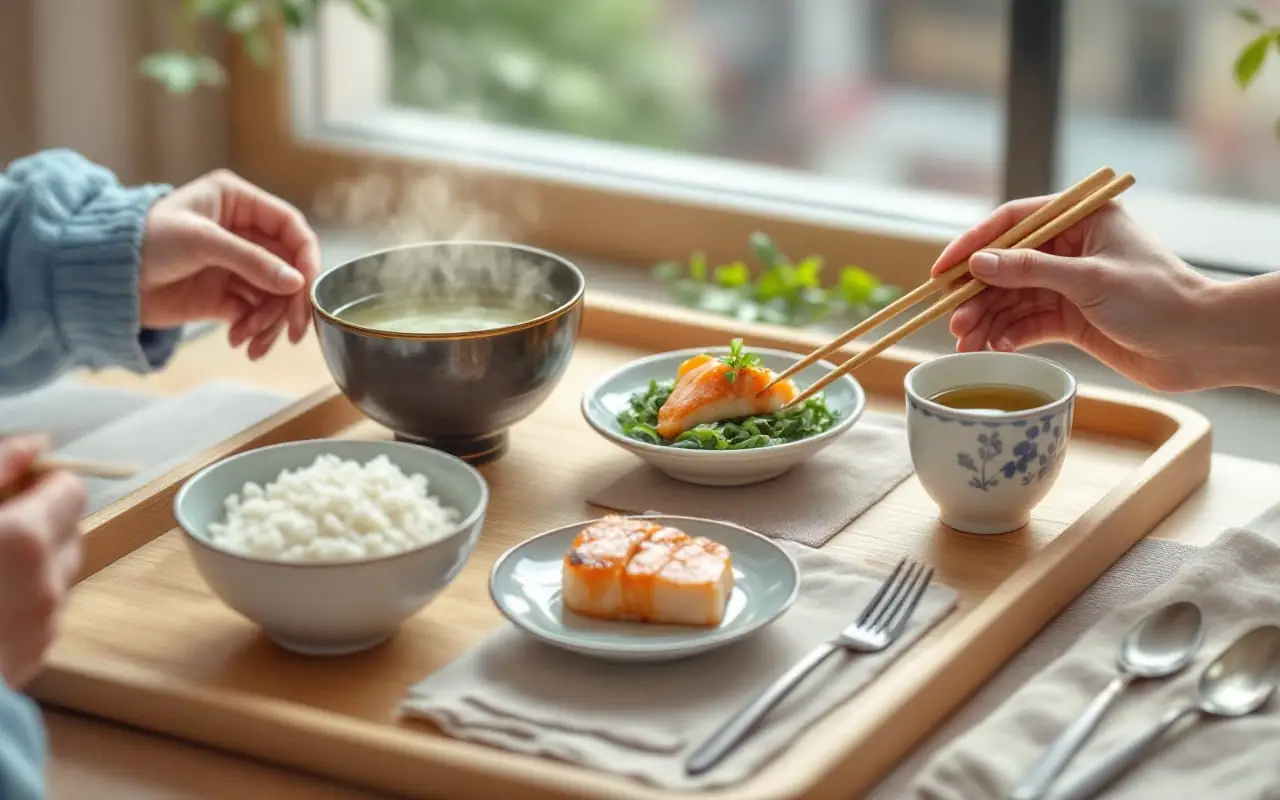
- Eat like a home kitchen. A Japanese home meal of ichiju sansai (one soup, three dishes) is a good template: rice, soup, a piece of fish, tofu or egg, and vegetables. Ekiken's advice to stop before you are full still holds up. Watch the salt, which hides in miso, soy sauce and pickles. Japan's health ministry sets daily salt targets for adults that most people here still exceed, and the World Health Organization recommends less than 5 grams of salt a day.
- Move every day. The WHO recommends that adults get at least 150 minutes of moderate activity a week, such as brisk walking, plus muscle-strengthening work on two or more days. Getting off the bus a stop early, taking the stairs at the station, or joining the rajio taiso (radio exercises) still broadcast every morning all count. Break up long spells of sitting; your neck will thank you, as Tom explains in his piece on stiff shoulders.
- Protect the evening. Some research suggests a warm bath an hour or two before bed helps people fall asleep a little faster. Dim the lights and put the phone down well before you want to sleep.
- Keep warm, safely. Older Japanese advice says to keep the belly and feet warm, and a haramaki (a soft band worn around the middle) is still common. The evidence here is mostly comfort, which is fine. The serious winter point is the bathroom: going from a cold changing room into a hot bath strains the heart and blood pressure, which is a real danger for older people, so warm the room first and keep the water moderate.
- Do not smoke, and drink lightly. These two do more for long-term health than almost anything on a shop shelf.
- Know your numbers. Read your check-up results, take up the cancer screening your town offers, keep vaccinations up to date, and if your blood pressure was borderline, check it again rather than waiting a year.
- Keep a small notebook. A line a day on sleep, energy, bowels and mood turns "I've been tired" into something a doctor can actually work with.
Where the idea goes wrong
Because mibyo describes a gray zone, it is easy to sell into. "You are not ill yet, but you will be" is a powerful sentence, and some people use it to sell things.
The commonest version is the supplement or health drink that promises to correct your constitution, taishitsu kaizen in Japanese advertising. In Japan, products labeled as kinosei hyoji shokuhin (foods with function claims) carry health wording based on evidence the company itself submits; the government does not test or approve them the way it approves medicines. "Natural" does not mean harmless either. In 2024, red yeast rice supplements from a well-known Japanese manufacturer were linked to serious kidney problems, including deaths, and were recalled.
Other warning signs:
- Tests offered outside ordinary medicine, such as hair mineral analysis or machines that claim to read the health of your organs through a hand sensor. These are not validated, and their "results" tend to lead straight to a product.
- Fear without detail. Vague talk of hidden toxins or a weakened body, with no measurement that a doctor would recognize.
- Any program that suggests stopping prescribed medicine for blood pressure, diabetes or cholesterol and replacing it with something natural. That one can do real harm.
- Long, prepaid packages of treatments or products.
Kampo itself can get pulled into this. Mibyo is a central idea in kampo thinking, and some kampo formulas are traditionally used for exactly the tired, chilly, not-quite-well picture. But kampo is medicine, with side effects and interactions, and it belongs in a doctor's or pharmacist's hands, not in a daily routine you design from an advertisement.
A few questions sort out most of these offers. Who profits if I say yes? What is the evidence, and who produced it? What would happen if I did nothing for a month? Would I be comfortable showing this to my doctor?
When "vague" needs a doctor
The real risk of the mibyo idea runs the other way, though. It can make people treat a genuine illness as a matter of constitution or mood and wait too long. Tiredness and feeling generally off can come from anemia, an underactive or overactive thyroid, diabetes, depression, sleep apnea, menopause, a side effect of medicine and, now and then, something more serious. A doctor can test for most of these.
Make an appointment if any of these apply:
- Tiredness that lasts more than a few weeks, or keeps getting worse, despite rest.
- Weight loss you cannot explain.
- Fevers or drenching night sweats.
- Breathlessness or chest discomfort when you exert yourself, palpitations, or fainting.
- Unusual thirst and passing urine much more often.
- A lasting change in bowel habit, blood in your stool or urine, black stools, or difficulty swallowing.
- A new lump, a cough that will not go away, or hoarseness lasting weeks.
- Low mood or loss of interest in things on most days for two weeks or more.
- Loud snoring with pauses in breathing, plus heavy daytime sleepiness.
Some things cannot wait for an appointment. Chest pain, sudden weakness or drooping on one side of the face or body, sudden trouble speaking, severe breathlessness, or a sudden severe headache need emergency care: in Japan, call 119.
Japan's health ministry and the World Health Organization both publish plain guidance on activity, salt and check-ups if you want the official versions. More of our everyday pieces sit under Health & Living.
The one thing I would ask you to keep from all this: mibyo is a reason to pay attention, not a reason to buy something. Pay attention with sleep, meals and walking, with your check-up results, and with a doctor who hears what you have noticed.
The writer
Keiko spent many years at the counter of a family-run pharmacy in Kumamoto that stocked kampo medicines. She writes about kampo, acupuncture and the old idea of yojo, carefully and with the evidence in view.