Waterless and cold air diffusers: how they work and how to choose
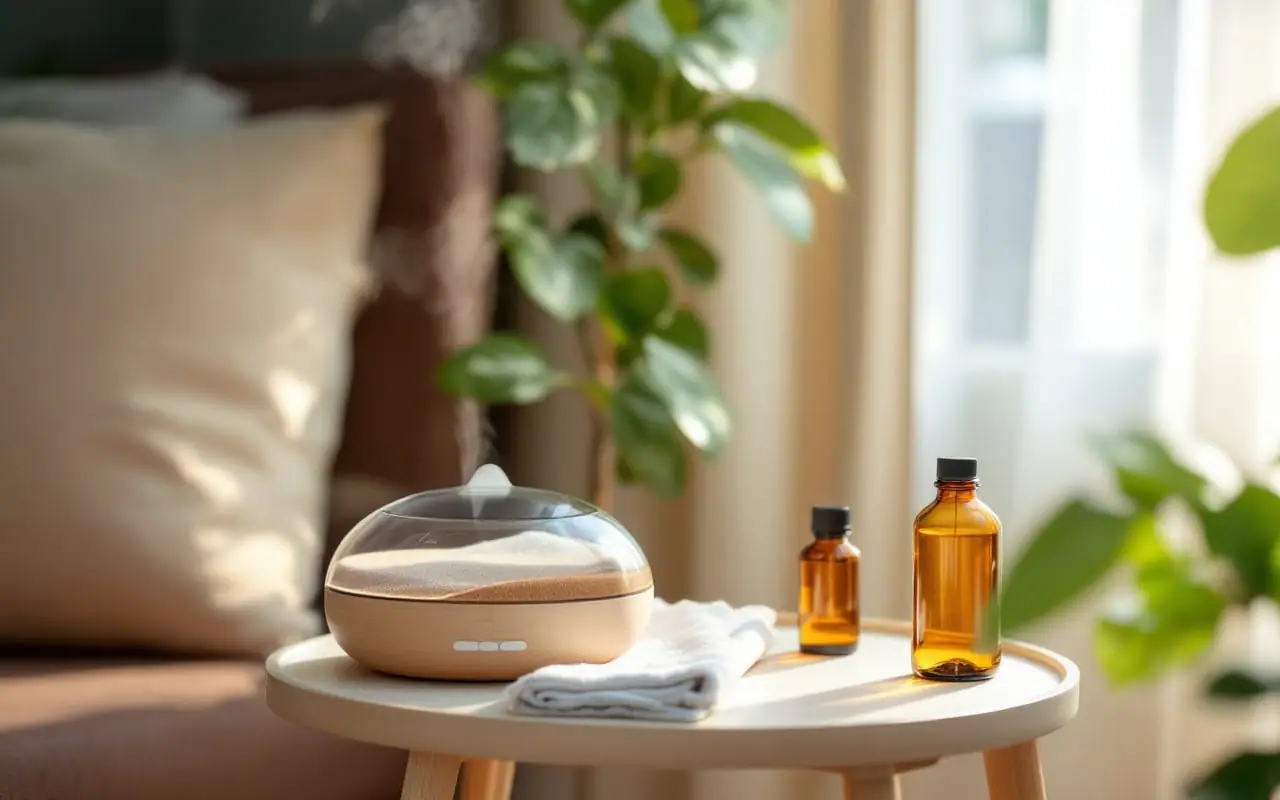
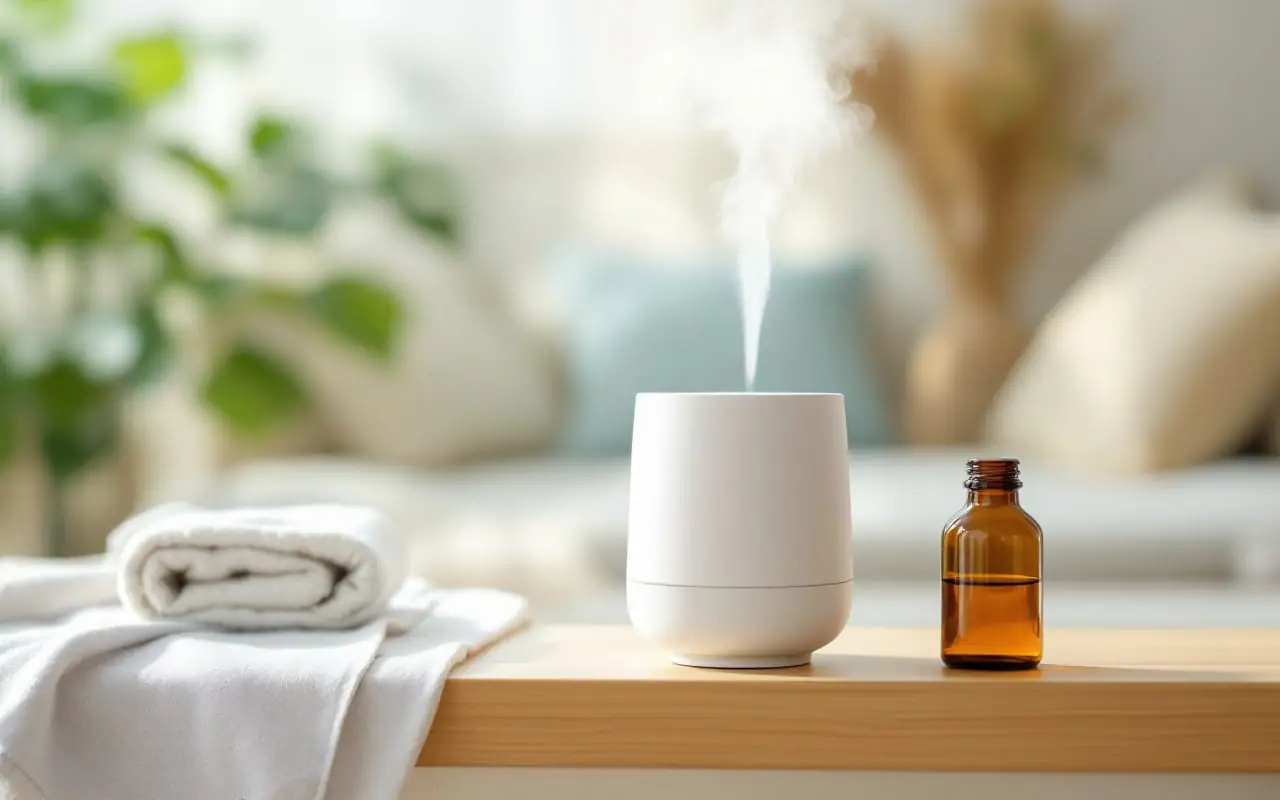
A waterless diffuser has no tank to fill: a glass top, a small base, and oil going in neat. Sellers also call it a cold air diffuser or a nebulising diffuser, and the three names mostly describe one idea, a small pump that turns essential oil into a fine mist using nothing but moving air. It gives a stronger scent than an ultrasonic diffuser, gets through oil far faster, and asks for more care in a home with pets, small children or anyone with asthma.
A note: links to Amazon here are affiliate links. As an Amazon Associate I earn from qualifying purchases.
If you only get one

A waterless nebulizing diffuser
Runs straight from the oil bottle with no water, on a short timer, so a little goes a long way.
Amazon price at 22 Oct 2026, 04:33 UTC: $27.99
Product prices and availability are accurate as of the date/time indicated and are subject to change.
View on AmazonOr, if it suits you better: a small ultrasonic diffuser or a larger ultrasonic diffuser with a timer, both on Amazon.
This guide is for anyone wondering whether a waterless model is worth it: how each type works, what to check before you buy, and when a plain ultrasonic diffuser suits better. In my house the open living room has a nebuliser; the small bedroom upstairs still has a diffuser that runs on water, and for good reason.
How a waterless diffuser works
A nebulising diffuser (sometimes spelt nebulizing) has three parts: a small air pump in the base, a narrow jet, and either a glass reservoir or a bottle of oil fitted on top. The pump pushes a fast stream of air across the end of a thin tube that dips into the oil. Air moving that fast draws the oil up and breaks it into droplets fine enough to hang in the room, while the glass catches the heavier ones and lets them run back down.
Nothing is heated and no water is added, so the room gets the whole oil, top notes and base notes together, much as it smells in the bottle. A heat diffuser drives off the lightest parts first, and an ultrasonic one spreads the oil through a mist that is almost all water.
"Cold air diffuser" is mainly a selling name. Most products sold under it are nebulising designs, from small battery units to large scent machines for shops and hotel lobbies, some fitted to an air-conditioning duct. The large ones put out far more scent than a home needs.
| Nebulising (waterless) | Ultrasonic | Heat (burner or warmer) | |
|---|---|---|---|
| What goes in | neat oil | water plus a few drops | a few drops, often on water |
| Scent | strongest, close to the bottle | soft and diluted | soft, changes as it warms |
| Oil used | the most | 3-5 drops per 100 ml | little |
| Sound | a steady pump hum | almost silent | silent |
| Power | mains or rechargeable battery | mains or USB | candle or mains |
| Cleaning | alcohol through the jet | rinse after use, clean weekly | wipe the dish |
What matters when you choose
Oil use per hour
This is the running cost nobody prints on the front of the box. An ultrasonic diffuser uses 3 to 5 drops in 100 ml of water for a whole session, about a quarter of a millilitre. A nebuliser uses oil by the minute. Where makers publish a figure, it is usually in millilitres per hour on the continuous setting, and one millilitre is roughly 20 drops, four or five times what a small ultrasonic tank needs for a session.
A pulse or intermittent mode (a few seconds of mist, then a longer rest) and an output dial both cut oil use sharply and stop the scent building up. I would not buy a waterless diffuser without at least one of them.
Room size
A nebuliser suits a large or open-plan room with some air moving through it, used in short bursts. In a six-mat room (about 10 square metres), even the lowest setting can be a lot, so use the shortest timer setting with the door open, or choose an ultrasonic diffuser. Drop counts do not apply to waterless models, because you set the strength with the timer and the dial. For ultrasonic tanks, the diffuser drops calculator works out the number for your tank and room.
Noise
The pump makes a steady, low hum, rather like the air pump in a fish tank. With the television on you will not notice it; in a quiet bedroom at night you will. If the diffuser will sit near where you sleep, an ultrasonic one is the quieter machine.
The reservoir and the cleaning
Glass reservoirs are the classic design. Glass does not react with citrus oils the way some plastics can, shows how much oil is left and wipes clean easily, but it breaks if knocked off a shelf. Other models fit straight onto a standard oil bottle, which saves pouring; check which bottle sizes fit.
Thick oils cause most of the trouble. Vetiver, sandalwood, myrrh, patchouli and vanilla extracts can clog the jet, so many manuals say to leave them out or mix a little into a thinner oil. Never put carrier oils such as jojoba or sweet almond in a nebuliser: they block it and go rancid inside. Many manuals suggest running a little rubbing alcohol through the jet every week or two, then letting the parts dry fully with the power off. Rubbing alcohol is flammable, so keep it away from candles and the hob. And do not leave oil sitting in an open reservoir for weeks: essential oils oxidise in air, and oxidised oil smells flatter and is more likely to irritate skin.
Timers, and battery or mains
On a nebuliser a timer is not a luxury. Look for short settings and an automatic switch-off. Mains models can run longer and often have a stronger pump. Rechargeable battery models are small, have no trailing cord for a toddler or a cat to pull, and move easily from room to room. The catch is that a light unit with a full bottle on top is easy to knock over, and a spill is neat oil, which marks varnished wood and some plastics and should be washed off skin straight away with soap and water.
Who shares the air
This matters more than any feature. A nebuliser puts more oil into the air than any other home diffuser, and the droplets settle on furniture, skin and fur. With a cat, a bird, a baby or someone with asthma at home, read the safety section first.
When an ultrasonic diffuser is the calmer choice
A waterless diffuser is not an upgrade for every home. An ultrasonic one is calmer when:
- it will run in a bedroom or a small room with the door mostly shut;
- you share the home with cats, birds, small pets, a young baby or someone with asthma;
- you are still finding out which oils you like and do not want to use them up quickly;
- you want a faint background scent rather than a room that smells of oil as you walk in.
For a bedroom, a small ultrasonic diffuser that switches itself off when the tank runs dry on Amazon is plenty. For a living room where a nebuliser would be too much, a larger ultrasonic diffuser with a timer on Amazon covers the space gently and keeps sessions short without you having to remember. The older guide on how to choose an essential oil diffuser goes through tank sizes and drop counts in detail.
A waterless diffuser makes sense the other way round: a large, well-aired room, nobody sensitive to scent, and a wish for strong scent for a short spell, such as after grilling fish.
The options and what each suits
Choosing oils for a waterless diffuser
Because a nebuliser uses oil quickly and nearly undiluted, it pays to know what you like before you fill it. A six-oil starter set in small bottles on Amazon lets you try several single oils on paper and in short sessions before you commit to a large bottle of one. Thin oils run well: true lavender (Lavandula angustifolia), sweet orange and lemon among them. Mix thick base notes into one of these rather than running them alone.
Sets like this usually include peppermint and eucalyptus. Leave those out of rooms where babies and young children sleep or play, because their main components can affect a small child's breathing. Citrus oils, tea tree and peppermint are among the oils of concern for cats, and rosemary and eucalyptus are on the avoid list for epilepsy. Check every oil against the essential oil safety chart.
Safety: pets, children, asthma and fresh air
- Start low and short. Use the lowest output and the shortest timer setting, about 10 to 15 minutes, with a door or window open. Even on a pulse mode, keep a session to 30 to 60 minutes at most, then switch off for at least as long. Never run a nebuliser overnight or in a closed bedroom.
- Keep pets out of it. Cats clear many essential oil compounds slowly, and droplets that settle on their fur are swallowed when they groom. Birds and small pets are sensitive to anything in the air. I would not run a nebuliser in any room a cat, bird or rabbit uses, and with a dog only in a large, aired room it can leave. Animal poison services such as the one run by the ASPCA list tea tree, citrus, peppermint, pine and ylang ylang among the oils of concern. If a pet drools, paws at its face, walks unsteadily or breathes fast, switch off, air the room and call a vet if the signs do not settle quickly.
- Keep children away from it. No nebuliser in a room where a baby or young child sleeps, and no diffusing at all in rooms a baby under 3 months uses. A reservoir of neat oil is a poisoning risk at toddler height, so keep the diffuser high and stable. If a child swallows oil from a diffuser or a bottle, phone a doctor or a poison advice line straight away, even if they seem well, and do not try to make them vomit. The steps are set out in essential oils around children and pets.
- Ask first with asthma or in pregnancy. With asthma or another lung condition, ask your doctor before you diffuse at all, because strong scents can set off symptoms; if your doctor is happy for you to try, start with an ultrasonic diffuser on a light setting, not a nebuliser. In pregnancy, talk to your midwife or doctor first.
- Switch off at the first sign. A headache, nausea, coughing or stinging eyes mean switch off and open a window. Wheezing, a tight chest, or swelling of the lips or face needs urgent help: call 119 in Japan, or your local emergency number.
Before you buy a waterless diffuser
- A room large and airy enough for it, or an honest plan to use only the shortest setting.
- A timer with short settings and an automatic switch-off.
- A pulse mode, an output dial, or both.
- A reservoir or bottle fitting you can clean, and a manual that explains how.
- A place out of reach of children and pets, on a surface a spill will not ruin.
- An idea of which oils you like, tried on paper first.
How the products on this page were chosen
The diffusers, oils and strips linked here were chosen from their specifications (power source, timer settings, tank size, shut-off), the makers' own information and published reviews. I have not used these particular models, and nothing on this page comes from hands-on trials. Listings change, so check the current timer and power details before you buy.

The writer
Philippa is a British writer who has lived in Japan for many years and has blended essential oils at home for two decades. She looks after the Aroma corner and never writes a recipe without the dilution.