Aroma Corner
essential oils at home, with care
Avocado carrier oil: a rich oil for dry skin, best used in small amounts
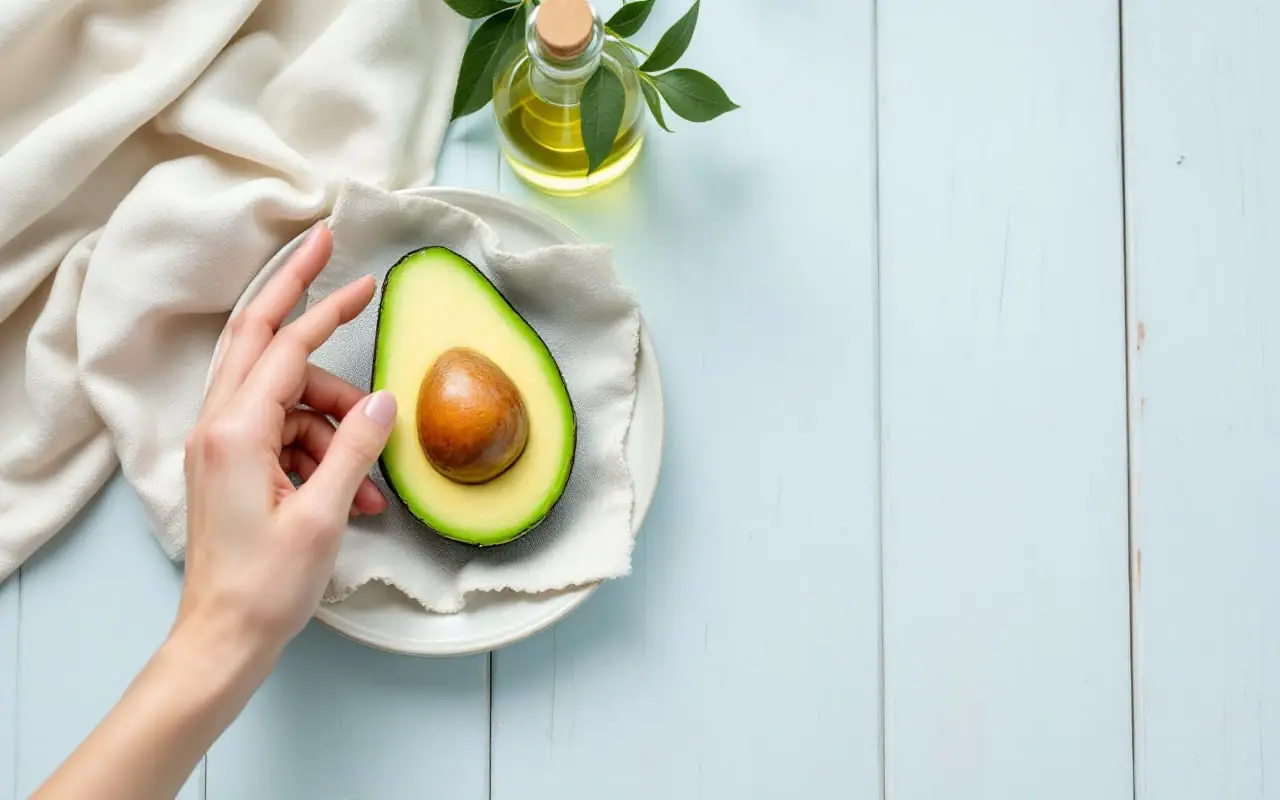
Avocado oil is one of the richest carrier oils in common use. It is thick, slow to sink in and, when unrefined, green and faintly savoury. Alone it is too heavy for a full-body massage, but a little stirred into a lighter oil does good work on dry hands, heels and elbows.
A note on the name
Botanists today call the avocado Persea americana, a member of the laurel family (Lauraceae), which also includes bay and cinnamon. Older aromatherapy lists sometimes print Laurus persea, the name Carl Linnaeus gave it in 1753 when he placed the avocado in the same genus as the bay tree. The botanist Philip Miller moved it into its own genus, Persea, in 1768. Both names mean the same plant.
Unusually for a carrier, the oil comes from the flesh of the fruit rather than from a seed or nut, much as olive oil does.
Cold-pressed or refined
Unrefined oil, sold as cold-pressed or extra virgin, is pressed from the flesh without high heat or chemical solvents. It ranges from deep emerald to green-gold, coloured by chlorophyll and carotenoids, and smells mild, grassy and a little like mushrooms. In a cold room it may turn cloudy or drop a pale sediment, which is normal and clears at room temperature. It keeps less well than refined oil, and its own smell can muddy a delicate essential oil blend.
Refined oil has been filtered, bleached and deodorised. It is pale yellow and nearly odourless, keeps longer, and its high smoke point makes it popular for frying. Refining strips out much of the colour and some of the minor plant compounds.
Either kind works on skin, and a food-grade bottle is fine if the label says pure avocado oil and it smells fresh.
What it feels like on skin
Avocado oil is mostly oleic acid, the same monounsaturated fat that dominates olive oil. It feels rich on skin and leaves a lingering sheen. Used alone it can feel greasy, so it suits bedtime better than the morning. On an oily or spot-prone face it may simply be too heavy.
Like other rich oils, it is an emollient: it softens skin and slows water loss from the surface, which is why it helps dry skin. Claims that it restores elasticity or prevents wrinkles go beyond the evidence. It is not a sunscreen either: a layer of avocado oil does not protect skin from UV, so keep using a proper one.
Why it is usually 10 to 20% of a blend
A lighter carrier gives slip and spreads easily; avocado adds richness without turning the whole blend sticky. Most people settle on avocado as 10 to 20% of the carrier oil. For a 50 ml bottle, that is 5 to 10 ml of avocado and 40 to 45 ml of something lighter. Sweet almond, jojoba and rice bran oil all make good partners.
| Carrier | Botanical name | Feel on skin | Rough keeping time once opened | Notes |
|---|---|---|---|---|
| Avocado | Persea americana | Rich, heavy, slow to absorb | 6-12 months; refined longer | Best at 10-20% of a blend |
| Sweet almond | Prunus amygdalus var. dulcis | Smooth, medium, good slip | About a year | All-purpose massage base; avoid with a nut allergy |
| Jojoba | Simmondsia chinensis | Light, silky, absorbs well | 2 years or more | A liquid wax, very stable; suits the face |
| Rice bran | Oryza sativa | Light, not greasy | About a year | Sold in Japan as rice oil |
| Grapeseed | Vitis vinifera | Very light and thin | About 6 months | Goes rancid quickly; buy small |
| Camellia (tsubaki) | Camellia japonica | Medium, soft, silky | About a year | Traditional Japanese oil for hair and skin |
Keeping times are rough; follow the best-before date and your nose. The essential oil dictionary lists more carriers.
Storage and rancidity
Keep avocado oil cool, dark and tightly capped, and buy an amount you will use within a few months. The fridge is fine, though the oil may cloud there. Oil that has gone rancid smells sharp or bitter, rather like crayons, old paint or stale nuts. Throw it out, since oxidised oil can irritate skin.
Avocado, latex and allergy
People allergic to natural rubber latex sometimes react to certain foods, including avocado, banana, kiwi fruit and chestnut, because the proteins look alike to the immune system. This is called latex-fruit syndrome. Refining removes most of the protein from the oil, but you cannot count on that, and unrefined oil may hold more. If you have a latex allergy, or have reacted to avocado as a food, ask your doctor or an allergy specialist before using avocado oil on your skin.
Everyone should patch test a new blend. Rub a little onto the inner forearm and leave it unwashed for 24 to 48 hours. If you see redness, itching, bumps or swelling, wash it off with soap and water and do not use it. Swelling of the lips, tongue or face, wheezing or trouble breathing after any contact is an emergency: call 119 in Japan, or your local emergency number.
A simple blend for dry hands
This makes 30 ml.
- Pour 24 ml of sweet almond oil (or jojoba or rice bran oil) into a clean, dry bottle.
- Add 6 ml of avocado oil, which is 20% of the carrier.
- If you want a scent, add 6 drops of essential oil in total, about 1%: for example 4 drops of lavender and 2 drops of Roman chamomile. Leave it unscented for children's hands or very sensitive skin.
- Cap, roll gently to mix, and label with the contents and date.
At night, after washing, warm about a quarter of a teaspoon between your palms and work it into the backs of the hands, knuckles and cuticles. Thin cotton gloves overnight help it soak in. Leave out bergamot, lime, lemon and other pressed citrus oils, because hands see a lot of daylight and these oils can burn skin in the sun. Use the blend within two to three months. For a bigger bottle, see the dilution chart.
Most dry, chapped hands improve with regular oiling and gloves for washing up. See a doctor or pharmacist if the skin is cracked and bleeding, weeping, very itchy, spreading, or no better after a couple of weeks, as eczema and contact dermatitis need their own treatment. If you have diabetes, have any cracks or sores on your feet checked rather than treating them yourself.