Eating through Japan's humid summer
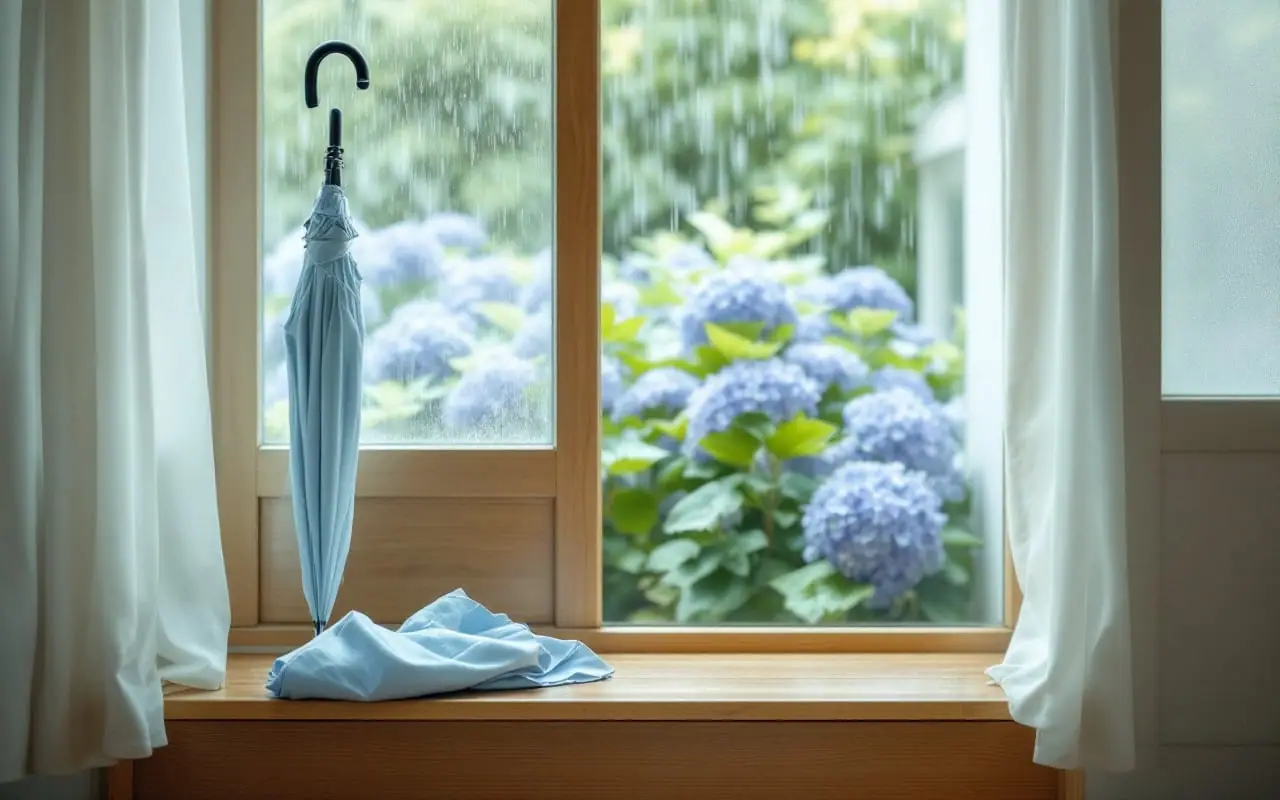
In Fukuoka the rainy season usually lifts sometime in July, and for a day or two the sky looks scrubbed clean. Then summer settles in properly. The air is thick enough to lean on, the cicadas start before six in the morning, and the ten-minute walk to the station leaves a damp patch on your back before the train even pulls in. The Japanese word for this weather is mushiatsui, steamy-hot, and by August people say it to each other the way they might say good morning.
It is the end of August as I write, and the heat has not let go. Many nights are what the Japan Meteorological Agency calls nettaiya (tropical nights), when the temperature never drops below 25°C. Sleep is thin. Appetite fades. Somebody at the next desk sighs that they have natsubate, and everybody nods.
The appetite that goes missing
Natsubate translates roughly as summer fatigue: the tired, heavy, not-hungry feeling that sets in after weeks of heat. It is not a medical diagnosis, and a doctor would point to several ordinary things bundled under one word. Poor sleep on hot nights. Fluid and salt lost in sweat and never quite replaced. The constant swing between a 35°C street and a chilly air-conditioned office, which leaves plenty of people feeling out of sorts. Kampo, Japan's herbal medicine tradition, has its own way of describing this summer heaviness, and my colleague explains the basics in what kampo is. And then there is food. When you are hot and tired you eat less, and what you do eat tends to be cold, plain and starchy.
That last part is the one a home cook can actually change.
Older relatives in Japan will tell you that too many cold drinks "chill the stomach" (onaka wo hiyasu) and that this is the root of summer sluggishness. I have heard it all my life. The honest answer is that there is little good research showing iced drinks harm digestion in healthy people. What is true is simpler. Gulping a large, very cold drink with a meal makes some people feel uncomfortably full, and a day of iced coffee and cold tea can quietly stand in for actual meals. So I do not ban ice. I just do not let it replace dinner. If cold, fizzy drinks leave you swollen after eating, I have written separately about bloating after meals.
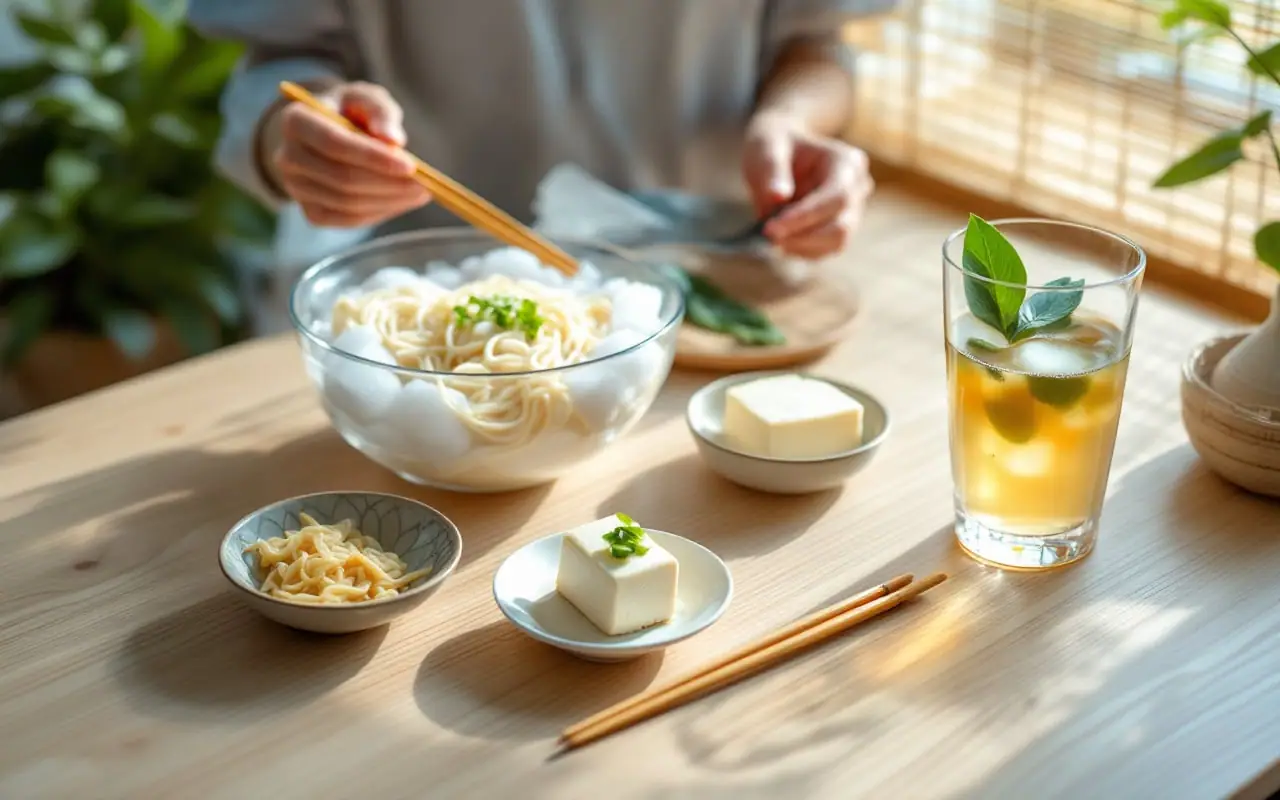
The bigger trap is the noodle bowl. Somen (very thin wheat noodles) served on ice, zaru soba (cold buckwheat noodles with a dipping sauce), hiyashi chuka (chilled ramen noodles with toppings): these are summer's great comfort foods, and I eat them happily. But a plate of somen with dipping sauce is mostly refined wheat and salt. Eat that for lunch four days running and you have had plenty of starch and very little protein, fat or vegetables. By the weekend your body notices.
The fix is not to give up cold food. It is to build cold meals that actually feed you.
Protein is the piece that usually goes missing, and it is easy to add cold. A soft-boiled egg halved over noodles. Chicken breast poached gently, cooled and torn into strips. A can of mackerel, which needs nothing but a squeeze of lemon and some thinly sliced onion. Hiyayakko, a block of chilled tofu, topped with grated ginger, green onion and a pinch of katsuobushi (dried bonito flakes). Edamame, warm from the pot or cold from the fridge. Natto stirred into rice, for anyone who likes it.
Pork has a special place in Japanese summer cooking. It is one of the richer everyday sources of vitamin B1 (thiamine), and every July the magazines recommend it for tired summer bodies. A real shortage of B1 does cause fatigue, but extra pork will not cure tiredness that comes from bad sleep and heat. Still, reishabu, paper-thin pork dipped briefly in simmering water, cooled and laid over lettuce, cucumber and tomato with sesame dressing or ponzu (a citrus and soy dressing), is one of the best things you can eat on a hot evening.
Then there is the Day of the Ox. On doyo no ushi no hi, which usually falls in late July, eating grilled eel is a custom that goes back to the Edo period. The popular story says a scholar suggested it to an eel seller as a way to sell more eel in the heat. Whether or not that is true, the custom stuck. Eel is rich and expensive, more a treat than a strategy, and some families instead eat other foods beginning with "u" that day: umeboshi (salt-pickled plum), udon, and uri, the gourd family that includes cucumber and watermelon.
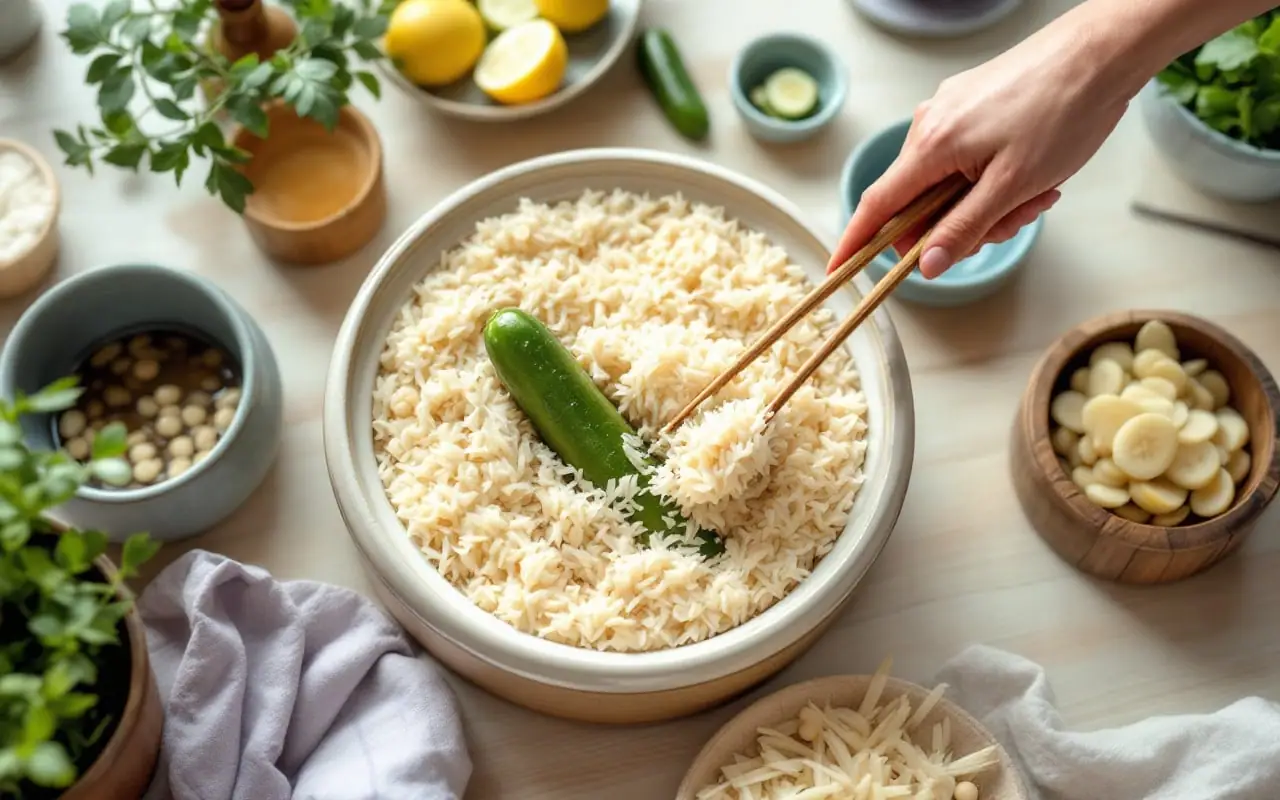
My own favorite summer bowl comes from our neighbors in Miyazaki. Hiyajiru is a cold miso soup: grilled fish flaked and pounded with miso and sesame, thinned with cold dashi (soup stock), then poured over rice with crumbled tofu, sliced cucumber and shredded shiso (perilla leaf). Protein, vegetables, a little salt and something cool to drink, all in one bowl that takes ten minutes once the fish is cooked.
Whatever you make, keep the yakumi close. These are the fresh, sharp aromatics Japanese cooks scatter over cold food: grated ginger, sliced green onion, myoga (a pink ginger bud with a faintly lemony bite), shiso, wasabi, toasted sesame. There is not much research on whether they truly bring an appetite back. In my kitchen, though, a plain bowl with yakumi gets eaten and a plain bowl without them gets pushed around. Sour flavors work the same way for many people: a small dish of sunomono (cucumber and wakame seaweed in sweet vinegar), or sliced tomato with a few drops of rice vinegar. You will find more seasonal cooking in our food and seasons section.
Salt, water and the barley tea jug
In most Japanese homes, summer means a jug of mugicha in the fridge. Roasted barley tea is caffeine-free and cheap, you make it with a tea bag and cold water overnight, and children grow up drinking it by the glass. It is about the most practical summer habit I know. One caution: barley contains gluten, so mugicha is not a safe choice for people with celiac disease.
Japan's health ministry and the environment ministry repeat the same few points every summer, and they bear repeating here. Drink regularly through the day, before you feel thirsty, because thirst lags behind need. The lag gets longer with age, so older people may not notice they are drying out. Do not count on beer at the rooftop beer gardens that open on department stores every summer; alcohol makes you pass more urine, so alternate with water. Tea and coffee still count toward your fluids if you are used to them.
Salt is where summer advice gets muddled. If you are working outdoors, playing sport or sweating heavily for hours, you lose real amounts of salt, and Japanese guidance recommends replacing salt along with water. That is what keiko hosuieki (oral rehydration solution) is for, and partly why grandmothers hand out umeboshi and salted watermelon. On an ordinary day spent mostly indoors, though, normal meals already give most people more than enough. The WHO recommends adults eat less than 5 grams of salt a day, and Japan's national nutrition surveys put the average adult at about double that. Sports drinks are useful on a hard, sweaty day and not great as the all-day drink, because of their sugar.
If you have high blood pressure, heart failure or kidney disease, take diuretics, or have been told to limit fluids, ask your doctor how much to drink in summer and whether salty drinks are right for you. The general advice was not written with you in mind.
The kitchen in a heat wave
Bacterial food poisoning rises with heat and humidity, and Japan's health ministry sums up prevention in three verbs: tsukenai, fuyasanai, yattsukeru. Do not let germs get onto the food, do not let them multiply, and kill them. In plainer terms: clean hands and boards, cold storage, thorough cooking.
Bento need the most care, because they sit for hours. Let rice and cooked food cool completely before you close the lid, since trapped steam turns the box into a warm, damp home for bacteria. Pack an ice pack and keep the bag out of the sun. Leave soft-boiled eggs and mayonnaise salads for cooler months. The umeboshi pressed into the rice is a lovely tradition, and its salt and acid may slow bacteria where it touches, but it does not protect the whole box.
Cooked rice and big pots of food are the other quiet risk. Rice left at room temperature for hours can grow bacteria that make toxins reheating will not destroy. Curry and stew made in a large pot and left on the stove overnight to cool slowly are a known cause of food poisoning in Japan, and the advice is to divide them into shallow containers and refrigerate them promptly.
Then there is raw chicken. In southern Kyushu, torisashi (raw or lightly seared chicken) is a well-loved local dish, and I understand the affection. Japanese health authorities warn every year that raw and undercooked chicken is a leading cause of Campylobacter food poisoning, which in rare cases is followed by a serious nerve condition called Guillain-Barre syndrome. I would steer clear, and I would never serve it to children, older relatives or anyone pregnant.
Most stomach upsets pass in a day or two with rest and fluids. See a doctor if there is blood in your diarrhea or vomit, you have a high fever or severe belly pain, you cannot keep fluids down, diarrhea lasts more than a few days, or you notice signs of dehydration such as very little urine, a dry mouth and dizziness when you stand. Babies, older people, pregnant women and anyone with a weakened immune system should be seen sooner.
When it is more than tiredness
Summer fatigue and heat illness can start out looking alike, which is the reason to take the heat seriously. Japan's environment ministry and weather agency issue heatstroke alerts (netchusho keikai arato) based on the WBGT index, which combines temperature, humidity and sunshine. On alert days, change your plans.
Early signs of heat illness include dizziness, a headache, nausea, muscle cramps, heavy sweating and a sudden, unusual tiredness. Move to a cool place, loosen clothing, cool the neck, armpits and groin with cold packs or wet cloths, and sip water or oral rehydration solution.
Call 119 in Japan, or your local emergency number elsewhere, if someone is confused, slurring their words, cannot drink on their own, has a seizure or loses consciousness, or does not improve quickly once cooled. Do not try to make a confused person drink.
One more thing that surprises visitors. A large share of serious heatstroke in Japan happens indoors, often to older people at home who did not switch on the air conditioner, sometimes to save money and sometimes because they simply did not feel hot. If you have older relatives, ask them about it, and ask again in August.
A short checklist for the next hot week
- Fill the mugicha jug every evening, so there is always something cold that is not sugary.
- Put protein in every cold meal: egg, tofu, fish, chicken, pork or natto.
- Keep ginger, green onion, shiso and myoga in the fridge for yakumi.
- Cool cooked food fast and refrigerate it; no big pots left on the stove overnight.
- Add an ice pack to every bento.
- Save salty drinks and oral rehydration solution for real sweating, not the sofa.
- Run the air conditioner at night, and check that older relatives do too.

The writer
Naoko is a food and nutrition writer from Fukuoka who studied nutrition before she took up writing. She covers gut health and everyday eating, and most of her ideas start at the kitchen counter.