Miso, natto and nukazuke: fermented foods and the gut
Late February is miso-making season in a lot of Japanese kitchens, mine included. Homemade miso is traditionally started in the coldest weeks of the year, a practice called kanjikomi (cold-season making), because the cold keeps unwanted microbes sluggish while the salt and koji get to work. This year I made a batch of mugi miso, the barley miso that is everyday miso in much of Kyushu, a little sweeter and more rustic than the pale rice miso most shops abroad carry. It sits in a crock under the stairs now and will not be ready until late summer at the earliest.
Fermented foods are having a moment outside Japan, and friends overseas ask me whether they should be eating natto for their gut. It is a fair question with a less tidy answer than the headlines suggest. Here is what I have learned, arranged around the questions I hear most. (For more seasonal cooking, see food and seasons.)
What does fermentation actually do to food?
Fermentation is what happens when bacteria, yeasts or molds feed on a food and change it. They break proteins down into amino acids, which is where much of the deep savory taste of miso and soy sauce comes from. They turn starches into sugars and sugars into acids or alcohol. The acids, together with salt, make the food keep.
Much of Japanese fermentation starts with koji: steamed rice, barley or soybeans grown with a mold called Aspergillus oryzae. Koji is the starter for miso, soy sauce, sake, mirin, rice vinegar and amazake (a sweet rice drink). Japan's brewing scientists think so highly of it that the Brewing Society of Japan named it the country's "national fungus" in 2006. Natto uses a different microbe altogether, a bacterium called Bacillus subtilis, and pickles such as nukazuke rely mostly on lactic acid bacteria, the same broad family that sours yogurt.
Are fermented foods the same as probiotics?
No, and this is the most useful distinction in the whole subject.
The definition scientists use, first set out by an expert group for the WHO and the UN's Food and Agriculture Organization, describes probiotics as live microorganisms that, given in adequate amounts, provide a health benefit. That means a specific strain, alive, in a known amount, tested for an effect. A fermented food is simply a food made with the help of microbes. Some still contain plenty of live ones when you eat them. Many do not. And even when they do, those microbes have rarely been tested for any particular benefit.
Plenty of Japanese staples lose their live microbes before they reach you. Most soy sauce is heated after pressing, a step called hi-ire. Most sake is pasteurized. A lot of supermarket miso is pasteurized too, or has a little alcohol added to stop fermentation so the pack does not swell on the shelf. If you want miso that is still alive, look for nama miso (raw miso), often sold in a pack with a tiny valve to let gas escape.
None of this makes pasteurized miso worthless. Fermentation has already changed its flavor and some of its chemistry. It just means that "fermented" on a label is not a promise about gut bacteria.
Does miso soup do anything for the gut?
The microbes in miso are mostly salt-loving species that thrive in a crock, not in a human intestine, and boiling the soup kills most of them anyway. The old advice to stir miso in after turning off the heat, and never let it boil, is mainly about aroma, which really does fade. There is no good evidence that the bacteria in a bowl of miso soup settle in your gut.
What a bowl of miso soup reliably does is make vegetables, tofu and seaweed warm and delicious, and that is not nothing. A soup with daikon, carrot, mushrooms, wakame (a soft seaweed) and tofu brings fiber and protein along with the miso, and fiber is something gut bacteria genuinely feed on.
Studies in Japan that look at miso and health are mostly observational and hard to read, because people who drink miso soup every day differ from those who do not in many other ways. Some Japanese researchers have argued that miso raises blood pressure less than the same amount of plain salt, but most of that evidence comes from animal studies, and the question is far from settled.
The salt itself is not in doubt. A typical bowl carries roughly 1 to 2 grams, depending on the miso and how much you use. The WHO recommends adults keep under 5 grams of salt a day, and Japan's own targets, while a little higher, are still well below what most adults here eat. My compromises: one bowl a day rather than three, more vegetables and less miso in each bowl, and a properly made dashi (stock from kombu and bonito), which makes a smaller spoonful of miso taste like plenty.
What about natto?
Natto is whole soybeans fermented with Bacillus subtilis var. natto, which gives the beans their strong smell and their famous sticky strings. Growing up in Fukuoka, I did not see it at breakfast every day. It has long been more of a Kanto and Tohoku habit, though you can buy it anywhere in Japan now.
The natto bacterium forms spores that survive stomach acid better than most bacteria, and small studies suggest at least some make it through the gut alive. Whether that does anything useful for people is not yet clear. What is clear is that natto is a good food: protein, fiber, and a great deal of vitamin K2.
That vitamin K is the most important safety point in this whole piece. Warfarin, a widely used blood thinner, works by blocking vitamin K, and natto contains enough to weaken its effect. People in Japan who take warfarin are routinely told by their doctors and pharmacists not to eat natto at all. If you take warfarin, follow that advice. Newer blood thinners do not interact with vitamin K in the same way, but ask your pharmacist rather than assume. Nattokinase supplements, sold on the strength of natto's reputation, are a separate product altogether, and anyone on blood thinners should talk to a doctor before taking them.
Natto allergy is uncommon but has an odd feature worth knowing. Reactions have been reported many hours after eating, sometimes in the middle of the night, which makes the cause easy to miss. Japanese allergy researchers have noticed it more often in surfers and divers, possibly linked to jellyfish stings. Hives, swelling or trouble breathing after natto, even if delayed, needs a doctor, and trouble breathing needs emergency help.
If beans already make you gassy, start with half a pack. I go through the usual reasons in bloating after meals.
And nukazuke?
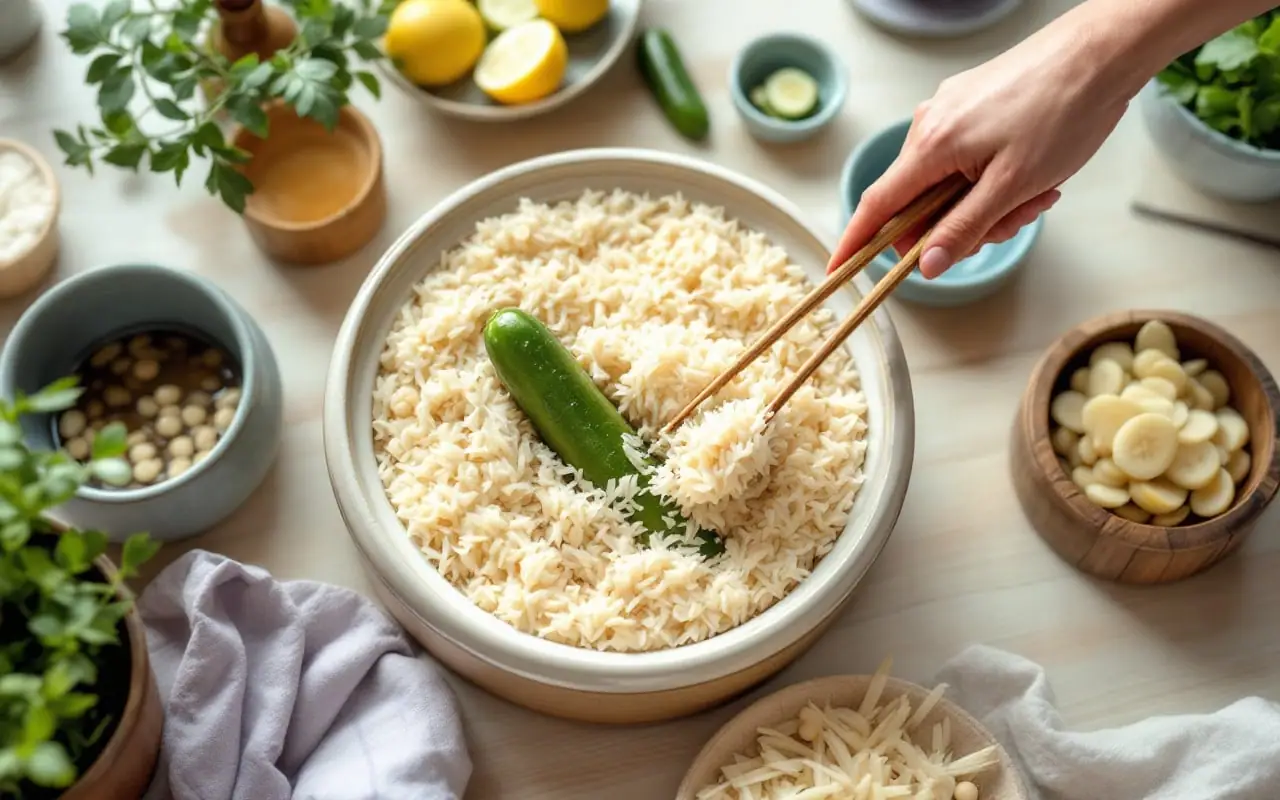
Nukazuke are vegetables pickled in a nukadoko, a bed of fermented rice bran mixed with salt and water. Cucumbers, eggplant, daikon and carrots are buried in it for anything from a few hours to a couple of days and come out sour, salty and crisp. The bed has to be turned over by hand every day, which keeps the balance of microbes right and gives the cook unmistakable hands. Some families keep the same bed going for decades. In February mine is sleepy and slow; in summer it wants stirring morning and night.
Homemade nukazuke eaten fresh does contain live lactic acid bacteria. The vegetables also pick up vitamin B1 from the bran, and Japan's standard food composition tables show a nukazuke cucumber carrying several times the B1 of a raw one. Be aware, though, that many shop pickles are not fermented at all. Lightly pickled vegetables sold as asazuke are usually just soaked in a seasoned liquid, and commercial pickles are often pasteurized. If live cultures matter to you, homemade or a small local maker is the surest way to get them.
Like miso, nukazuke is salty. It is meant as a few slices beside a bowl of rice, not a side salad.
What does the research really say?
Interest is high and solid evidence is thin. Most studies of fermented foods are small, short or observational.
The study quoted most often came from Stanford University in 2021. About three dozen healthy adults were asked to eat either more fermented food or more fiber for ten weeks. The fermented food group, eating several servings a day of things like yogurt, kefir, kimchi and kombucha, ended up with a more varied gut microbiome and lower levels of some inflammation markers. It is an interesting result. It was also small and short, and it did not include miso, natto or nukazuke.
Specific probiotic strains have reasonable evidence in a few situations, such as reducing diarrhea linked to antibiotics in some people, but that evidence is about tested products, not pickles. The US National Center for Complementary and Integrative Health keeps a clear, plain-language summary of where probiotic research stands.
As for Japan's long life expectancy, which people love to credit to miso and natto, there are many other plausible explanations: universal health insurance, low rates of obesity, plenty of fish and vegetables, a lot of everyday walking. Japan also spent decades persuading people, especially in the salt-loving northeast, to cut down, because diets heavy in salted and pickled foods were linked to stroke and stomach cancer. The traditional diet was never all good news.
Who should be careful?
- Anyone taking warfarin, with natto.
- People with high blood pressure, kidney disease or heart failure, and anyone told to limit salt: miso, pickles and soy sauce add up fast.
- People taking an older type of antidepressant called an MAOI, who are told to limit aged and fermented foods such as miso and soy sauce because of a substance called tyramine.
- Anyone with a weakened immune system, for example during chemotherapy, who should ask their care team about unpasteurized and live-culture foods.
- People with a soy allergy, and anyone who has had a delayed reaction after eating natto.
When is it a doctor question, not a food question?
Fermented foods are food. They will not fix a gut problem that needs medical care, and adding natto to breakfast can quietly delay a visit that should happen. See a doctor if you notice blood in your stool or vomit, black stools, weight loss you cannot explain, trouble swallowing, vomiting that keeps coming back, severe belly pain or a fever, or a change in your bowel habits that lasts more than a few weeks. The same goes if you have been trying fermented foods or probiotics for a month for a nagging symptom and nothing has changed. Your annual check-up is a good moment to raise it, and it is also where your blood pressure gets measured; there is more on that in our guide to health check-ups in Japan.
How I would start
Treat fermented foods as part of meals, not as medicine. A small bowl of miso soup crowded with vegetables. Natto over rice with green onion a few mornings a week, if you are not on warfarin. Three or four slices of nukazuke in place of a heap of salty shop pickles. Eat them because they taste good and make vegetables easy to love, and let the research catch up in its own time.

The writer
Naoko is a food and nutrition writer from Fukuoka who studied nutrition before she took up writing. She covers gut health and everyday eating, and most of her ideas start at the kitchen counter.