Helichrysum essential oil: what immortelle is and how to use it
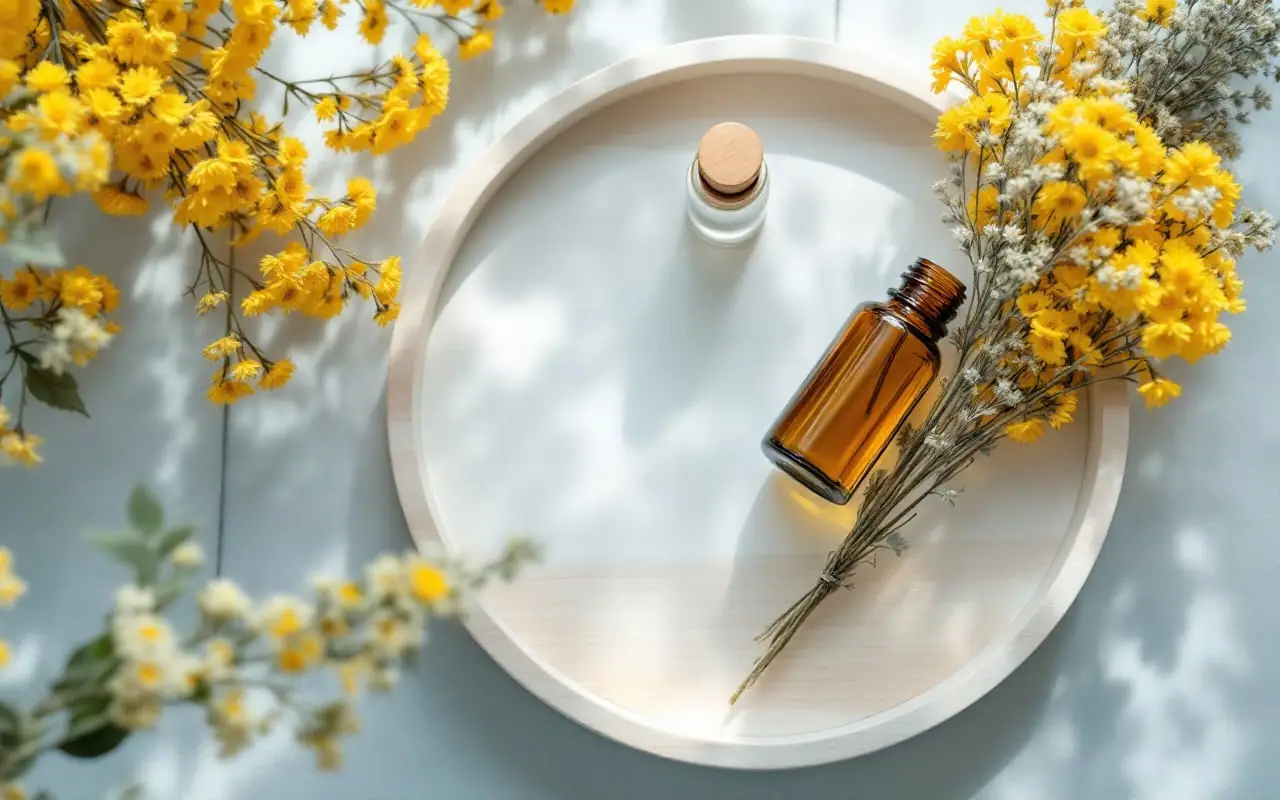
Helichrysum essential oil, often sold as immortelle or everlasting, is steam distilled from the flowering tops of Helichrysum italicum, a low, silver-leaved shrub of Mediterranean hillsides. It smells of honey, warm hay and dried fruit with a faint curry note, and people mostly buy it for skin: bruises, scars, and dry or older skin. It is one of the more expensive oils on the shelf, and the research in people is very thin. These are the questions I am asked about it most, roughly in the order people ask them.
What plant does helichrysum oil come from?
Helichrysum italicum belongs to the daisy family. The genus has several hundred species, but the oil sold for aromatherapy is almost always this one, sometimes with a subspecies on the label. Crush a leaf and you will see why gardeners call it the curry plant, although it has nothing to do with curry; the curry leaves of Indian cooking come from a different plant altogether. The yellow flower heads dry without losing their shape or colour, which is where the names everlasting and immortelle come from.
The name causes one mix-up in Japan. The papery strawflowers sold as helichrysum in garden centres and dried-flower shops here are another plant, now called Xerochrysum bracteatum. They are lovely in a vase and are not the source of the oil.
Most helichrysum oil comes from Corsica, from the Balkans (Croatia and Bosnia and Herzegovina in particular) and from Italy. Corsican oil is the one perfumers prize. It tends to be rich in neryl acetate, which gives a sweeter, fruitier scent, while Balkan oils often carry more of the sharper compounds alpha-pinene and gamma-curcumene. Neither is better for home use, but they smell different, and the origin should be on the label. There are also helichrysum oils from Madagascar and South Africa, made from other species with quite different chemistry. If the label names another species, it is not the oil this page describes.
Why is it so expensive?
The plants give very little oil. The flowering tops are cut once a year in high summer, and it takes a great deal of plant material to fill one small bottle, so 5 ml of helichrysum often costs several times what 10 ml of true lavender does.
Fashion made it worse. When helichrysum became popular in the 2010s, wild plants in the Balkans were picked hard, farmers there planted large new fields, and the price swung up and down for years afterwards. A supplier who can tell you whether the oil comes from wild or farmed plants, and from which harvest, deserves your custom over one who cannot.
What does it smell like?
Strong. Straight from the bottle it is honeyed and herbal, with that curry edge. On a paper blotter it settles over an hour or two into something warmer, closer to dried apricots and hay. Many people love it at first sniff and a few find it medicinal. Because it is so intense, a single drop changes a whole blend.
Is helichrysum oil good for bruises and scars?
Here is the honest part. Helichrysum has a long history in Mediterranean folk medicine, mostly as teas and preparations of the whole plant rather than distilled oil. Laboratory work, in cells and in animals, has found anti-inflammatory and antimicrobial effects from the oil and from plant extracts. Some of the most studied compounds come from those extracts and are too heavy to distil, so their results do not carry over to the oil in your bottle.
In people, I know of no good-quality trials of helichrysum oil on bruises or scars. Its reputation rests on the experience of aromatherapists and a few small reports without comparison groups. That does not mean it does nothing. It means nobody has shown how much it does, and an ordinary bruise fades on its own within two weeks or so.
What I would do with a bruise, such as the shin you catch on the corner of a low table in a tatami room:
- In the first day or two, cool it: a cold pack or a bag of frozen peas wrapped in a cloth, for up to 20 minutes at a time, and rest and raise the limb if you can. This is the standard advice you will also find on the NHS website at nhs.uk.
- After that, if you enjoy the ritual, massage a 2 percent blend gently around the area once or twice a day. That is 4 drops of helichrysum in 10 ml of carrier oil.
- Keep it off broken skin, grazes and open wounds.
For a scar, wait until the wound has fully closed and any scab has gone. Gentle daily massage with a plain oil or an unscented moisturiser, plus sun protection, are the parts with the most support behind them. Adding helichrysum at 1 percent is a pleasant extra, not a treatment.
When is a bruise a reason to see a doctor?
- Bruises that appear without any knock you can remember, or that come up very easily or often
- Bruising together with nosebleeds, bleeding gums or unusually heavy periods
- Severe pain or swelling, or trouble moving the limb or putting weight on it, which can mean a broken bone
- A bruise that is still not fading after about four weeks
- Any unexplained bruising while you take blood thinners
- A knock to the head: get urgent help for vomiting, drowsiness, confusion, a worsening headache or changes in vision
Scars that become raised, spread beyond the original wound, itch badly or hurt are worth showing to a doctor, as is any wound that turns hot, red and swollen or starts to ooze.
How much should I use?
Many shops sell helichrysum already diluted, often at 5 or 10 percent in jojoba, which makes sense for an oil this costly. It does change the arithmetic, so here are both versions for a 10 ml blend, counting 20 drops to the millilitre.
| Use | Strength | Neat helichrysum, in 10 ml carrier | A 10% dilution, topped up to 10 ml with carrier |
|---|---|---|---|
| Face oil | 0.5-1% | 1-2 drops | 10-20 drops (up to 1 ml) |
| Body, small area, most days | 1-2% | 2-4 drops | 20-40 drops (1-2 ml) |
| Bruise, a few days only | up to 3% | up to 6 drops | up to 3 ml |
With a 5 percent dilution, double the amounts in the last column. Do not use a 10 percent dilution straight from the bottle: that is ten times the usual face strength and more than I would put on even a single bruise. The dilution calculator does the sums for other bottle sizes, and a 10 ml glass roller bottle keeps a bruise blend handy by the front door. In a bath, helichrysum is mostly wasted, but if you want it there, mix 2 or 3 drops into a tablespoon of unscented bath dispersant first.
Who should be careful with helichrysum?
- People allergic to plants in the daisy family, such as ragweed, chamomile, arnica or chrysanthemum. In Japan, that includes anyone who reacts when handling kiku (chrysanthemums) at the florist or at the family grave. Patch test on the inner forearm and wait 24 to 48 hours.
- Anyone on blood thinners. Some aromatherapy books claim helichrysum "thins the blood" or "dissolves bruises", and there is no good evidence either way. If warfarin or a similar medicine is behind your bruising, the bruise needs a doctor's eye rather than an oil, and a pharmacist can tell you whether anything you put on your skin matters.
- Pregnancy and breastfeeding. No specific hazard is known, but there is almost no safety data either. Many aromatherapists leave it out in pregnancy; ask your midwife first.
- Children. Nothing marks helichrysum as especially risky, but I keep it off babies entirely and use no more than 0.5 to 1 percent for children over about two, for short spells only.
- Pets. Cats clear many plant compounds poorly. Never put oils on a pet, and keep blends out of reach of paws and teeth.
Never swallow helichrysum oil, whatever a seller suggests about "internal use". If some gets in an eye, rinse with clean running water for at least 10 minutes. If anyone swallows it, contact a doctor or poison information service, and call 119 in Japan (or your local emergency number) for drowsiness, choking or trouble breathing. Any rash that spreads or blisters is a job for a pharmacist or doctor.
How do I choose a good bottle?
- The full Latin name, Helichrysum italicum, ideally with a subspecies.
- The country of origin and, if possible, the harvest year.
- If it is diluted, the percentage and the carrier. "Helichrysum in jojoba" with no figure is not enough.
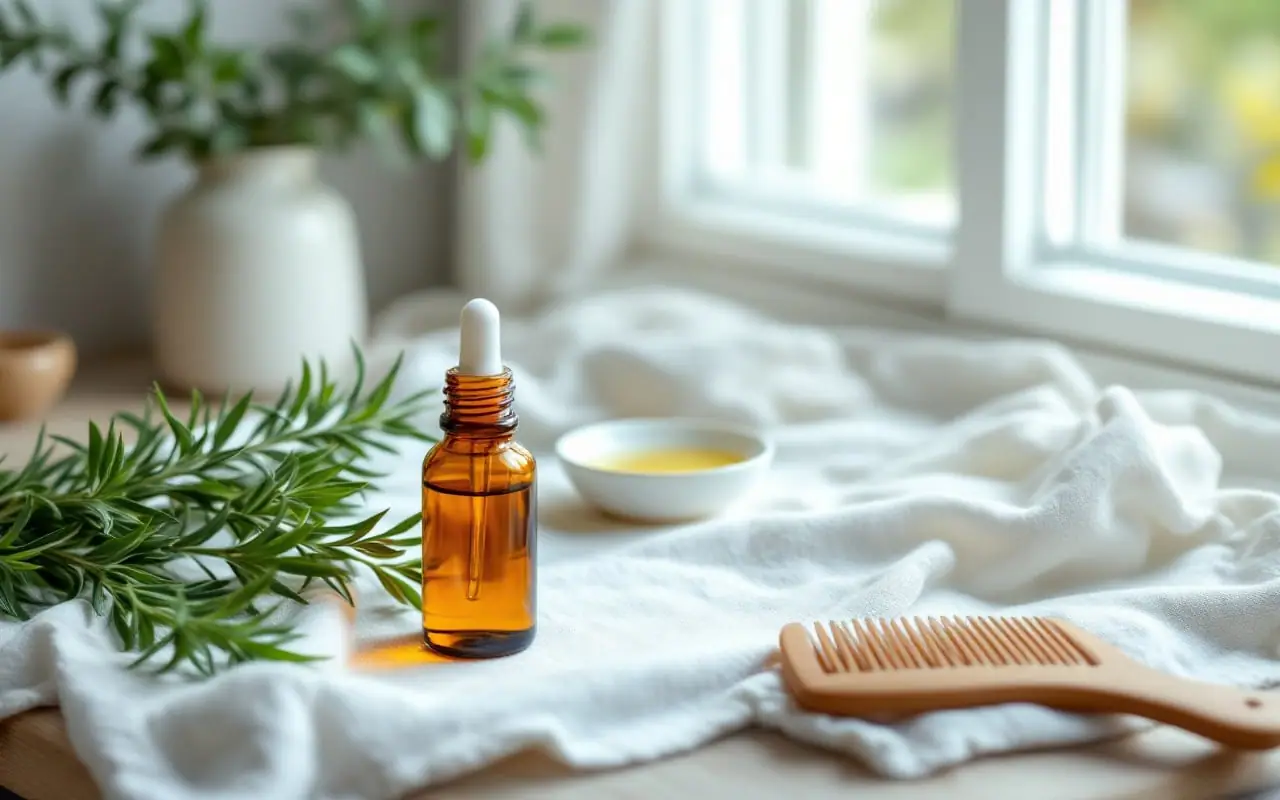
- Dark glass, a dropper insert and a small size. Most people use it a drop at a time.
- A price that makes sense. A large bottle of "pure helichrysum" for the price of lavender has been cut with something, often cheaper related species, other oils or an undeclared carrier. Some sellers will send a gas chromatography report for the batch, and those who offer one are more likely to be selling the real thing.
A small bottle of helichrysum oil, either neat or already diluted in jojoba, will last a long time kept cool, dark and tightly capped.
What blends well with it?
Helichrysum is bossy, so let it be the smallest part of any blend.
- Lavender and Roman chamomile, for a gentle body oil
- Frankincense, a classic partner in skin blends (more in my frankincense profile)
- Geranium or rose, for a floral face oil
- Sweet orange or bergamot FCF, to lift the honeyed note
- Cypress, for a fresh leg-massage blend
The guide to oils that blend well has more pairings. My rule for helichrysum is the one I use for any costly oil: buy small, dilute well, and keep it for the jobs you enjoy using it for, without asking it to do what a cold pack, a little time and, when the warning signs are there, a doctor can do.

The writer
Philippa is a British writer who has lived in Japan for many years and has blended essential oils at home for two decades. She looks after the Aroma corner and never writes a recipe without the dilution.