Reed diffusers vs electric diffusers: how to choose
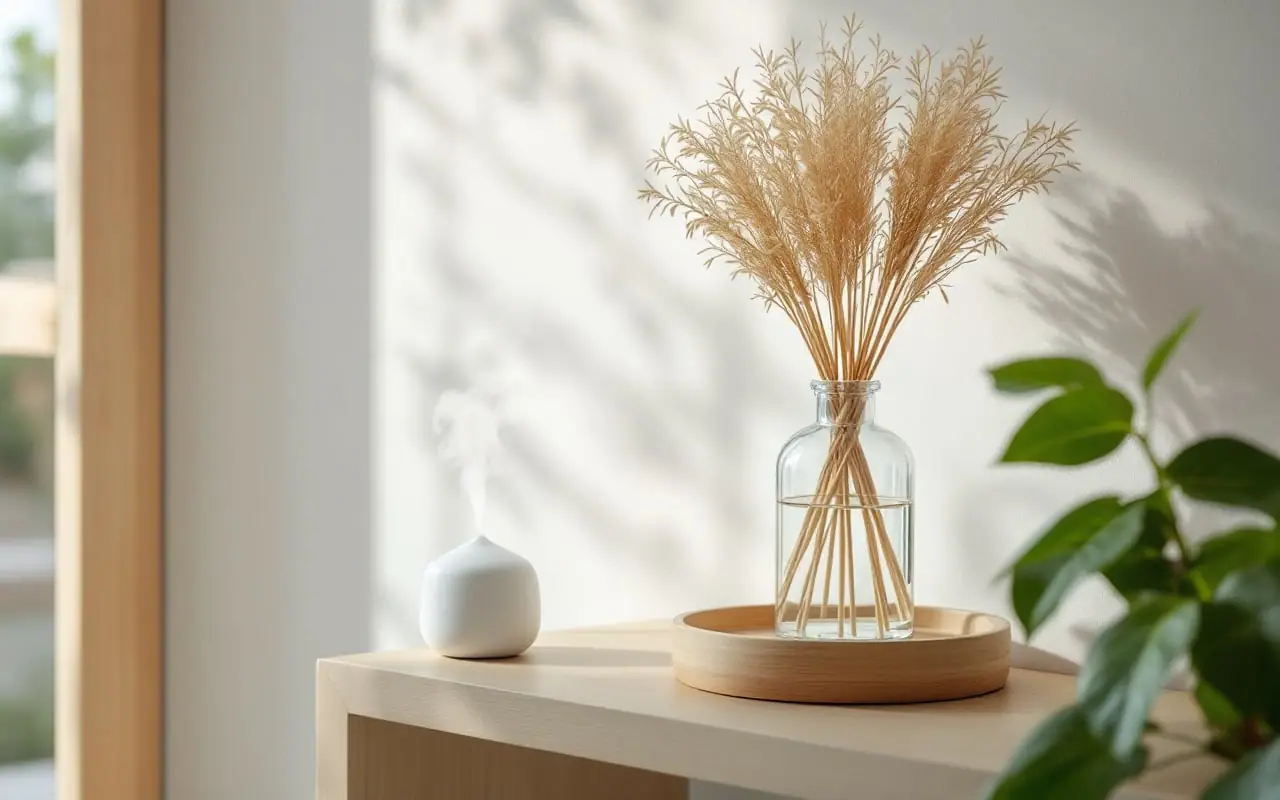
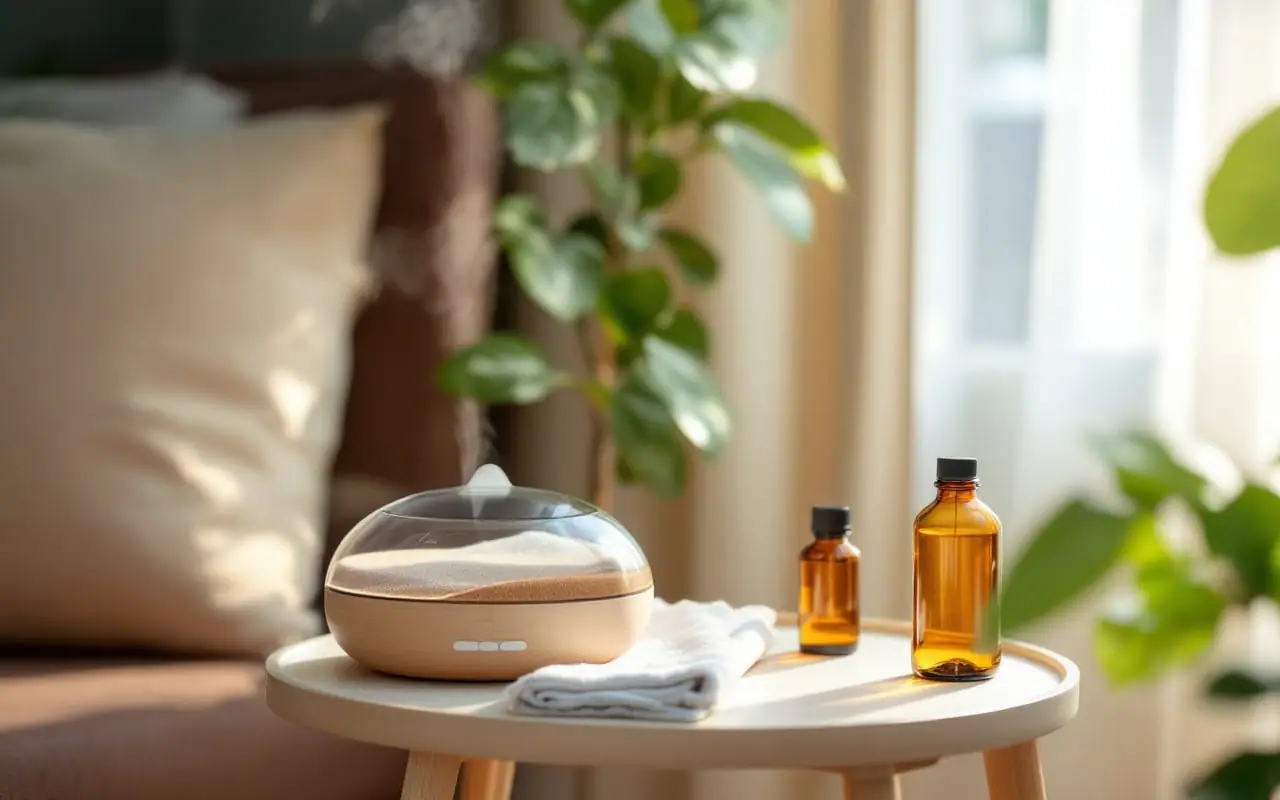
A reed diffuser is a bottle of scented liquid with a fan of thin sticks standing in it. The sticks draw the liquid up and it evaporates from their tips all day and all night, with no plug, no water and no switch. An electric diffuser uses power instead: an ultrasonic model shakes water and a few drops of essential oil into a cool mist, and a nebulising model (sold as a nebulizer in American shops) breaks neat oil into a fine vapour. Both put scent into a room. They suit different rooms, and quite different households.
So, reed diffuser or electric diffuser? Reeds suit small spaces such as the genkan (the entrance hall where shoes come off), a toilet or a washroom, where a faint, steady background scent is all you want and nobody small or furry is likely to knock the bottle over. An electric diffuser suits a living room, or a bedroom before you go to sleep, where you want a clearer scent for half an hour and then fresh air. If you share your home with a cat, a crawling baby or someone with asthma, the off switch matters more than anything else on this page.
If you have already settled on something electric, my guide to choosing an essential oil diffuser goes further into the different models.
What matters when you choose
- How strong you want the scent, and how far it should reach. A reed diffuser scents the air close to the bottle: plenty for a toilet room or a genkan, faint in a living room. An ultrasonic diffuser fills a bedroom or a six-mat room (about 10 square metres) without trouble. A nebulising diffuser is stronger again, and can be too much for a small space.
- Whether you can switch it off. Reeds keep releasing scent while you sleep and while you are out. Electric diffusers have an off switch, and most have a timer. For anyone sensitive to smells, that is the real difference.
- Who else breathes the air. Cats are the special worry, because their livers clear many essential oil compounds slowly, and droplets settle on fur that they then lick. Birds have very efficient lungs and should not share scented air at all. Babies, people with asthma and anyone prone to perfume headaches do better with short sessions than with a scent that never stops.
- Where it will stand. A reed bottle holds concentrated liquid. Knock it over and you have neat oil on the floor, on the cat, or on a varnished table, which it can mark for good. In Japan, think about earthquakes too: a tall bottle near the edge of a shelf will not survive a decent shake. Electric diffusers need a socket or USB port close by, and they are full of water.
- What it takes to keep going. Reeds use liquid continuously, so a bottle you only notice for an hour a day still evaporates for twenty-four. You will also replace the reeds every refill or two. An ultrasonic diffuser uses a few drops a session, but needs rinsing after use and a proper clean each week. A nebulising diffuser gets through neat oil quickly.
- The season. An ultrasonic diffuser adds a little moisture, welcome in a dry winter on the Pacific side of Japan and less so during tsuyu (the early-summer rainy season), when reeds or a waterless diffuser make more sense. Reeds also empty noticeably faster in summer heat.
Reed or electric at a glance
| Reed diffuser | Ultrasonic diffuser | Nebulising diffuser | |
|---|---|---|---|
| How it works | Reeds wick scented liquid up to evaporate from the tips | A vibrating plate turns water and oil into a cool mist | A small pump breaks neat oil into a fine vapour, no water |
| Scent strength | Soft, close to the bottle | Moderate, fills a room | Strong, fills a larger room quickly |
| Control | None: always on | Timer, and switches off when dry | Timer and on-off cycles on most models |
| Oil use | Steady, day and night | 3-5 drops per 100 ml of water | High, neat oil |
| Upkeep | Turn reeds weekly, new reeds each refill | Empty after use, clean weekly | Clean the glass with alcohol now and then |
| Main risks | Spills of concentrated liquid, reeds in mouths, oil on fur | Water near sockets, mist settling on pets | Strong vapour, too much for small rooms |
| Suits | Genkan, toilet, washroom, a quiet shelf | Living room, bedroom before sleep | Larger rooms, short sessions |
The options
Making your own reed diffuser
If you want to know exactly what you are breathing, mixing your own reed diffuser is simple. You need a bottle, a base liquid, essential oils and fresh reeds.
- Pick the bottle. Glass, with a narrow neck: a smaller opening means slower evaporation and less to spill. Some plastics soften or cloud in contact with essential oils, so avoid plastic. You can buy an empty glass reed diffuser bottle, or reuse a small glass vase with a narrow mouth.
- Choose the base. Commercial reed bases are solvent mixtures made to travel up a reed. At home, fractionated coconut oil works, thinned with a little alcohol so it wicks freely. In Japan, most home recipes use musui etanoru (anhydrous ethanol), sold in drugstores for cleaning. Skip water, which does not mix with essential oils, and heavy kitchen oils such as olive, which barely move up a reed and go rancid.
- Measure the oil by spoon, not drops. For a gentle 10 percent blend in a 100 ml bottle, use 80 ml fractionated coconut oil, 10 ml alcohol and 10 ml essential oil. Ten millilitres is two teaspoons, roughly 200 drops, which is why counting drops is hopeless here. For a stronger scent go up to 15 or 20 percent, and no further: more oil mostly means a more concentrated liquid in the house, not a nicer room.
- Add the reeds. Three to five suit a toilet or genkan; six to eight suit a larger room. More reeds mean more scent and a bottle that empties sooner. Rattan works because it is full of fine channels running the length of the stick; bamboo skewers, with their solid joints, hardly wick at all. When the old ones clog, you can pick up a pack of natural rattan reeds.
- Turn them, but not too often. Leave the reeds a few hours to soak through, then turn them over once so the wet ends are at the top. After that, once a week, or when the scent fades. Do it over the sink with a paper towel underneath and wash your hands afterwards, because the drips are neat blend.
- Replace the reeds when turning no longer helps. Rattan fills with dust and the heavier parts of the oil and simply stops drawing. There is no good way to clean reeds, and old ones carry the old scent, so start fresh with each new blend.
Light citrus and mint notes leave first, so a reed blend made only of sweet orange smells lovely for a few days and then of very little. A base note, such as cedarwood, slows things down and holds the blend together; my notes on blending factors explain top, middle and base notes. Keep very thick oils such as vetiver, sandalwood or myrrh to a small share, or the reeds clog within weeks.
Label the bottle with the oils, the strength and the date. Stand it on a saucer or small tray on a low, stable surface, away from the edge, direct sun, heaters and candles (the alcohol is flammable), and add a non-slip mat underneath if you live with earthquakes.
Getting more from an electric diffuser
With an ultrasonic diffuser, the usual guide is 3 to 5 drops per 100 ml of water, and fewer in a small room. The diffuser drops calculator works it out for your tank and room size. Run it for 30 to 60 minutes, then switch off and open a window for a while. Empty the tank after each use and clean it weekly as the maker suggests. Japanese tap water is soft in most areas, so the white dust that hard water leaves on furniture (familiar to anyone from south-east England) is rarely a problem here.
A nebulising diffuser needs a lighter hand. Most run in on-off cycles; choose the shortest. Use it in rooms people and animals can leave, and keep thick oils out of the glass. Keep any diffuser on a stable surface, cord out of reach.
When scent in the air is not a good idea
- Babies. No diffusing in a room where a baby under about 3 months sleeps or spends time, and no reed bottles anywhere a crawling or climbing child can reach. A reed sucked like a lolly is a real route to poisoning.
- Cats, birds and small caged pets. Reeds knocked over by a cat mean neat oil on fur and paws, which is a vet emergency. Diffuse only where animals can walk away, and never in a room with a bird. My guide to essential oils around children and pets has the oils of most concern and what to do if something goes wrong.
- Asthma. Strong scents set off coughing or wheezing in some people. Ask your doctor before diffusing, and stop at the first tight chest. An oil never replaces an inhaler.
- Headaches. A scent that never stops is the usual reason people tell me a reed diffuser gives them headaches. Fewer reeds, a weaker blend or a different room often fixes it.
If anyone swallows reed diffuser liquid or essential oil, do not make them vomit. Call for poison advice at once even if they seem well, and call 119 in Japan (or your local emergency number) for coughing, choking, drowsiness, trouble breathing or a fit. If a wheeze or tight chest does not settle quickly in fresh air, or lips or face start to swell, treat it as an emergency. And frequent headaches, or a cough that has lasted three weeks, deserve a doctor's appointment rather than a change of scent.
The one question to ask first
Before you buy anything, ask who will be in the room when you are not paying attention. If the answer is shoes, coats and the occasional visitor, a reed diffuser is a simple, quiet choice. If it includes a cat, a toddler or someone asleep with asthma, choose the device with a switch and a timer, or go without.
How the picks on this page were chosen
The product types here were chosen from specifications, materials, makers' published information and published reviews, matched to what each job needs: an automatic shut-off and a modest tank for an ultrasonic diffuser, a glass reservoir for a nebulising one, plain rattan for reeds and glass for reed bottles. We have not handled these particular products ourselves, and nothing on this page is a hands-on comparison.

The writer
Philippa is a British writer who has lived in Japan for many years and has blended essential oils at home for two decades. She looks after the Aroma corner and never writes a recipe without the dilution.