How to choose an essential oil starter set and judge a brand
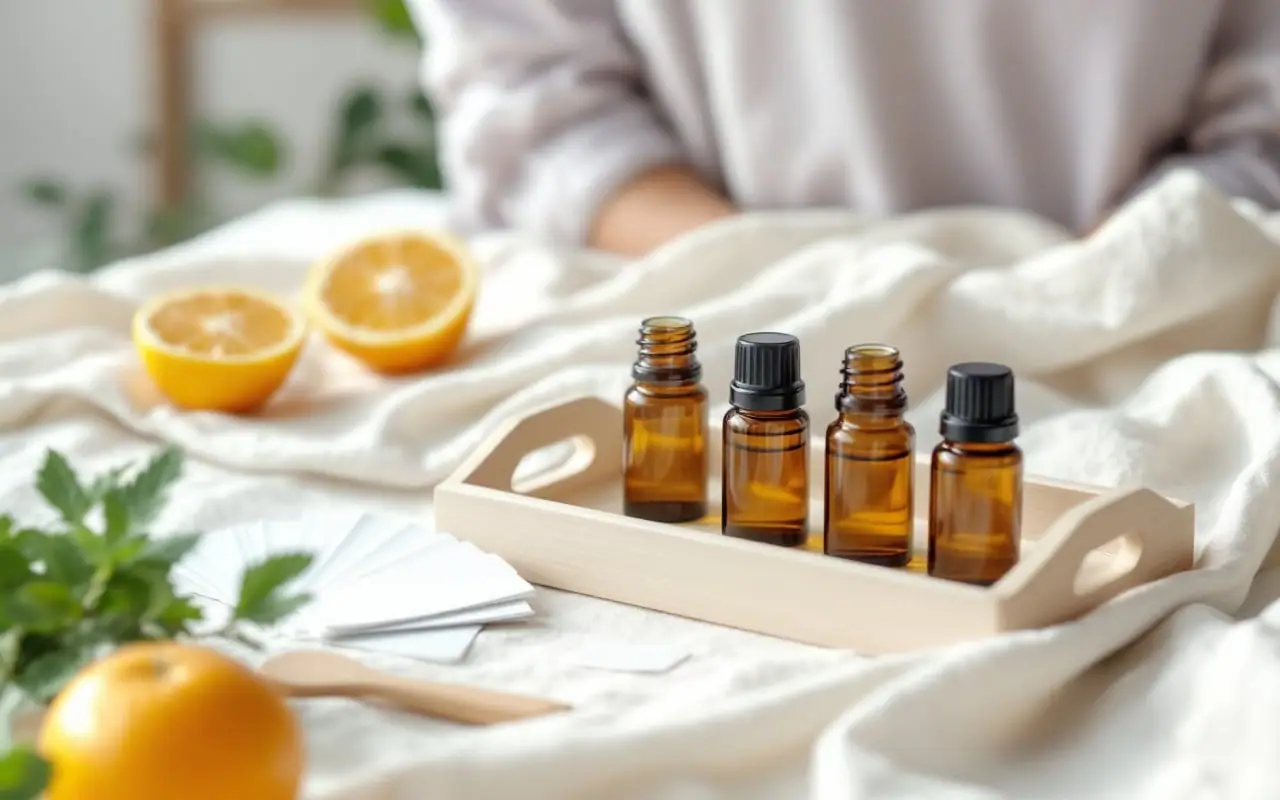
A starter set is how most people meet essential oils: six or so small bottles in a box, given as a present or bought on a whim after a pleasant half hour in a shop. Some sets are a sound introduction. Others are a row of vaguely labelled bottles with no safety advice at all, and you cannot always tell which is which from the box. This guide is for anyone choosing starter essential oils, for themselves or as a gift, and for anyone looking at a shelf of unfamiliar essential oil brands and wondering which to trust.
I won't name brands here. The same handful of checks works for any of them, whether you are in a Fukuoka department store, on a British high street or scrolling at midnight. What matters is not the packaging. It is whether each bottle tells you exactly what is inside, whether the oils are ones you will actually use, and whether the seller treats a concentrated plant extract with the care it deserves.
What matters when you choose
The Latin name, the part of the plant and where it came from
Common names are loose. "Lavender" can mean four different plants with different chemistry, and "eucalyptus" covers several species. Every bottle in a decent set carries the full botanical name: Lavandula angustifolia for true lavender, Citrus sinensis for sweet orange, Mentha x piperita for peppermint. A careful label also says which part of the plant was used (flowering tops, peel, leaf), how the oil was extracted (steam distillation or cold pressing) and the country of origin.
The aroma shops I use in Japan usually print all of this on a small side label. If a set gives only common names, I treat it as something for scenting a drawer, not for skin.
Single oils you will actually use
A first set works best as single oils that are versatile, reasonably gentle and different from one another: something floral, something citrus, a mint, a fresh leaf oil, perhaps a wood. Six is plenty. Boxes of twelve or more tend to be padded with oils that sit unopened until they go stale, or that need real care on skin, such as clove, cinnamon bark or wintergreen. Ask whether you would reach for each one within a month.
Small dark bottles with proper closures
Look for amber or cobalt glass, a dropper insert in the neck so the oil comes out one drop at a time, and a cap a small child cannot easily twist off. Once opened, oils react with the air and slowly change, citrus oils fastest, and an old oil is more likely to irritate skin. Bottles of 5 or 10 ml that you will finish within about a year are better value in every sense than a large bottle that lingers. The piece on whether essential oils expire goes through shelf life oil by oil.
Label words that mean something, and words that don't
"100% pure", "therapeutic grade", "clinical grade" and "premium grade" are marketing phrases. No government or independent body grades essential oils that way. "Natural" means little, and "organic" describes how the plants were farmed, not whether the oil in the bottle is unadulterated. "Fragrance oil", "aroma oil" and "nature identical" usually mean a synthetic perfume, which is fine in a reed diffuser and not something to put on skin.
What does mean something is a batch or lot number, a date, and a seller who will send you the gas chromatography report for that batch if you ask. That report (often shortened to GC-MS) is a laboratory fingerprint of the oil's main components. International standards describe the normal make-up of many common oils, and a careful supplier can tell you whether a batch sits within them.
Prices that differ from oil to oil
I won't give figures, but the pattern makes a useful test. Sweet orange is pressed from peel left over from juice production, while rose, neroli and true sandalwood take enormous amounts of plant material or decades of growth. A range where every bottle costs the same, or a set where rose sits alongside orange at no extra cost, is telling you something about what is in the rose.
Safety advice that comes with the oils
A careful seller tells you to dilute before using oils on skin, to keep bottles away from children and not to take oils internally. In the UK and the EU, many essential oils must carry hazard symbols and child-resistant caps under chemical labelling rules, so a bottle sold there without them is a warning sign in itself. Be wary of any seller, or any friend selling oils on commission, who encourages swallowing oils, adding them to drinking water or applying them neat. That advice is wrong whoever gives it.
Six oils that make a sensible first set
Most starter sets are built around the same six or so oils, which between them cover the main scent families and most home uses.
| Oil | Look for on the label | Scent | An easy first use | Take care |
|---|---|---|---|---|
| Lavender | Lavandula angustifolia, flowering tops, steam distilled | Soft, floral, a little herbal | 1 or 2 drops on a tissue at bedtime | Old, oxidised lavender can sensitise skin |
| Sweet orange | Citrus sinensis, peel, cold-pressed | Sweet and juicy | A few drops in a diffuser on a grey afternoon | Oxidises quickly, so keep it cool and use it up |
| Peppermint | Mentha x piperita, leaf, steam distilled | Sharp and cooling | 1 drop on a tissue when a room feels stuffy | Never near the face of a baby or young child; keep away from eyes |
| Tea tree | Melaleuca alternifolia, leaf, steam distilled | Fresh and medicinal | Diluted, on a small area of adult skin | Oxidised oil irritates; toxic to cats and dogs |
| Eucalyptus | Eucalyptus radiata or E. globulus, leaf | Camphor-fresh | A drop on a tissue during a cold, for adults | Not for young children's rooms; dangerous if swallowed |
| Lemongrass | Cymbopogon flexuosus or C. citratus, leaf | Lemony and grassy | In a diffuser, with a little orange | Skin limit of 0.7 percent, about 1 drop in 10 ml |
Some sets swap lemongrass for lemon. Cold-pressed lemon can make skin burn in strong sunlight, so keep it below 2 percent on skin that will see the sun, or look for steam-distilled lemon, which does not have that problem. Atlas cedarwood (Cedrus atlantica) and frankincense are other good swaps.
If you share your home with a cat, think twice about a set heavy in citrus, tea tree, peppermint and eucalyptus, all of which appear on the lists of oils of concern for cats. The essential oil safety chart sorts common oils by who should avoid them or use them with care: pregnancy, children, epilepsy, cats, dogs and sun.
Essential oil blends: ready-made or your own?
Ready-made blends, the bottles called "sleep", "focus" or "breathe", are tempting because they promise the work is done. The trouble is usually information. A good blend label lists every oil with its Latin name, ideally in order of quantity, and says whether the blend is neat or already diluted. Many say only "a blend of pure essential oils", leaving you no way to check for an oil you react to, or for peppermint in something sold for a child's bedroom. A neat blend also can't be adjusted: if one note dominates, you are stuck with it.
Making your own from single oils is easier than it sounds. Two or three oils are enough, and the page on which oils blend well together has tried pairings with drop counts. For skin, a 10 ml roller takes 2 drops of essential oil in total at 1 percent and 4 drops at 2 percent, and the dilution calculator works out other bottle sizes. A home blend also tells you exactly what you are smelling, so next time you can change it.
The options, and who each one suits
Your first fortnight with a new set
- Before opening anything, read every label. If a bottle has no Latin name, set it aside. Write the date of opening on each cap or on the box.
- On the first evening, label a paper smelling strip in pencil for each oil, dip the tip about half a centimetre, and smell them one at a time. Breathe some fresh air between oils so your nose stays fair, and note which ones you like.
- Smell the strips again the next morning, when the bright top notes have gone. Some oils you liked at first will fade, and some will win you over.
- For the rest of the first week, use one oil at a time and only by inhalation: a drop on a tissue, or a few drops in a diffuser for 30 to 60 minutes. If an oil gives you a headache or a tight chest, put it away.
- Before any oil goes on skin, patch test it at 1 percent (2 drops in 10 ml of carrier) on the inside of your forearm and wait 24 hours.
- In the second week, try a two-oil blend from the oils you liked best, and write down the oils, the drops and the date.
- Keep the box somewhere cool and dark that children cannot reach: not the bathroom shelf, and not a sunny windowsill. Through a Japanese summer I keep mine in the fridge, in a closed tin.
Safety, and when to get help
The commonest problems at home are predictable: skin reactions, oil in the eye, and children getting hold of bottles.
- Skin: always dilute, at 0.5 to 1 percent for the face and 1 to 2 percent for the body, and never on broken or inflamed skin. If a patch turns red, itchy or blistered, wash it with mild soap and water and stop using that oil. See a doctor or pharmacist if the rash spreads, blisters or hasn't settled within a few days.
- Eyes: if oil gets in an eye, rinse it with plenty of clean, lukewarm water, and get medical help if pain or blurred vision continues.
- Swallowing: never take essential oils by mouth, and keep every bottle out of children's reach. If a child swallows any oil, don't try to make them sick. Call emergency services or a poison information line straight away and have the bottle with you. Coughing, choking, breathlessness or unusual drowsiness after swallowing an oil is an emergency: 119 in Japan, 999 in the UK, 911 in the US.
- Allergy: swelling of the face or lips, or any trouble breathing, needs emergency help.
- Ask first: if you are pregnant or breastfeeding, have epilepsy or asthma, take regular medicines, or want to use oils on a child, ask a doctor, midwife or pharmacist before you start.
How the products on this page were chosen
The products mentioned here were chosen on paper: from their specifications, bottle and closure details, the maker's own information and other published information, checked against the criteria above. I have not used these particular products, and nothing on this page is a hands-on comparison. Listings change, so read the label of whatever arrives, and send back anything that does not carry a Latin name. If you remember one rule from this page, make it that one: no Latin name, no purchase.

The writer
Philippa is a British writer who has lived in Japan for many years and has blended essential oils at home for two decades. She looks after the Aroma corner and never writes a recipe without the dilution.