Kakkonto and the common cold: what it was made for
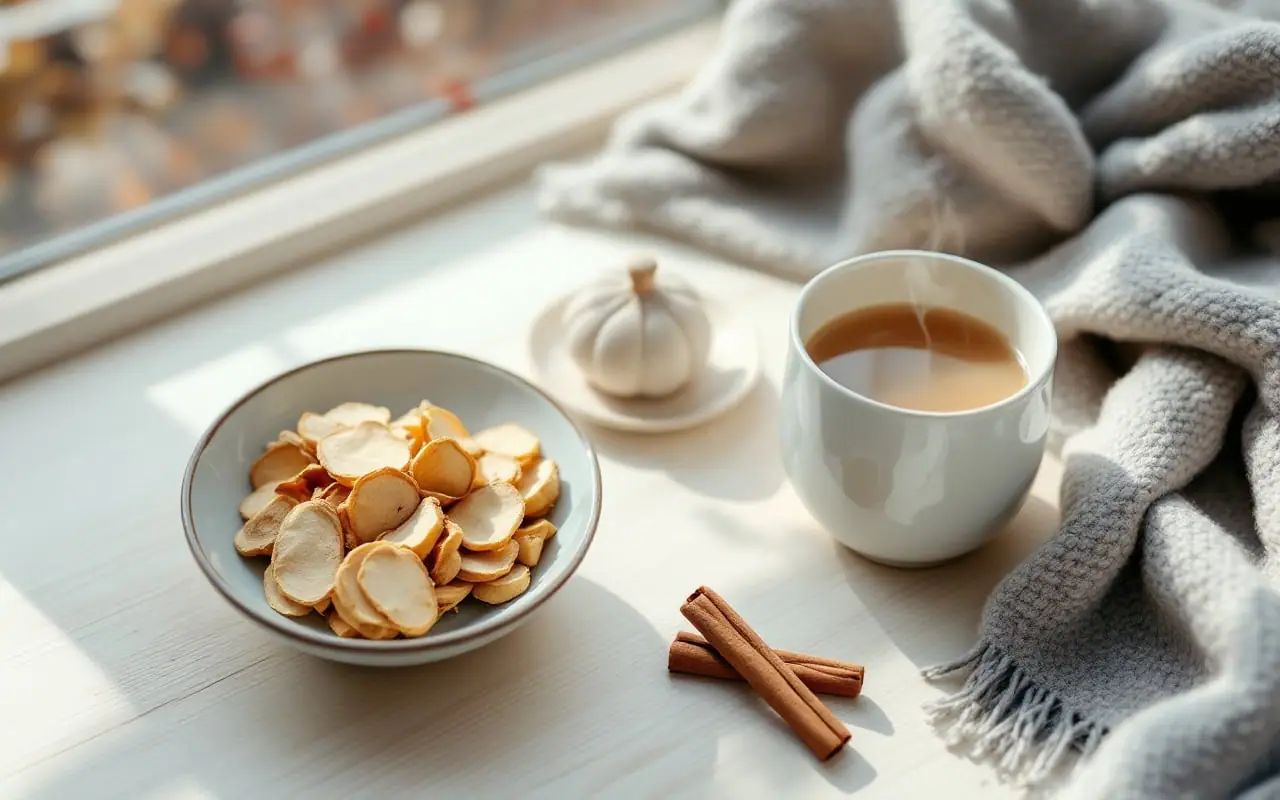
There is an old rakugo story, the kind of comic tale told by a single performer kneeling on a cushion, about a kakkonto isha, a "kakkonto doctor". Headache: kakkonto. Stomach ache: kakkonto. Sore eyes: kakkonto. In the usual telling, the doctor finally turns to a man who has only come along to keep a patient company and, finding nothing wrong with him, prescribes him kakkonto as well. The phrase is still used, a little unkindly, for a doctor with one answer for everything.
I thought of that story most Novembers at the pharmacy counter in Kumamoto where I worked for many years. As the first cold mornings arrived, people asked for kakkonto the way they might ask for tissues: for a sore throat, for a cough in its second week, once for a hangover. It is probably the best-known kampo formula in Japan, and that familiarity is exactly why it is worth looking at what it was meant for.
Seven ingredients in a box
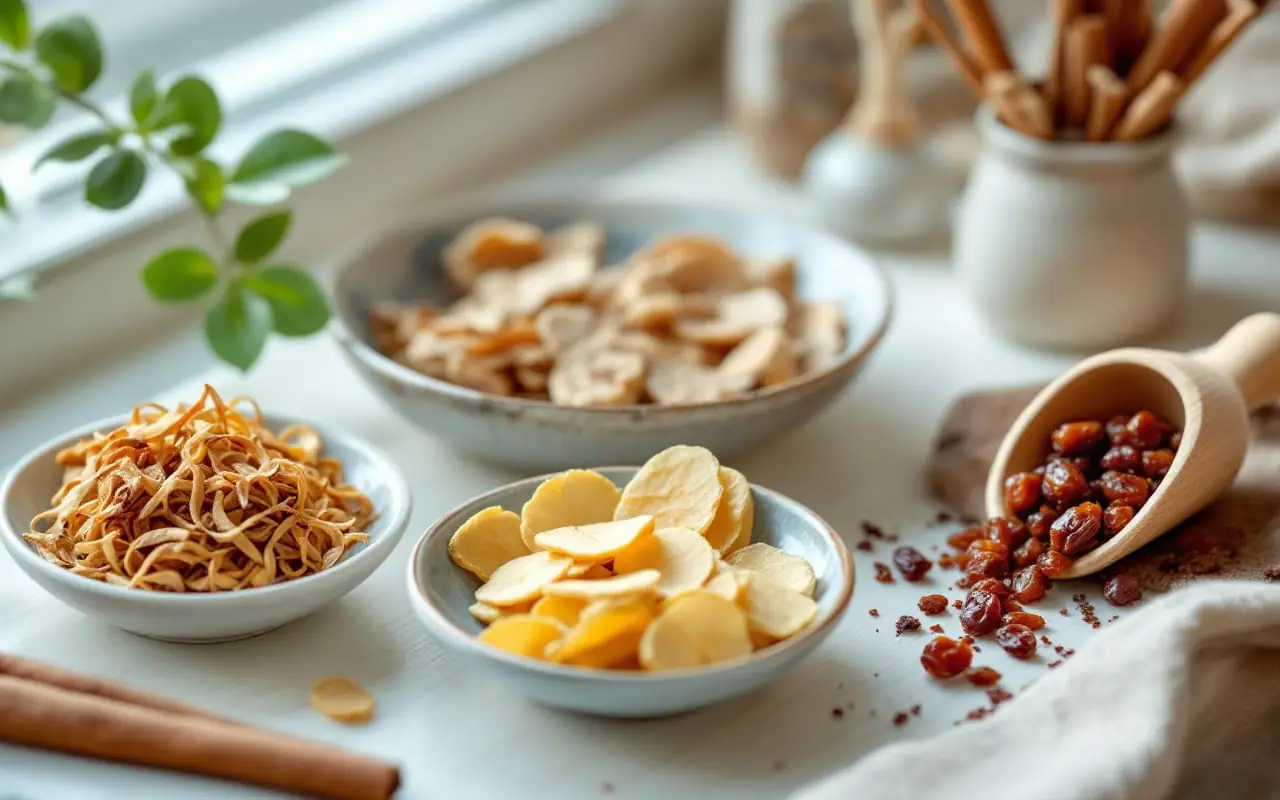
Like other kampo formulas, kakkonto is a fixed recipe of dried plant ingredients, today usually sold as extract granules. It has seven:
- Kakkon, the dried root of kudzu, the climbing vine that gives the formula its name. The same plant gives kuzu starch, used in sweets and in kuzuyu, the thick, sweet, hot drink many of us were given as children when we felt poorly. Kitchen starch and the sliced root in a formula are different things.
- Mao, ephedra herb, which contains ephedrine and related stimulant substances.
- Keihi, cinnamon bark.
- Shakuyaku, peony root.
- Kanzo, licorice root.
- Shokyo, ginger.
- Taiso, jujube, a dried fruit a little like a small date.
Take away the kudzu and the ephedra and the remaining five make another classic formula, keishito. Kakkonto is, in effect, that gentler formula with two strong ingredients added, which explains both how it is traditionally used and why it is not for everyone. Ephedra and licorice matter most for safety, and I come back to both below. For how kampo formulas are made and prescribed in general, see the piece on what kampo is.
The cold it was written for
Kakkonto comes from the Shanghan lun (Treatise on Cold Damage), the Chinese classic compiled around the end of the Han dynasty that still sits at the root of Japanese kampo. The text describes an illness at its very first, outermost stage: a dislike of cold or wind, a stiff back of the neck and upper back, and skin that has not yet begun to sweat. For that picture, it names kakkonto.
Japanese over-the-counter boxes put this into modern language: the early stage of a cold without sweating, in people of moderate strength or more, plus head colds, headache, stiff shoulders and muscle aches. The shoulders tell you how much the formula is about the neck and upper back. Kakkonto turns up regularly for katakori, Japan's famous stiff shoulders, which Neil explains from the everyday side in his piece on stiff shoulders.
So the traditional use is narrow. Not "a cold", but one moment in some colds, in some people.
How a cold changes, and where the old texts place kakkonto
A cold is not one thing from start to finish, and kampo pays close attention to how the picture shifts. What follows describes the traditional view; it is not a guide to choosing anything for yourself.
The first chilly evening
You notice a shiver on the way home. The back of your neck feels stiff, you want another layer, and your skin is dry. There may be a mild fever or none yet. This is the picture the old texts match to kakkonto. Traditional instructions talk about keeping warm afterward until a light sweat breaks, without letting it become heavy: in kampo thinking the cold is still at the surface, and a little sweat lets it out.
Sweating has already started
If you are already sweating easily, feel washed out, and the chill comes and goes, the tradition says kakkonto no longer fits. Ephedra pushes sweating further, which is the opposite of what is wanted. The classical counterpart for a weaker person who is already sweating is keishito, the five-ingredient formula without the ephedra.
The throat comes first
Many colds begin with a hot, scratchy, painful throat rather than a chill. In the traditional view that is a "hot" picture, and kakkonto, a warming formula, is a poor match. At the counter, this was one of the two mismatches I saw most often.
Day three and beyond
This was the other. By the third or fourth day the cold has usually settled in: a thick nose, a cough, a fever that has come and gone. The traditional picture has moved on, and a kampo doctor's choice would move on with it. Kakkonto for a cough in the second week is, by kampo's own standards, the wrong tool.
None of this means you should diagnose your own pattern. It means "kakkonto is for colds" is too loose a rule even within the tradition that made it.
What rest and fluids are doing
Most colds are caused by viruses and clear up by themselves within a week or two, though a cough can linger. Antibiotics do nothing for them, and ordinary cold medicines ease symptoms without making the virus go away faster.
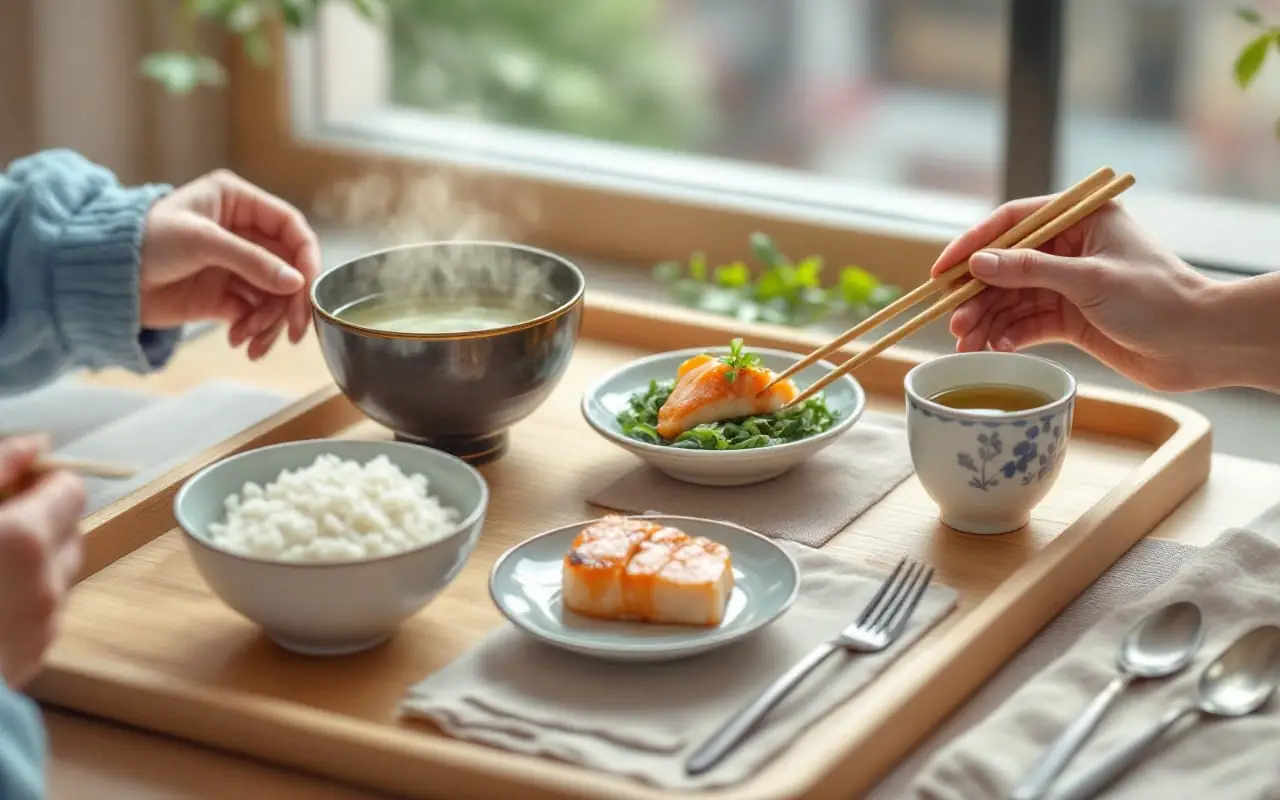
What helps the body through is mostly unglamorous: sleep, warm fluids, a warm room, and food that is easy to eat, such as okayu (rice porridge) with a little umeboshi (pickled plum), or miso soup with plenty of negi (long green onion). Ginger and honey in hot water soothe a sore throat in adults (never give honey to babies under one year), and kuzuyu earns its place as a warm drink whatever you think of the formula that shares its plant. Japan's old tamagozake, egg beaten into hot sake, is one tradition I would let go: alcohol dries you out and breaks up sleep.
What the studies show
Long traditional use tells you that many people have found kakkonto comforting, not whether it changes the course of a cold. Laboratory and animal studies suggest effects on inflammation and on how the body responds to some viruses, which is a reason to study it further, not proof that it helps people.
Trials in people are few and small. One randomized trial in Japan compared kakkonto with a standard over-the-counter cold medicine in adults at the very first signs of a cold, and did not find kakkonto any better at stopping the cold from getting worse. Because the comparison was another medicine rather than a placebo, it does not settle the question either way. Reviews of herbal medicines for the common cold generally rate the evidence as low in quality.
My honest reading: there is no good evidence that kakkonto shortens a cold or stops one developing. It may make some people feel better in the early hours, and it carries real risks for some, which is where the conversation at the counter usually went next.
Ephedra, licorice and who should ask first
Ephedra stimulates the heart and nervous system. It can raise heart rate and blood pressure and cause palpitations, sleeplessness, heavy sweating, a trembling feeling, loss of appetite and difficulty passing urine. It is not a minor herb. In the United States, dietary supplements containing ephedra alkaloids were banned in 2004 after reports of heart attacks and strokes, mostly linked to weight-loss and sports products. A kampo formula is a different kind of product, but the main active substance is the same. Ephedrine is also on the anti-doping prohibited list for competition, so athletes should check before taking any formula that contains it. The US National Center for Complementary and Integrative Health has plain information on ephedra and other herbs.
Licorice is the other concern. Over a few days the risk is low for most people, but it adds up with other licorice-containing products, and long use can lower potassium and raise blood pressure, as the kampo piece linked above explains. Rashes, stomach upset and, rarely, liver problems have also been reported.
Speak to a pharmacist or doctor before using kakkonto if any of these apply:
| If this applies to you | Why it matters |
|---|---|
| Heart disease, an irregular heartbeat or high blood pressure | Ephedra raises heart rate and blood pressure |
| An overactive thyroid, or thyroid medicine | Both speed up the heart, and the effects can add together |
| An enlarged prostate or trouble passing urine | Ephedra can make passing urine harder |
| Kidney disease, or swelling of the legs or face | Licorice makes the body hold on to salt and water |
| Older age, a weak build or stomach, or heavy sweating | Side effects are more likely, and traditionally the formula does not fit |
| Pregnancy or breastfeeding | Needs individual advice |
| Medicines for depression, asthma or the heart | Some interact with ephedrine-type ingredients |
| Already taking a cold, cough, nasal or hay fever medicine | Many contain an ephedrine-type ingredient, licorice or caffeine, and doubling up is easy |
| A child who is unwell | Children need their own advice, whatever the box says |
The row about other cold medicines was the conversation I had most often. Someone would arrive with kakkonto in one hand and an all-in-one cold medicine in the other, and many of those contain a relative of ephedrine for the nose, plus caffeine, sometimes licorice too. Taken together, the ingredients stack. Bring everything you are taking to the counter, or write it in your okusuri techo (medicine notebook), and ask.
When a cold is not just a cold
The other risk with any home remedy is that it keeps you at home when you should be seeing a doctor. Get medical advice for any of these:
- A sudden high fever with aches all over and exhaustion, especially in flu season. That sounds more like influenza than a cold. Antiviral medicines for flu work best when started within about two days, so those days are better spent at a clinic than trying remedies. Many clinics in Japan ask you to phone before coming in with a fever.
- A fever that lasts more than three days, or one that comes back after you seemed to be recovering.
- Breathlessness, wheezing, chest pain, or coughing up blood or rust-colored phlegm.
- A severe sore throat with trouble swallowing, earache, or pain over the cheeks and forehead that is getting worse after a week.
- A cough that lasts more than three weeks.
- Palpitations, chest discomfort, a pounding headache or trouble passing urine after taking any cold remedy. Stop it and ask.
Babies, older people, pregnant women and anyone with heart or lung disease, diabetes or weakened immunity should get advice sooner. Severe breathlessness, chest pain, blue lips, confusion, or a stiff neck with a fever or rash need emergency care: in Japan, call 119.
If a cold starts tonight
- Go to bed early, keep warm, and keep a drink beside the bed.
- Before you take anything, check the labels of what you already take for ephedrine-type ingredients, licorice and caffeine.
- If you are thinking about kakkonto or any other kampo, ask a pharmacist first, and mention your heart, blood pressure, thyroid, prostate, any pregnancy and every medicine you use.
- Give an ordinary cold a few days, and keep the warning signs above in mind.
- Stay home from work or school while you are feverish, and wash your hands often for everyone else's sake.
More pieces on these traditions are collected in the Kampo & Eastern Medicine section. The kakkonto doctor in the story is funny because he has one answer for everything. Kakkonto deserves better than that, and so do you.
The writer
Keiko spent many years at the counter of a family-run pharmacy in Kumamoto that stocked kampo medicines. She writes about kampo, acupuncture and the old idea of yojo, carefully and with the evidence in view.