Miso salmon: broiled or pan-fried, plus a miso cod variation
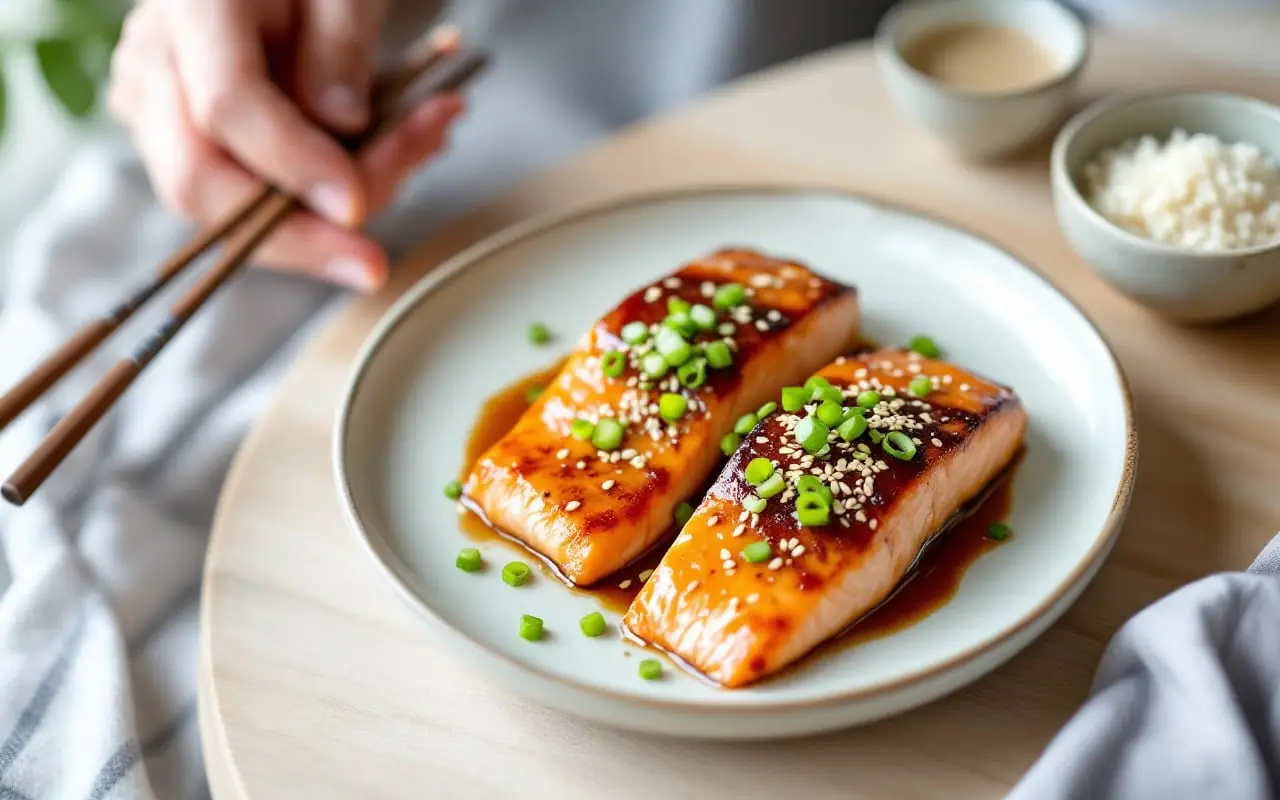
When I was growing up in Fukuoka, miso-marinated fish meant sawara (Spanish mackerel) in spring and salmon in autumn, pulled from my mother's fridge after a night under a blanket of sweet miso. The weeknight version below takes about 15 minutes: a thin miso glaze spread over salmon fillets and browned under the broiler or in a frying pan. Miso salmon is one of the easiest Japanese dishes to make well outside Japan, because the miso does the seasoning for you. Further down is the slower variation, saikyo-yaki, the overnight marinade behind the famous miso cod.
Miso salmon ingredients
Serves 4. Weights first, then US measures.
- 4 salmon fillets, skin on, about 150 g (5 oz) each and roughly 2.5 cm (1 inch) thick
- 54 g (3 tablespoons) white miso
- 30 ml (2 tablespoons) mirin
- 15 ml (1 tablespoon) sake, or water
- 4 to 8 g (1 to 2 teaspoons) sugar or honey, to taste
- 5 ml (1 teaspoon) soy sauce, optional
- 5 g (1 teaspoon) finely grated fresh ginger, optional
- Neutral oil: 5 ml (1 teaspoon) for the tray, or 15 ml (1 tablespoon) for the pan
- To finish: 2 green onions, thinly sliced, and 1 teaspoon toasted sesame seeds
A note on the miso. "White miso" covers a wide range. Sweet white miso, the Kyoto style, is soft, pale and gentle, with about half the salt of an everyday light-colored miso. Many tubs labeled white miso outside Japan are closer to the everyday kind. Taste yours before adding sugar: if it is already sweet, the mirin may be enough. For this recipe I reach for a tub of white (shiro) miso, the mild pale kind kept in the chilled section. Our guide to miso paste types explains the differences if you are standing in front of a shelf of tubs.
Red miso works too, but it is saltier and darker. Use 2 tablespoons instead of 3, add an extra teaspoon of sugar, and watch it under the heat, because darker miso looks done before it is.
Make the glaze
Stir the miso, mirin, sake, sugar, soy sauce and ginger together in a small bowl until smooth. It should be about as thick as plain yogurt: spreadable, not runny. Before the glaze goes anywhere near the raw fish, spoon about a third of it into a second small bowl and set it aside. That clean portion is for brushing on later.
Pat the fillets dry with paper towels. There is no need to salt them; the miso is salty enough.
Method 1: broiled miso salmon
This is the method I use most. The broiler caramelizes the glaze in spots, which is the whole point.
- Set an oven rack about 15 cm (6 inches) below the broiler and heat the broiler on high. Line a sheet pan with foil and brush it with the teaspoon of oil.
- Lay the fillets skin side down on the foil. Spread the larger portion of glaze over the tops and sides in a thin, even layer. A thick layer burns before the fish is cooked.
- If you have time, put the tray in the fridge for 15 to 30 minutes. The glaze seasons the surface a little more. Do not leave raw fish sitting on the counter.
- Broil for about 4 minutes, then brush on the reserved glaze and broil for another 3 to 5 minutes, until the glaze is browned in patches and the fish flakes in the thickest part. Thinner fillets may need only 5 or 6 minutes in all; very thick ones up to 12.
- If the top is browning too fast, move the tray down a rack or lay a loose sheet of foil over it and keep going.
If your broiler runs fierce, or the fillets are thicker than about 3 cm, start them in a 220°C (425°F) oven for 6 minutes, then switch to the broiler for the last 2 to 3 minutes to color the glaze.
Method 2: pan-fried miso glazed salmon
Good when you do not want to turn the oven on, and it gives you crisp skin.
- Loosen the larger portion of glaze with 2 tablespoons (30 ml) of water so it pours. Keep the reserved third for the end.
- Heat the tablespoon of oil in a large nonstick or well-seasoned frying pan over medium-high heat.
- Lay the fillets in skin side down and press each one gently with a spatula for 10 seconds so the skin stays flat. Cook for 4 to 5 minutes, until the skin is crisp and the flesh has turned opaque about two thirds of the way up the sides.
- Turn the fillets, lower the heat to medium-low and cook for 1 to 2 minutes.
- Dab out most of the fat with a folded paper towel held in tongs. Pour the thinned glaze around the fish and spoon it over the tops. Let it bubble for 1 to 2 minutes, turning the fillets once, until it thickens and clings. Brush the reserved glaze over just before the end.
- Serve skin side up so the skin stays crisp.
Miso and mirin both carry sugars, and in a hot pan they go from glossy to scorched in under a minute. Keep the heat moderate once the glaze is in, and take the pan off the burner if it starts to smoke.
How to tell when salmon is done
The US Food and Drug Administration advises cooking fish to an internal temperature of 63°C (145°F), measured in the thickest part. At that point the flesh is opaque and separates easily with a fork. Many restaurants serve salmon less cooked than this. If you are pregnant, over 65, cooking for young children, or have a weakened immune system, stay with the official temperature. An instant-read thermometer takes the guessing out of it, and it is the single most useful thing to own for cooking fish.
Let the fillets rest for a couple of minutes before serving. Scatter over the green onion and sesame seeds.
Variation: saikyo-yaki (miso cod)
Saikyo-yaki is fish marinated in saikyo miso, the sweet white miso of Kyoto, then grilled. The miso cod served in restaurants around the world is this dish made with black cod, also called sablefish, which is rich and almost impossible to dry out. At home in Japan it is just as often made with sawara, salmon or ordinary cod. It takes very little work, but it needs a day or two of planning.
For 4 pieces of black cod, cod or salmon, about 120 g (4 oz) each:
- 3 g (1/2 teaspoon) salt, for salting the fish first
- 150 g (about 1/2 cup) sweet white miso
- 30 ml (2 tablespoons) mirin
- 15 ml (1 tablespoon) sake
- 12 g (1 tablespoon) sugar, only if your miso is not already sweet
- Sprinkle the salt over both sides of the fish, lay the pieces on a plate and put them in the fridge for 20 to 30 minutes. Beads of moisture will appear. Pat them away with paper towels. This firms the flesh and takes away any fishy smell.
- Mix the miso, mirin, sake and sugar into a smooth paste.
- Spread a thin layer of the paste over the bottom of a lidded container. Lay a sheet of cheesecloth or plastic wrap on it, put the fish on top, cover with another sheet and spread the rest of the paste over that. The sheet keeps the miso off the fish so it wipes clean later. You can also coat the fish directly and scrape it off.
- Cover and marinate in the fridge for 24 to 48 hours. Twelve hours gives a light flavor. Japanese cooks sometimes go to three days, but by then the fish is saltier and firmer, and I stop at two.
- When you are ready to cook, scrape off the miso with your fingers and dab the fish with paper towels. Any miso left on will burn.
- Heat the oven to 200°C (400°F). Put the fish skin side down on a foil-lined tray and bake for 10 to 12 minutes, then broil for 1 to 3 minutes until speckled brown. Check lean cod from 8 minutes, as it dries out faster than black cod. On the stove, cook it in a frying pan lined with a sheet of parchment over medium-low heat, lid on, for about 4 minutes a side.
Marinated fish freezes well. If plans change, wrap each piece, freeze it within the first day, and thaw it overnight in the fridge before cooking.
Food safety with raw fish
- Buy fish you will cook within a day or two, and keep it in the coldest part of the fridge, at 4°C (40°F) or below.
- Always marinate in the fridge, never on the counter.
- Throw away any marinade or glaze that has touched raw fish, unless you boil it first. That is why the recipe sets a clean portion aside.
- Wash your hands, knife and board after handling raw fish, before touching anything you will eat uncooked.
- Leftovers go into the fridge within 2 hours of cooking and keep for 3 to 4 days. Cold leftover miso salmon, flaked and tucked into a rice ball, is one of my favorite next-day lunches.
Salt, fish and health
Going by Japan's standard food composition tables, a tablespoon of light-colored miso carries about 879 mg of sodium, and sweet white miso about 432 mg. Three tablespoons shared among four fillets is about three quarters of a tablespoon each, so roughly 320 mg of sodium per serving with sweet white miso and about 660 mg with a light-colored one, before the soy sauce. Not all the glaze is eaten, but that is the right order of size. The miso soup calories and sodium calculator lists the figures for each type of miso, which helps if you are keeping track across a whole meal.
Salmon is an oily fish, and the NHS suggests at least two portions of fish a week, one of them oily. The FDA places salmon and cod among its lower-mercury choices, which makes them suitable in pregnancy when fully cooked.
Some people should check before making this a regular dish. If you have high blood pressure, kidney disease or heart failure, or have been told to limit salt, ask your doctor or a dietitian how much miso fits your day. Miso contains soy, soy sauce usually contains wheat, and barley miso contains gluten. Swelling of the lips or tongue, hives or trouble breathing after eating fish or soy needs urgent medical help. Vomiting or diarrhea that will not settle after a fish meal, or signs of dehydration, is a reason to call your doctor.
What to serve with it
A bowl of rice, a cup of miso soup made a little lighter on the miso to balance the glaze, and something green: blanched spinach with sesame, or quick cucumber slices with a pinch of salt. That is a Japanese weeknight dinner, and it comes together in the time the fish takes.
The one thing to remember with any miso salmon: spread the glaze thin and stay by the broiler. Miso browns beautifully, and then, a minute later, it burns.

The writer
Naoko is a food and nutrition writer from Fukuoka who studied nutrition before she took up writing. She covers gut health and everyday eating, and most of her ideas start at the kitchen counter.