What is a fermented food? Meaning, how it works and a long list
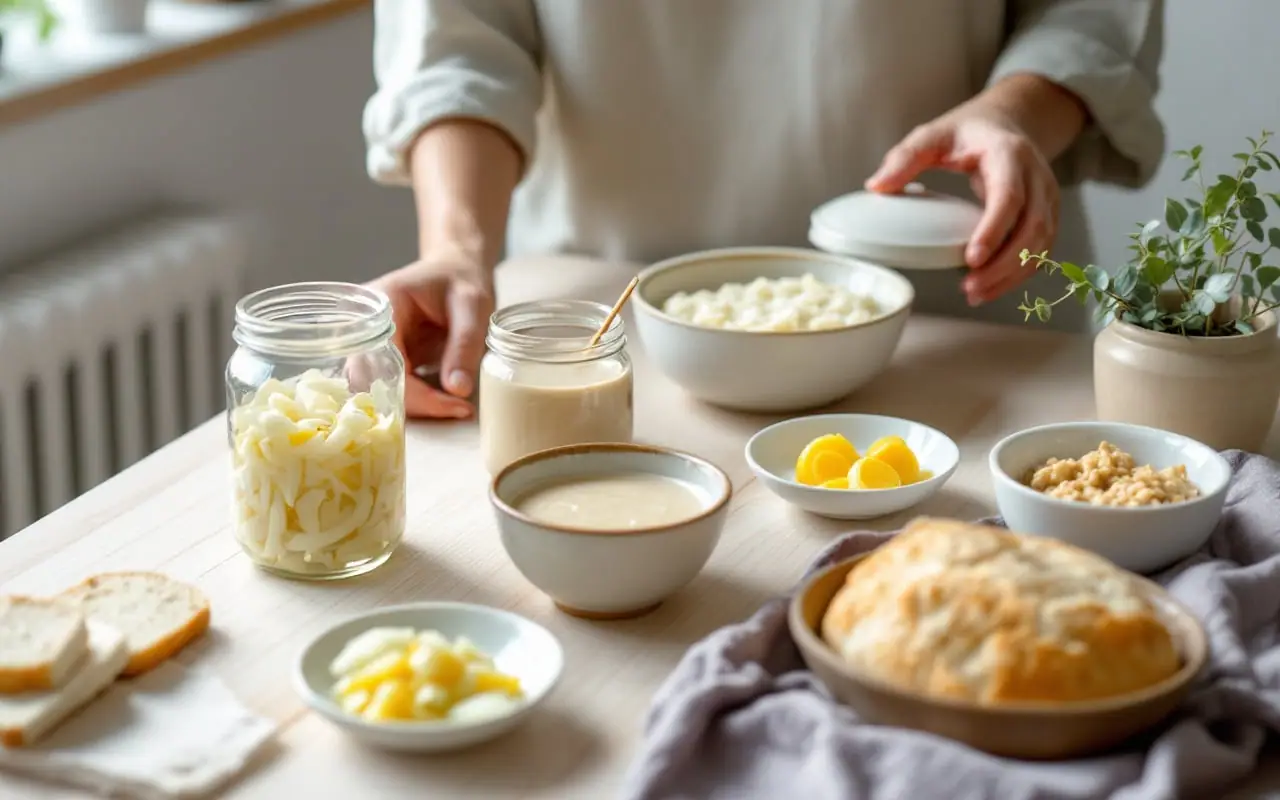
On my kitchen counter this morning there is a tub of barley miso, a crock of nukazuke (vegetables pickled in fermented rice bran) waiting to be stirred, half a sourdough loaf and a carton of yogurt. Four very different foods, and every one of them is fermented. So what is a fermented food, exactly? In short, it is a food that microbes have helped to make: bacteria, yeasts or molds were allowed, on purpose, to grow in it and change it. Below: how it works, a long list of examples, and the foods that only sound fermented.
What is a fermented food? The definition scientists use
In 2021 a panel of scientists brought together by the International Scientific Association for Probiotics and Prebiotics (ISAPP) published a definition that has become the usual reference point. Put simply, fermented foods are foods made through desired microbial growth and the changes that the microbes' enzymes make to the food.
"Desired" is what separates fermentation from spoilage. Rice going sour in a warm kitchen is also microbes at work, but nobody invited them. In fermentation the cook chooses the salt, the temperature, the starter and the time, so that useful microbes win.
"Made through" means the microbes do the making, but they do not have to be alive when you eat the food. Bread is baked, most soy sauce is heated after pressing, and canned sauerkraut is pasteurized. All are fermented foods with few or no live microbes left, which is why a fermented food is not automatically a probiotic. I go into what that means for the gut in miso, natto and nukazuke: fermented foods and the gut, and our explainer on prebiotics vs probiotics untangles the terms.
How fermentation works
Microbes eat. Given the sugars, starches and proteins in a food, they break them down for energy and leave other substances behind. Those leftovers are what we taste, and often what makes the food keep. The main kinds of fermentation are named after what the microbes leave:
- Lactic acid fermentation: lactic acid bacteria turn sugars into lactic acid, which sours the food and makes it a poor home for most spoilage and disease-causing bacteria. Yogurt, sauerkraut, kimchi, nukazuke and naturally fermented pickles work this way.
- Alcoholic fermentation: yeasts turn sugars into alcohol and carbon dioxide. That gives us beer, wine and sake, and the bubbles that lift bread dough (the alcohol bakes off).
- Acetic acid fermentation: a second group of bacteria turns alcohol into acetic acid, which is how wine becomes wine vinegar and rice wine becomes rice vinegar. Kombucha relies on yeasts and acetic acid bacteria working together.
- Mold fermentation: molds grow over a solid food and release enzymes that cut starch into sugars and proteins into amino acids. Koji, rice, barley or soybeans grown with the mold Aspergillus oryzae, is the Japanese example and the starting point for miso, soy sauce, sake and mirin. Tempeh uses a Rhizopus mold, and blue cheeses use Penicillium.
- Alkaline fermentation: a few bacteria, mostly Bacillus species, break down protein and release ammonia, so the food becomes less acidic rather than more. Natto is the famous case, and several West African seasonings made from fermented seeds work the same way.
Salt shapes most of these. Lactic acid bacteria put up with salt better than many spoilage microbes, so salting cabbage or cucumbers gives the right ones a head start. In miso and soy sauce, heavy salting slows everything down so the koji enzymes have months to work. Temperature matters too: a warm kitchen ferments fast and can turn vegetables soft, which is why Japanese home cooks traditionally start their miso in midwinter.
Some ferments are wild, relying on the bacteria already living on cabbage leaves or cucumber skins. Others use a starter: koji for miso, a spoonful of the last yogurt, a piece of saved sourdough. A nukazuke bed carries its microbes from one batch of vegetables to the next, sometimes for decades.
A list of fermented foods, by type
This fermented foods list is long but far from complete. I have leaned on Japanese and Kyushu examples because that is my kitchen.
Soybeans and other beans
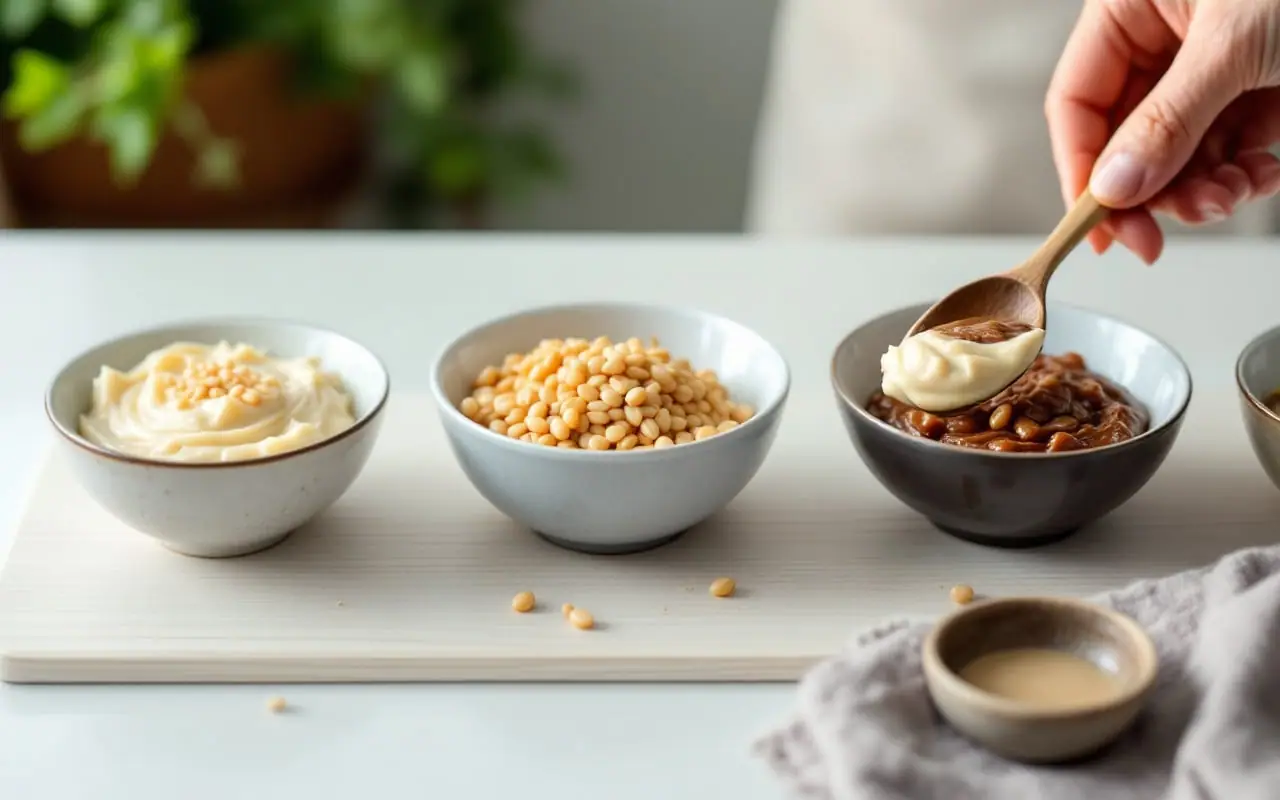
- Miso, made from soybeans with rice, barley or soybean koji. In Kyushu the everyday kind is mugi miso (barley miso). Our guide to miso paste types explains the colors and flavors.
- Soy sauce (shoyu), including the sweet soy sauce that Kyushu cooks love, which is usually sweetened after brewing.
- Natto, whole soybeans fermented with Bacillus subtilis.
- Tempeh, the Indonesian soybean cake bound together by mold.
- Korean doenjang and gochujang, Chinese fermented black beans and fermented tofu.
Vegetables
- Sauerkraut and kimchi.
- Naturally fermented cucumber pickles, the cloudy, sour kind sold chilled.
- Nukazuke: cucumber, eggplant, daikon and carrot buried in a bed of fermented rice bran.
- Takuan, yellow daikon traditionally dried and fermented in rice bran (many shop versions are simply seasoned).
- Shibazuke, the purple Kyoto pickle of eggplant and red shiso leaves.
- Takanazuke, pickled mustard greens from Kyushu, which turn sour and deeper in flavor as they ferment.
- Sunki, from the Kiso valley in Nagano, made from turnip greens fermented with no salt at all.
- Fermented hot sauces and pepper mashes, and curtido, the lightly fermented cabbage relish of Central America.
Dairy
- Yogurt, kefir, cultured buttermilk, sour cream and cultured butter.
- Most cheeses, from cheddar and parmesan to brie and blue cheese.
Grains and bread
- Sourdough and ordinary yeast bread.
- Ethiopian injera, and south Indian idli and dosa batters.
- Amazake, the sweet Japanese rice drink made with koji (another version is made with sake lees).
Drinks
- Beer, wine, cider, sake and kombucha.
- Shochu, Kyushu's spirit, distilled from a fermented koji mash of sweet potato, barley or rice.
- Awabancha from Tokushima, one of the few Japanese teas truly fermented by bacteria. Cocoa and many coffee beans are also fermented before roasting.
Fish, meat and seasonings
- Fish sauce, and shiokara, salted squid fermented in its own innards.
- Katsuobushi, dried bonito. The top grade is deliberately grown with mold to dry it further and deepen the flavor.
- Funazushi from Shiga, carp fermented in rice for months, an ancestor of sushi.
- Kusaya, the pungent dried fish of the Izu Islands, dipped in a fermented brine.
- Salami and other dry-cured fermented sausages.
- Vinegar of every kind, including kurozu, the black rice vinegar left to ferment outdoors in rows of clay pots in Kagoshima.
- Traditional mirin, made with koji, and shio-koji, a salty koji seasoning for marinades.
What isn't fermented, or not quite
Some foods sound fermented and are not. Others are fermented, but not in the way people assume.
- Quick pickles. Cucumbers soaked in vinegar are pickled, not fermented. Most shelf-stable dill pickles are made this way, as are pink sushi ginger and much of the lightly pickled asazuke sold in Japan.
- Black tea. The trade calls it "fermented", but the change comes from the leaf's own enzymes reacting with air, not from microbes.
- Umeboshi. Japan's salted plums sit on the borderline. They are cured in so much salt that microbes have little room to work, and most of their sourness comes from the fruit's own acids.
- Fermented, then heated. Bread, most soy sauce, shelf-stable sauerkraut and a good deal of shop miso keep the flavor of fermentation but few or no live microbes. If live cultures matter to you, look in the chilled section for "live cultures", "raw" or "unpasteurized".
Are fermented foods good for you?
Some of what fermentation does to food is well understood. Lactic acid bacteria use up part of the lactose in milk, which is one reason the US National Institute of Diabetes and Digestive and Kidney Diseases (NIDDK) notes that some people with lactose intolerance manage yogurt and hard cheese better than a glass of milk. Koji enzymes turn proteins into amino acids, which is where the savory depth of miso and soy sauce comes from. Natto is rich in vitamin K2.
The bigger claim, that fermented foods as a group improve gut health, still rests on small or short studies; I went through them in the gut piece linked above. My honest summary: eat fermented foods because they taste good and make vegetables, beans and whole grains easy to enjoy, not as medicine.
Safety points worth knowing
- Salt. Miso, soy sauce, fish sauce, pickles and kimchi carry a lot of it. The WHO advises adults to keep below 5 grams of salt a day. With high blood pressure, kidney disease or heart failure, ask your doctor what your own limit should be.
- Tyramine. Aged and fermented foods such as aged cheese, soy sauce, miso, sauerkraut and cured sausage contain tyramine. People taking MAOI antidepressants and a few other medicines are told to limit them because blood pressure can spike; ask your pharmacist.
- Natto and warfarin. Natto's vitamin K weakens warfarin, and people taking it are usually told to avoid natto.
- Pregnancy. Soft cheeses made from unpasteurized milk can carry Listeria, which is dangerous in pregnancy, and the CDC advises choosing cheeses made with pasteurized milk.
- Alcohol. Kombucha, especially home-brewed, and sake-lees amazake can contain a little alcohol, which matters for children, in pregnancy and for anyone avoiding it.
- A weakened immune system. During chemotherapy or after a transplant, ask your care team before eating unpasteurized or live-culture foods.
- Allergies and gluten. Soy is in miso, soy sauce, natto and tempeh. Many soy sauces contain wheat, and barley miso contains barley, so neither is gluten-free.
Fermenting at home
Home fermentation is mostly safe when the basics are followed. For a first jar of sauerkraut, an airlock lid and glass weight kit for wide-mouth mason jars makes it easier to keep the cabbage submerged and lets gas out without opening the jar.
Three rules I keep in my own kitchen:
- Weigh the salt. For sauerkraut, about 2 percent of the weight of the cabbage, so 20 grams of salt for each kilogram of shredded cabbage.
- Throw out anything with fuzzy mold in blue, green, black or pink, anything slimy, and anything that smells rotten rather than sour. A flat white film is usually a harmless yeast.
- Do not improvise with low-acid foods sealed away from air at room temperature. Garlic kept in oil is the classic botulism risk, so homemade garlic oil belongs in the fridge and should be used within four days, or frozen.
When to see a doctor
Fermented foods are not a treatment, and they should never delay a visit. See a doctor if a change in your bowel habits lasts more than a few weeks, or if you notice blood in your stool or vomit, black stools, weight loss you cannot explain, trouble swallowing, vomiting that keeps coming back, severe belly pain or a fever. If you feel unwell after eating a home ferment and the vomiting, diarrhea or cramps do not settle, call your doctor. Blurred or double vision, drooping eyelids, slurred speech, difficulty swallowing or muscle weakness after eating home-preserved food can be signs of botulism and need emergency care straight away.
Three questions for any jar
"Fermented" describes how a food was made, not what it will do in your body. When you pick up a jar, ask three things. Did microbes make it, or only vinegar? Was it heated afterward? And how much salt is in a serving? Those answers tell you far more than the word on the label.

The writer
Naoko is a food and nutrition writer from Fukuoka who studied nutrition before she took up writing. She covers gut health and everyday eating, and most of her ideas start at the kitchen counter.