Green tea bags and decaf green tea: what to look for
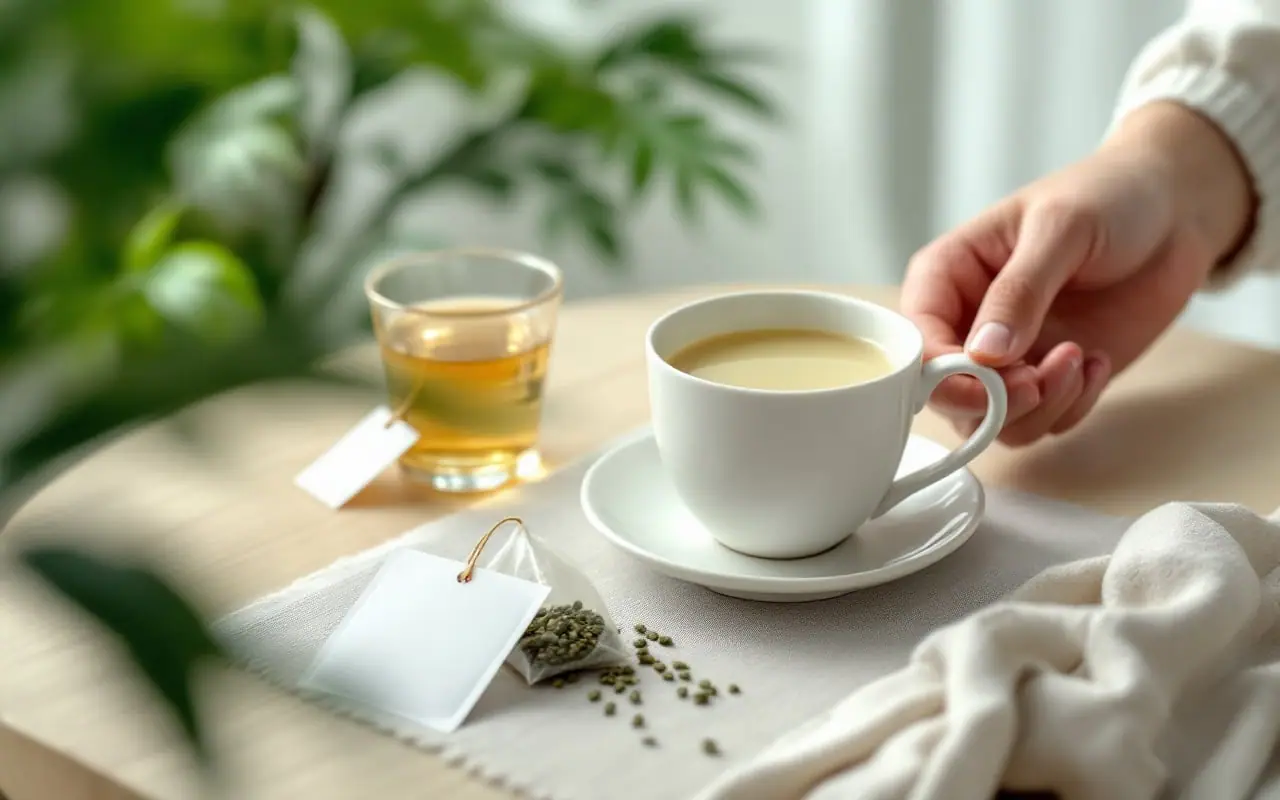
Green tea bags are how most people outside Japan drink green tea, and plenty of people in Japan too, at the office or on the train with a bottle of hot water. Many of the complaints about green tea I heard over the pharmacy counter in Kumamoto, that it tasted bitter or kept someone awake, came down to a bag left too long in boiling water, or a third cup late in the afternoon. This guide is for anyone choosing green tea bags for daily use, or a decaf green tea for the evening: what is inside the bag, how to brew it well, how decaf is made, and how much caffeine is left.
A note: links to Amazon here are affiliate links. As an Amazon Associate I earn from qualifying purchases.
If you only get one

Japanese green tea bags
Green tea with a little matcha in each bag, for the office or a travel mug.
View on AmazonOr, if it suits you better: decaf green tea bags or roasted barley tea bags, both on Amazon.
Three questions settle most choices. How will you brew it, in a mug at a desk or in a pot at home? How much caffeine do you want, and at what time of day? And will you finish the box while it is still fresh?
What is inside a green tea bag
Most ordinary paper tea bags hold fannings, the small broken pieces of leaf left after the larger leaf is sorted out. Small pieces have a lot of surface, so they color the water within seconds and give up their flavor fast. That is convenient in a hurry, but it also means they turn bitter and astringent quickly if the bag stays in, and they lose freshness sooner once the box is open.
Pyramid bags are larger, usually made of a fine mesh, and leave room for bigger pieces or whole leaves to unfold. They brew more like loose tea, and a good one gives a second, shorter cup. The mesh is often a plastic such as nylon, or a plant-based plastic, and some paper bags contain a little plastic so the seal holds in hot water. A few laboratory studies have found that plastic bags can shed tiny particles into very hot water; what that means for health is not known. If it bothers you, choose plain paper bags or loose leaf.
Matcha-blended bags, sold in Japan as matcha-iri (with matcha added), are sencha or genmaicha with a little matcha powder mixed in. The powder gives a greener cup and a rounder taste, even from fannings, and adds a little caffeine, since matcha is the whole leaf ground.
Japanese and Chinese styles in a bag
Japanese green tea is almost always steamed soon after picking. That gives the grassy, savory, sometimes sea-like taste and the deep green cup of sencha (the everyday rolled-leaf tea), fukamushi (deep-steamed sencha) and bancha (later, larger leaves). Steamed teas like cooler water.
Most Chinese green tea is pan-fired instead, which gives a toasty, nutty taste and a paler, yellow-green cup. Common bagged styles include gunpowder (leaf rolled into small pellets), dragon well (flat, pressed leaves) and jasmine tea, which is green tea scented with jasmine flowers. Pan-fired teas take slightly hotter water.
Many supermarket boxes say only "green tea". A box that names the country, the style and, for Japanese tea, a region such as Shizuoka, Kagoshima or Yame in Fukuoka tells you more about what you are buying.
What matters when you choose
- Leaf size. Fannings in paper bags for speed; larger leaf in pyramid bags for a fuller, gentler cup and a second steep.
- Style and origin. Steamed Japanese tea or pan-fired Chinese tea, and a label that says which.
- Freshness and packing. Green tea fades with air, light, heat and moisture. Individually sealed bags in foil envelopes keep better than loose bags in a cardboard box, and a box you finish in a month or two is fresher than a large one that sits open for half a year. Look for a packing date as well as the date by which to use it.
- What the bag is made of. Paper, plant-based mesh or nylon mesh, if that matters to you.
- Caffeine. Regular, matcha-blended (a little more), decaf (a little), or a caffeine-free drink that is not tea at all.
- What else is in it. Roasted rice in genmaicha, flowers in jasmine tea, or added flavorings. The ingredients list shows how much of the bag is actually tea.
The options and what each suits
Green tea bags vs loose leaf
Bags win on speed, tidiness and a consistent cup, one mug at a time. Loose leaf wins on taste, because whole leaves release their flavor more slowly and less harshly, and on value over time, because good leaf gives two or three infusions where a paper bag gives one.
If you drink tea at home, a loose-leaf Japanese sencha on Amazon is the natural next step. Brew it in a Japanese kyusu teapot with a built-in strainer on Amazon, the side-handled pot that lets you pour off every drop so the leaves stop steeping between cups. Many people keep both: bags for the office, leaf for the weekend.
How to brew a green tea bag so it is not bitter
- Cool the water. For a Japanese green tea bag, water at about 70 to 80°C (158 to 176°F) is right; small pieces behave like fukamushi and give up their flavor fast. Chinese pan-fired bags can take about 80°C (176°F). Genmaicha, hojicha and bancha bags take boiling water. Without a thermometer, pour freshly boiled water back and forth between two empty mugs two or three times before adding the bag: each pour takes off roughly 5 to 10°C. If you drink green tea every day, a kettle with temperature presets on Amazon takes out the guesswork.
- Mind the volume. One bag suits about 200 to 250 ml. In a large mug, use two bags rather than a longer steep.
- Keep it short. One minute for a Japanese bag, up to two for a Chinese one, then taste. Lift the bag out; do not squeeze it against the spoon, which pushes the most astringent liquid into the cup.
- Try a second cup from pyramid bags. Use slightly hotter water and a shorter steep. Paper bags of fannings rarely give a good second cup.
- Cold-brew in summer. Leave a bag in a bottle of cold water in the fridge for a few hours. Japanese homes call cold-brewed tea mizudashi; it draws out less bitterness and less caffeine than hot water.
The green tea brewing chart gives temperatures and times for each kind of Japanese tea, scaled to your cups.
Decaf green tea: how it is made
Most decaf tea is made in one of two ways. In the carbon dioxide method, the leaf is soaked in carbon dioxide held under high pressure, where it behaves like a liquid and draws out caffeine while leaving much of the flavor behind. In the ethyl acetate method, the leaf is washed with ethyl acetate, a solvent that also occurs naturally in fruit, which is why some labels call the result "naturally decaffeinated". That word tells you little about the process. Makers who use carbon dioxide often say it keeps more of the tea's taste, and decaf made either way usually tastes a little flatter than regular tea.
Decaf is not caffeine free. A typical figure is about 1 to 2 mg in a cup, against about 30 mg in a regular cup of sencha, though it varies with the maker and the brew. If the exact amount matters to you, look for the maker's figure on the box or its website.
Caffeine in a cup
| Cup | Caffeine, typical |
|---|---|
| Japanese sencha, 150 ml | about 30 mg |
| Hojicha, 150 ml | about 30 mg |
| Genmaicha or bancha, 150 ml | about 15 mg |
| US green tea bag, 240 ml | about 29 mg |
| Matcha, one bowl (2 g) | about 64 mg |
| Decaf green tea, one cup | about 1 to 2 mg |
| Mugicha (roasted barley tea) | none |
| Brewed coffee, 240 ml | about 96 mg |
The Japanese figures come from Japan's standard food composition tables (8th edition) and the US ones from USDA FoodData Central; matcha follows a tea maker's published figure. Real cups vary with the leaf, the water and the time. The green tea caffeine calculator adds up your own day.
Hojicha is often sold as the low-caffeine choice. In Japan's tables, hojicha brewed the standard way has about the same caffeine as sencha. Roasting does not burn caffeine away; a milder hojicha is milder mainly because it was roasted from later leaves or stems. If you want less caffeine, genmaicha and bancha carry about half what sencha does.
Caffeine-free choices
The Japanese answer is mugicha, roasted barley tea, kept by the jug in many refrigerators all summer. It is not made from the tea plant, so it has no caffeine at all, and roasted barley tea bags on Amazon brew hot or cold. Because it is barley, it contains gluten and does not suit anyone with celiac disease or on a gluten-free diet.
Herbal infusions are caffeine free too, but "herbal" does not mean harmless. Some herbs interact with medicines or are not advised in pregnancy, so ask a pharmacist about any herbal tea you plan to drink every day.
Who should limit caffeine, and when to ask
The US Food and Drug Administration gives 400 mg a day as an amount healthy adults can usually have without dangerous effects. In pregnancy, the usual guidance, from the American College of Obstetricians and Gynecologists among others, is to stay under 200 mg a day. Talk to your doctor or midwife about your own limit; decaf green tea and mugicha make it easy to keep a tea habit while staying well under it.
From my pharmacy years, a doctor or pharmacist should hear about your tea habit if any of these apply:
- pregnancy or breastfeeding;
- palpitations or a heart rhythm problem, anxiety or panic attacks, or poor sleep;
- reflux, which caffeine late in the day can make worse;
- medicines, since some antibiotics and antidepressants slow the rate at which the body clears caffeine, and green tea can lower blood levels of nadolol, a beta-blocker;
- low iron, because tea with meals reduces how much iron you absorb from plant foods.
Children are more sensitive to caffeine than adults, which is one reason mugicha is such a common drink for children in Japan. A racing or irregular heartbeat, chest pain, shaking or vomiting after a lot of caffeine needs urgent care. For what the research says about green tea and health, see is green tea good for you, and for matcha, sencha and the other leaf teas, how to choose matcha and green tea.
Storing tea bags
- Keep the box closed, or move the bags into an airtight tin or jar.
- Store them somewhere cool and dark, away from the stove, coffee and spices; tea picks up smells easily.
- Aim to finish an opened box within a month or two.
- If you keep unopened packs in the refrigerator, let them come to room temperature before opening so moisture does not settle on the leaf.
How these picks were made
The teas and tools linked in this guide were chosen from their specifications, origin, ingredients, maker information and published reviews. We did not taste or try them for this guide. The notes describe what each kind of tea bag is and who it tends to suit.

The writer
Keiko spent many years at the counter of a family-run pharmacy in Kumamoto that stocked kampo medicines. She writes about kampo, acupuncture and the old idea of yojo, carefully and with the evidence in view.