Miso soup recipe with homemade dashi, tofu and wakame
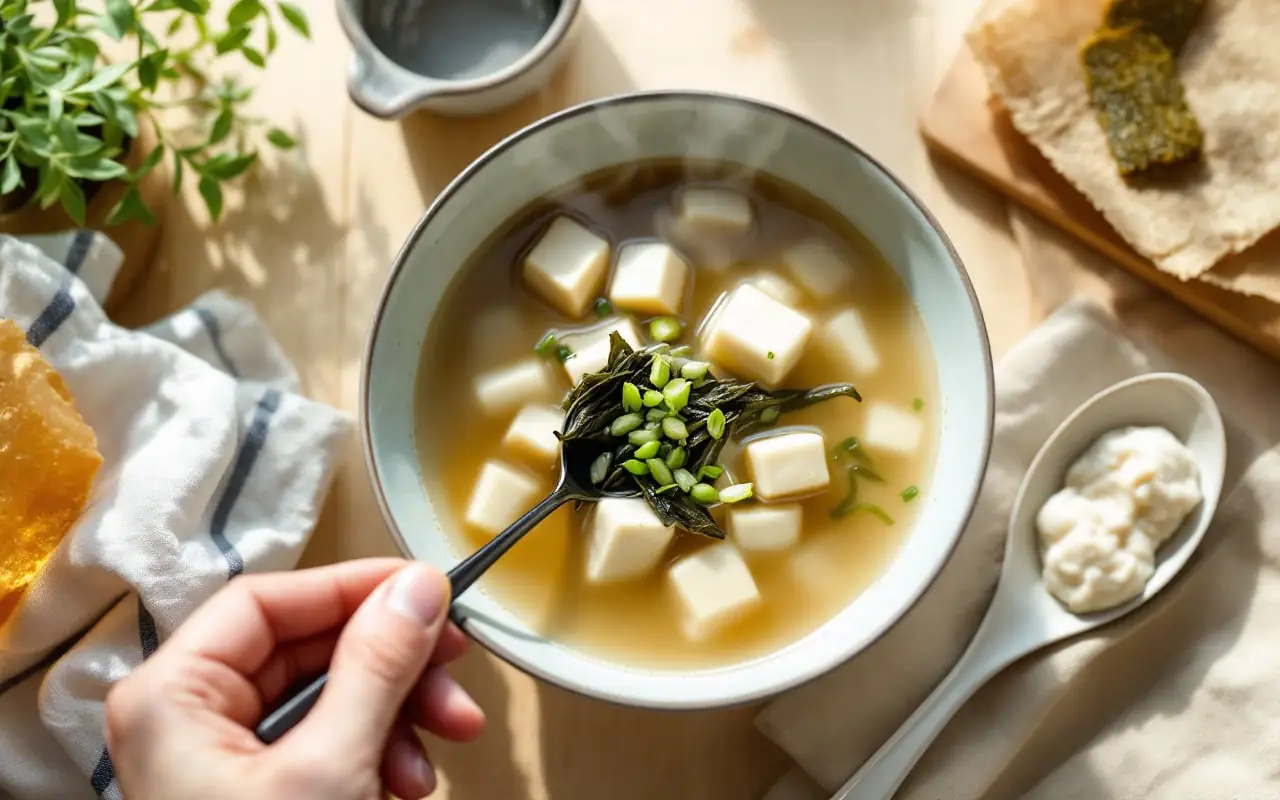
This is the miso soup recipe I make most mornings in my Fukuoka kitchen, written out in grams and cups so it works anywhere. Miso soup is three things: dashi (a light stock, here made from kelp and dried bonito), miso paste stirred in at the very end, and a few simple fillings. The ratio to remember is about 1 tablespoon of miso for every cup (240 ml) of dashi. The rest is below, with quicker dashi for busy days and an honest look at the salt.
What is miso soup?
Misoshiru is the everyday soup of Japan. It turns up at breakfast with rice and grilled fish and again at dinner. The traditional home meal is described as ichiju sansai, "one soup, three dishes", and the one soup is very often this one.
It is less a fixed dish than a method. The dashi and the miso stay; the fillings, called gu, change with the season and the vegetable drawer. Regions change the miso too. Kyoto households lean toward sweet white miso, Nagoya toward dark soybean miso, and here in Kyushu barley miso is the everyday kind. Most kitchens outside Japan start with a light rice miso or a blend, which is what I use below.
Ingredients
Makes 4 small bowls, about 175 ml (3/4 cup) each.
For the soup:
- 700 ml (about 3 cups) dashi, homemade or quick (see below)
- 150 g (about 5 oz) silken or soft tofu
- 4 g (about 4 teaspoons) dried cut wakame seaweed
- 54 g (3 tablespoons) awase or light-colored miso, plus up to 1 tablespoon more to taste
- 20 g (2 slim) green onions, thinly sliced
For homemade dashi (makes a little more than you need):
- 1 liter (about 4 1/4 cups) cold water
- 10 g kombu (dried kelp), a piece about 10 cm (4 inches) square
- 20 g katsuobushi (dried bonito flakes), about 2 loosely packed cups
A note: links to Amazon here are affiliate links. As an Amazon Associate I earn from qualifying purchases.
A tablespoon of miso weighs about 18 g, so a kitchen scale saves scraping sticky paste off a spoon. For a first tub, the easiest place to start is a tub of awase (mixed) miso on Amazon, mellow but savory enough for a proper bowl. A light-colored rice miso works the same way.
Dashi from scratch
Kombu and katsuobushi together make awase dashi, the all-purpose stock of Japanese home cooking. It takes about 45 minutes, most of it waiting.
- Do not wash the kombu. The white powder on the surface is natural (mostly mannitol, a sugar alcohol) and part of the flavor. If there is grit, wipe it lightly with a damp cloth.
- Put the kombu in a pot with the water and leave it for 30 minutes. Longer is fine; on a slow day I leave the pot covered in the fridge overnight.
- Heat over medium-low. When small bubbles form around the kombu and at the edge of the pot, just before a boil, lift the kombu out. Boiled kombu makes the stock slippery and a little bitter.
- Let the water come up to a boil, add the bonito flakes all at once and turn off the heat. Leave them for about 2 minutes, until they sink.
- Strain through a fine sieve lined with a paper towel or a clean cloth. Let it drip and do not squeeze, or the dashi turns cloudy and fishy.
You will have a little more than the 700 ml the soup needs; I cook rice or vegetables in the extra. The used kombu and flakes can go back into fresh water for a lighter second stock, niban dashi, fine under strong fillings like pork.
Quicker dashi
- Cold-brewed kombu dashi: Leave the kombu in the water in a jar in the fridge overnight. Nothing to watch, and it is plant-based; two dried shiitake add depth.
- Dashi packs: Large tea bags of ground bonito, kelp or other dried fish, simmered for a few minutes as the packet says. Fukuoka is fond of ago dashi, made from grilled flying fish.
- Dashi granules or powder: The fastest of all, dissolved straight into hot water. Most contain salt, and often sugar or flavor enhancers, so taste the soup before adding all the miso. You will usually need less.
Making the soup
- Cut the tofu into 1.5 cm (1/2 inch) cubes.
- Bring the dashi to a gentle simmer in a medium pot. Slide in the tofu and warm it for 1 to 2 minutes. Keep the heat moderate; a hard boil breaks silken tofu apart.
- Turn the heat to its lowest. Put the miso in a ladle, dip the ladle halfway into the pot and stir the miso with chopsticks until it dissolves into the dashi. A small sieve does the same job. Taste, and add the extra tablespoon only if it needs it.
- Scatter in the dried wakame. It needs no soaking here and swells to many times its size within a minute or two, so resist adding more.
- Warm the soup until it is just about to bubble, then take it off the heat. Japanese cooks call this moment niebana: the miso smells its best, and boiling would flatten the aroma.
- Ladle into bowls and top with the green onion.
Firm vegetables such as potato, daikon or carrot go into the dashi at the start and simmer until tender. Leafy greens, tofu and seaweed go in near the end.
Variations I rotate through
- Potato and onion: My weekday standard. Thin slices simmered soft, faintly sweet and filling.
- Daikon and aburaage: Matchsticks of daikon with strips of aburaage (fried tofu pouch). Pour boiling water over the aburaage first to rinse off some of the oil.
- Clams with red miso: Asari clams make their own stock. Soak them in salted water (about 30 g of salt per liter, close to seawater) somewhere dark for 2 to 3 hours to purge the sand, then start them in cold water with kombu. When the shells open, discard any that stay shut and stir in red miso, lightly, because clams are salty too.
- Tonjiru: Thin slices of pork with daikon, carrot, burdock root and konnyaku (a firm jelly made from konjac yam), simmered until soft. A winter meal in a bowl.
- Satsuma-jiru: Kagoshima's version, with chicken and root vegetables in barley miso. If you can find barley miso, try it; it tastes of southern Kyushu.
- Mushrooms and greens: Shiitake or enoki with komatsuna (a mild leafy green), or spinach blanched separately first.
- Cold, for summer: Hiyajiru, from Miyazaki, is chilled miso soup poured over rice with grilled fish, cucumber and tofu. I described it, with other ideas for the hot months, in eating through Japan's humid summer.
For a plant-based bowl, use the cold kombu and shiitake dashi with any vegetable filling.
Is miso soup healthy?
Mostly yes, with one caveat. A bowl brings a little protein from the tofu and miso, some minerals from the seaweed and whatever vegetables you add, for very few calories. It is warm and gentle, which is why so many people in Japan reach for it after a cold or a late night. Whether the microbes in miso do anything for your gut is a separate and much less certain question; I went through what the research does and does not show in miso, natto and nukazuke.
The caveat is salt. Japan's standard food composition tables put ordinary light-colored rice miso at about 12 percent salt, so a tablespoon carries close to 900 mg of sodium. Sweet white miso has about half that. Working from those tables, one bowl of my recipe made with light-colored miso comes to roughly 50 kcal and about 800 mg of sodium, which is 2 g of salt. Use a full tablespoon of light-colored miso in 150 ml of dashi with the same fillings and it rises to about 56 kcal and 1,023 mg of sodium (2.6 g of salt); with sweet white miso, the same bowl is about 60 kcal and 576 mg. An awase blend lands between the misos in it, and its label will tell you. The miso soup calories and sodium calculator works this out for your own bowl, miso and add-ins.
Now set that beside the guidelines. The US Dietary Guidelines suggest staying under 2,300 mg of sodium a day. The World Health Organization recommends adults stay under 2,000 mg, which is 5 g of salt. Japan's health ministry sets targets of under 7.5 g of salt a day for men and 6.5 g for women. So one bowl of my recipe is about a third of the American figure and two fifths of the WHO one. A bowl a day fits most diets. Three a day, alongside soy sauce, pickles and bread, adds up quickly.
Ways to keep the salt down without a sad soup:
- Make good dashi. A savory stock lets a smaller spoonful of miso taste like plenty.
- Crowd the bowl with vegetables and tofu, so there is less broth.
- Swap part of the miso for sweet white miso, which has roughly half the salt of light-colored miso and suits potato and pumpkin. If you buy a tub of white (shiro) miso on Amazon for this, check that its sodium per tablespoon really is lower.
- Choose potassium-rich add-ins such as potato, mushrooms and leafy greens, which help balance sodium for most people.
Some people should ask before making this a daily habit. If you have high blood pressure, kidney disease or heart failure, take blood-pressure medicine, or have been told to limit salt or fluids, ask your doctor or a dietitian how miso soup fits your diet. People with kidney disease are often told to limit potassium as well, so the potato tip may not suit them. Miso is made from soybeans, so it is out with a soy allergy, and barley miso contains gluten. If you take an older type of antidepressant called an MAOI, ask your pharmacist about aged and fermented foods, miso included.
Miso soup is a kind thing to eat when your stomach is unsettled, but it is food, not treatment. See a doctor promptly for vomiting that keeps coming back, blood in your vomit or stool, black stools, severe belly pain, a fever, signs of dehydration such as passing very little urine, or weight loss you cannot explain.
Storing dashi, soup and miso
- Dashi keeps for 2 to 3 days in a covered jar in the fridge. For longer, freeze it in an ice cube tray and use it within about a month.
- Finished soup is best the day it is made. Cool leftovers and refrigerate them within two hours, as with any cooked food, and eat them within a day or two. Reheat gently until steaming, without letting it boil. Silken tofu and wakame do not freeze well, so freeze the dashi rather than the soup.
- Miso balls (miso-dama) are my answer to rushed mornings. Mix each tablespoon of miso with a pinch each of bonito flakes and dried wakame and some green onion, and wrap each portion in plastic wrap. They keep about a week in the fridge or a month in the freezer, where the salt stops them freezing hard. Drop one into a mug, pour on about 160 ml (2/3 cup) of hot water and stir.
- The miso tub lives in the fridge with a piece of plastic wrap pressed onto the surface. Use a clean, dry spoon. It keeps for months and slowly darkens, which is harmless.
If you remember one thing
One tablespoon of miso per cup of dashi, stirred in off the boil. Get the dashi right and you will need less miso than you think, which is good for the flavor and good for the salt.

The writer
Naoko is a food and nutrition writer from Fukuoka who studied nutrition before she took up writing. She covers gut health and everyday eating, and most of her ideas start at the kitchen counter.