What the year-end osoji can teach you about a bathroom that dries out
In the last weeks of the year, households across Japan take part in osoji, the big year-end clean. Futons go out on the balcony, and someone always ends up kneeling in the bathroom with a brush, working at the corners where the grout has gone gray. It makes you notice how much a bathroom's surfaces decide how hard it is to keep healthy.
From a better exhaust fan to new wall tile in white zellige, the changes worth making in the room that holds the most moisture are the ones that leave fewer places for damp to settle. Below is how moisture works in a bathroom, what to check, how to clean it a little at a time, and when a damp home is a reason to talk to a doctor.
Osoji starts with the room that holds the most moisture
The custom of osoji is often explained as clearing out the old year so the new one can start clean. In practice, families tend to leave the bathroom and kitchen for last, because they take the longest. Steam, soap and warm water meet there every day, and over a year they leave a film on walls, a dark line along the grout, and sometimes spots of mold behind the shampoo shelf.
The Japanese bathroom is built around this problem. The washing area sits outside the tub, the floor slopes to a drain, and most homes run a fan or open a small window after the evening bath. The room is designed to get wet and then dry out quickly. Wherever you live, that is a useful way to look at your own bathroom: not as a room that should never get wet, but as one that should dry fast once you are done.
Mold needs moisture, a surface to grow on, and time. You cannot remove the moisture from a bathroom, but you can shorten the time it lingers and choose surfaces that give it less to hold on to. Health agencies in many countries, Japan included, give the same general advice for damp homes: control the water, ventilate, and clean visible mold before it spreads.
How moisture behaves after the evening bath
It helps to know what happens in the hour after a hot bath or shower, because that is when most of the damage is done.
- Warm, wet air rises and spreads. It reaches the ceiling first, then drifts into the hallway or bedroom if the door is open.
- It condenses on the coldest surfaces. Outside walls, window frames and the ceiling above the tub cool fastest, so droplets form there and run down.
- Water sits in the low points. Grout lines, the joint between tub and wall, the base of the shower door and the underside of shelves stay wet longest.
- Anything porous soaks it up. Bath mats, wooden stools, unsealed grout and the back of a towel left on the floor all hold water for hours.
The practical checks follow from that list. Does the fan run long enough after a bath to clear the mirror and the ceiling? Does the window open, and do you use it? Is there a cold patch of wall that stays damp into the next morning? Are there gaps in the caulk or grout where water can get behind the tile? If you answer "no" or "not sure" to several of these, the room is probably staying damp longer than it should.
Choosing surfaces that dry out and wipe clean
When people renovate a bathroom, they often choose tile for its look first. It is worth giving equal weight to how a surface behaves when it is wet, because you will clean it every week for years.
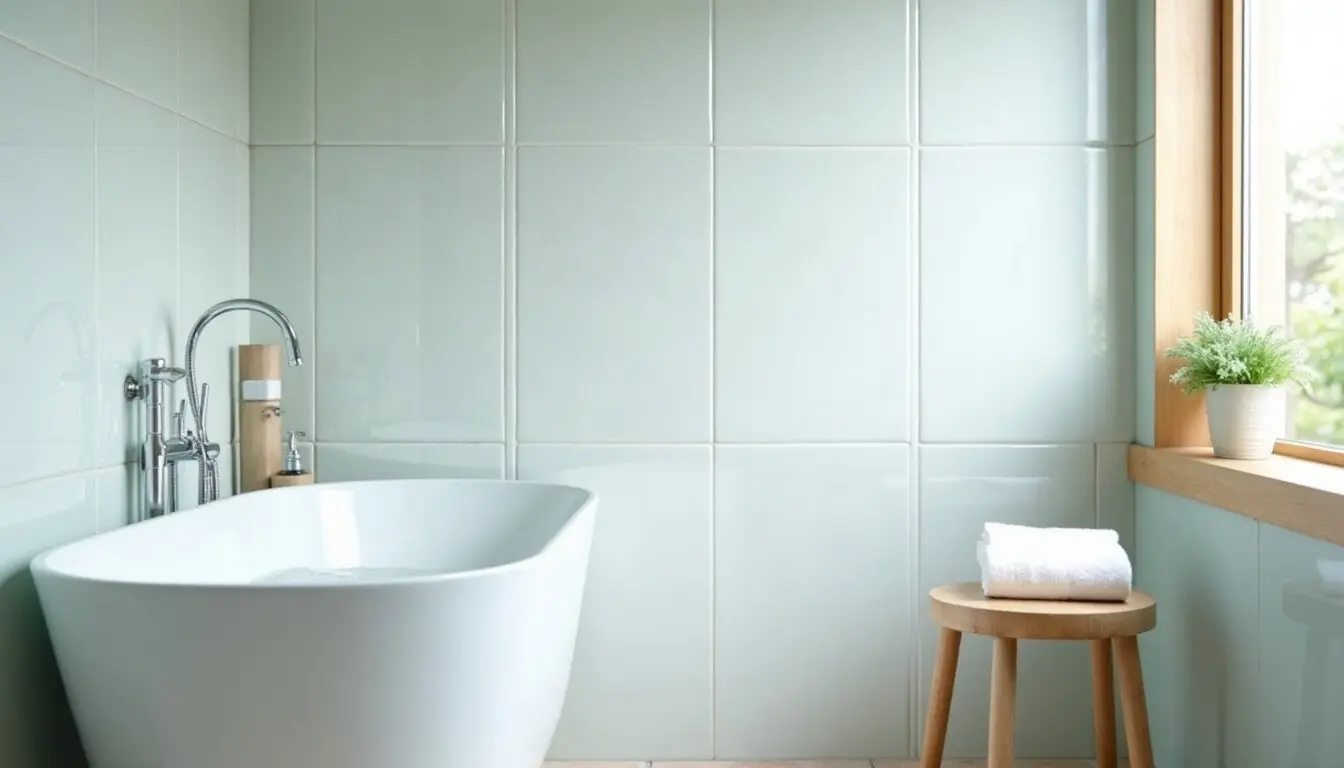
Glazed tile is a common choice for walls in wet rooms because the glaze sheds water and can be wiped down. Zellige, the handmade glazed clay tile from Morocco, is one version that many people choose for its soft, uneven shine. Each piece is shaped and glazed by hand, so the surface ripples slightly and the color shifts from tile to tile. That variation is part of the appeal, and it also means a few practical things to discuss with whoever installs it.
- Joints and grout. Handmade tiles have irregular edges, so the grout lines vary. Grout is usually the first place mold shows, so ask your installer what grout and joint width suit the tile and the room.
- Sealing. Some installers recommend sealing handmade tile or its grout, especially in a shower. Practices differ, so ask what they advise for your specific tile and how often it should be renewed.
- Where it goes. Glossy glazed tile can be slippery underfoot when wet. Many people keep it for walls and the area around a tub, and choose a floor surface with more grip. Ask the supplier or installer which surfaces are suitable for floors.
- Cleaning products. Handmade glazes and clay bodies can react to harsh or acidic cleaners. Ask what the maker or supplier recommends before you reach for a strong bathroom spray.
Light colors have one more advantage in a bathroom: they show what is happening. A dark spot of mold, a line of soap scum or a slow leak is easy to see on a pale wall, so you catch it early. White tile also reflects daylight and soft lamp light, which makes a small, windowless bathroom feel less closed in. That is a matter of comfort rather than health, but a calm room is easier to keep tidy, and a tidy room is easier to keep dry.
Cleaning the way osoji does it, a little at a time
The year-end clean is famous because it is big, but the thinking behind it is that a home cared for through the year needs less rescue in December. A few small habits do most of the work.
After each bath
Run the fan or open the window for long enough that the mirror and ceiling clear. Squeegee or wipe the walls and the floor around the tub. Hang the bath mat and towels where air can reach both sides. In Japan, many families also leave the bathroom door slightly open overnight in dry weather so the room finishes drying.
Once a week
Wipe the tile and grout with a mild cleaner suited to the surface, paying attention to the corners and the joint along the tub. Lift bottles and shelves so the surface underneath can dry. Rinse and air the bath stool and any wooden items.
With the seasons
At the start of the humid months and again at the end of the year, look closely at caulk, grout and the ceiling above the shower. Small gaps, peeling paint or a soft, discolored patch of wall are worth showing to a plumber or contractor, because water behind tile can do damage you cannot see from the front.
A note on safety: never mix bleach-based cleaners with acidic products or ammonia, because together they can release harmful gases. Use one product at a time, keep the window open or the fan on while you clean, and wear gloves. If strong cleaning products make you cough or feel short of breath, stop and get fresh air.
When damp at home is a reason to see a doctor
Most people live with a little bathroom mold at some point without any obvious effect. For some, though, damp and mold are linked to breathing problems, and the guidance from health bodies is that people with asthma, allergies or weakened immune systems are more likely to be affected.
See a doctor if you or someone in your home has wheezing, breathlessness, a cough that does not settle, chest tightness, or asthma that seems to get worse at home and better when you are away. Babies, older relatives and anyone with a long-term lung condition deserve extra care. Tell the doctor about the damp and mold at home, because it helps them understand the picture.
Bathrooms are also a common place for falls, especially for older people and especially in winter, when the room is cold and the bath is hot. Public-health messaging in Japan regularly reminds families to warm the bathroom and changing area before an older relative bathes. If someone falls in the bathroom, hits their head, or has pain, dizziness, confusion or trouble standing afterward, get them checked promptly rather than waiting to see.
Sudden dizziness or feeling faint in a hot bath is also a signal to get out carefully, sit down somewhere cooler, and talk to a doctor if it happens again.
Yojo habit: After every evening bath, take one minute to wipe the walls, prop open the door or window, and let the fan run until the mirror clears. Do it every night and the December clean becomes a short one.
The one thing to remember
A healthy bathroom is not one that never gets wet. It is one that dries out quickly and shows you its problems early, so choose surfaces you can see and wipe, keep the air moving after every bath, and treat a cough that only happens at home as worth a doctor's attention.

The writer
Shun is a health journalist based in Fukuoka. He reads the guidance published by health ministries and medical bodies and explains how check-ups, seasons and everyday life in Japan touch our health.