Japan & Kyushu / Health & Living
Gentle autumn walks in Kyushu: Yabakei and walking well as the air cools
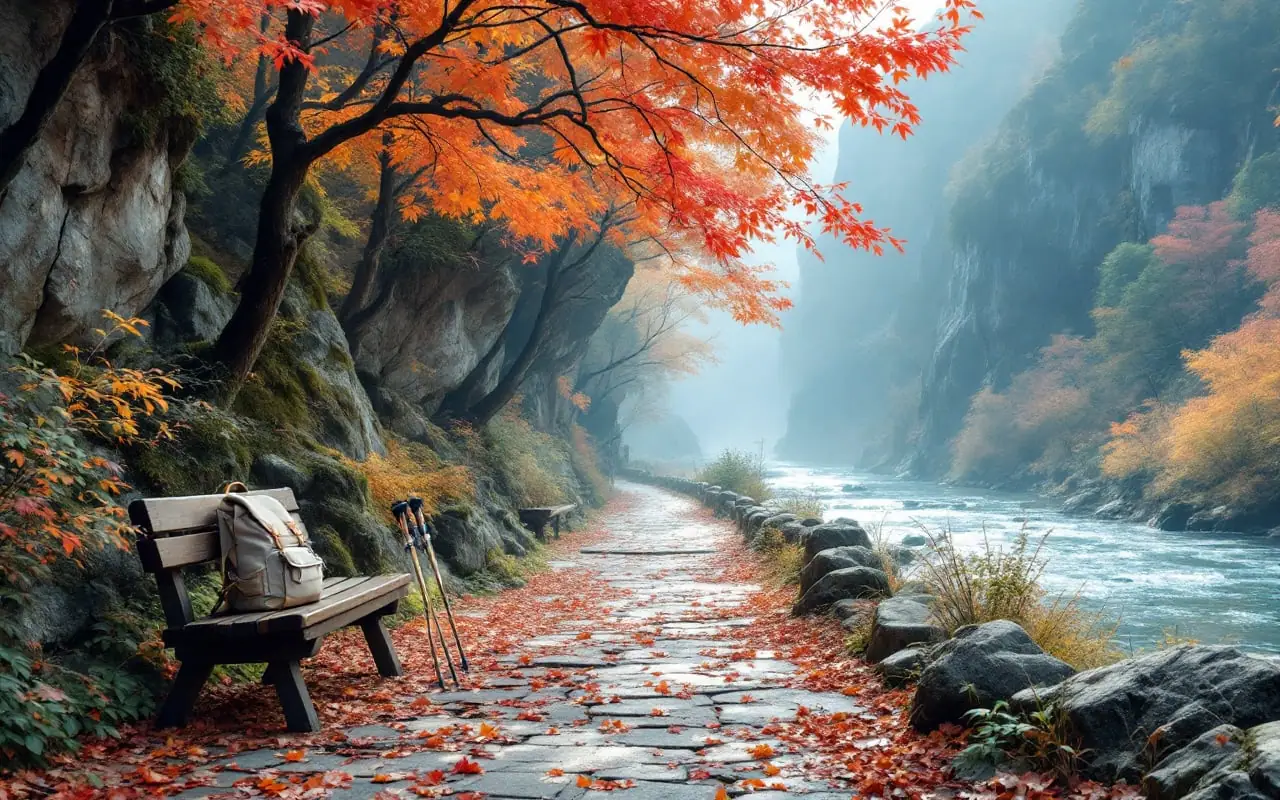
On weekday mornings in the middle of November, the roads into Yabakei carry a steady line of cars and tour buses, and a good share of the people who step out of them have gray hair. Retired couples with walking poles, a group from a community center in matching caps, a woman steadying her father on a stone step: Yabakei in autumn draws walkers of every age, and most of them are there to go slowly.
That is a good thing. An easy walk among autumn leaves is real exercise, and it is the kind people keep doing into their eighties. It also comes with a short list of predictable risks: cold valley mornings, wet leaves on stone, too little water because nobody feels thirsty, and hearts that are older than their owners feel. I live in Fukuoka and drive to the hills of Oita most autumns. What follows comes from those trips and from reading the public health advice on walking.
A gorge made for short walks
Yabakei is a long gorge along the Yamakuni River in northern Oita Prefecture, inland from the city of Nakatsu. Water has worn the old volcanic rock of the area into cliffs, pillars and narrow side valleys, and the slopes are covered with maples and other trees that turn red, orange and yellow as the nights get cold. The color usually peaks somewhere in the first three weeks of November, moving a week or so either way with the weather and with the height of each side valley.
It is less one walk than a string of short ones. Hitome Hakkei ("eight views at a glance") is the best-known viewpoint, a few minutes' stroll from a parking area, where rock peaks line up around a bend in a side valley. Downstream is Ao no Domon, a tunnel cut through a cliff by hand in the eighteenth century so that travelers no longer had to edge along a dangerous path above the river. The story of the Buddhist monk who began the work, and spent decades on it, is told on boards at the site. Nearby, the temple of Rakanji sits high in the cliff face, known for its many small stone figures and reached by a long climb.
Most visitors drive or take a bus and walk in short sections, which suits a mixed group well. Part of the route of the old railway that once ran up the valley is now a path for cycling and walking: wide, close to flat and away from traffic, which is about as gentle as walking gets.
If Oita is too far, Kyushu has plenty of similar places: old castle towns in the hills south of Fukuoka with maples along their streets, temple gardens near the cities, and gorges in Kumamoto and Miyazaki with riverside trails and benches. More pieces on local life are collected under Japan & Kyushu.
Why a slow walk still counts
People talk about a gentle walk as if it barely counts as exercise. It counts. The World Health Organization recommends that adults get at least 150 to 300 minutes of moderate activity a week, and for most people brisk walking is the easiest way to get there. It also says plainly that some activity is better than none, which matters for anyone starting from a low base. Japan's health ministry makes a similar point in its physical activity guidance, encouraging people to add about ten minutes of movement to their day, a message it has called purasu ten ("plus ten").
For older people, walking does a second job: it keeps the leg strength and balance that prevent falls. Japanese doctors and city health centers now use the borrowed word furairu (frailty) for the slow slide in strength, appetite and activity that can follow a quiet year indoors, and a regular walk is one of the simplest ways to push back against it.
Shinrin-yoku (forest bathing), a term Japan's Forestry Agency coined in the 1980s, has also been studied here, and some small studies have found lower stress scores and slightly lower blood pressure readings after time in woodland than after a walk in town. The studies are small and short, and it is hard to separate the trees from the day off. A walk in the woods is relaxing, which is reason enough; there is no need to call it a treatment.
Cold mornings, warm middays
Valleys hold cold air. On a clear November morning it can be only a few degrees above freezing by the river at eight o'clock, warm enough for shirt sleeves on a sunny slope by noon, and cold again by mid-afternoon once the sun drops behind the cliffs. In late November it is close to dark by five.
Layers that come off and go back on work better than one thick coat. Next to the skin, a thin wool or synthetic top moves sweat away; cotton holds it and chills you as soon as you stop. Over that goes a fleece or a light down jacket, then a thin windproof shell. A hat and light gloves take up no space and make a large difference.
Cold matters for the heart as well as for comfort. Cold air narrows the blood vessels in the skin and pushes blood pressure up, and the step from a heated car into a chilly valley is a sudden one. People with heart disease or high blood pressure do better to put their warm layers on before they get out of the car, start slowly, and save the steepest stretch for the warmest part of the day.
Pace by the talk test
The easiest way to judge pace needs no watch or app. At a moderate pace you can talk in full sentences but could not comfortably sing. If you cannot finish a sentence, slow down.
A few habits make a walk easier for everyone, and much easier for older walkers:
- Start slowly for the first ten minutes or so, while muscles and joints warm up.
- Shorten your stride on slopes rather than pushing harder.
- Rest before you are tired, not after.
- Let the slowest person set the pace, and put them at the front, so the group does not stretch out.
- Pick a route with turning points, so you can cut it short without anyone feeling they have failed.
- Plan toilet stops. Some older people drink less on an outing to avoid needing one, which is exactly the wrong trade.
Walking poles are worth a try for older walkers or anyone with sore knees. A pair gives two extra points of contact on uneven ground and takes some load off the knees on the way down.
Shoes, steps and wet leaves
Fallen leaves look soft and behave like ice when wet, especially on stone. Moss on old steps is slipperier still, and gorge paths stay damp in the shade even on a dry day. Many falls on easy walks happen on the way down, when legs are tired and attention drifts.
Wear shoes with thick, grippy soles that you have already worn in; a gentle walk is not the day to test new boots. Go down stone steps one at a time, holding the rail, and if they are steep and uneven, going down sideways can feel steadier. Look at your feet on descents and at the view when you stop.
People with diabetes, especially those with reduced feeling in the feet, should check their feet after a walk for blisters or rubbing they may not have felt.
Autumn woods have one more hazard worth knowing about. Hornets and wasps stay active well into autumn. If one circles you, move away slowly rather than swatting at it, and keep clear of any nest you spot. Anyone with a known sting allergy should carry the emergency treatment their doctor prescribed. A sting followed by hives spreading over the body, swelling of the face or lips, or trouble breathing is an emergency: call 119.
Water when it does not feel hot
Thirst fades in cool weather, and it fades further with age. You still lose water through breath and sweat on a long walk, and heated cars and dry autumn air add to it. Mild dehydration shows up as tiredness, a headache, or dizziness when you stand up from a bench.
Carry water or a flask of warm tea and drink a little at each rest, whether or not you feel thirsty. Keep alcohol for the end of the day: a beer with lunch before the walk back loosens your balance on steps and adds to fluid loss. A rice ball or some fruit helps too, since low energy makes legs heavy and attention slack.
When to stop and get help
Breathing harder on a slope is normal, as long as it settles within a minute or two of resting. The following are not normal, and the right response is to stop, sit down and get help rather than walk on to see if it passes:
- pain, pressure, tightness or heaviness in the chest, particularly if it spreads to the arm, neck, jaw or back, or comes with sweating, nausea or light-headedness
- breathlessness that is out of proportion to the effort, does not ease with rest, or comes on at rest
- fainting, nearly fainting, or a racing or irregular heartbeat
- sudden weakness or numbness on one side, a drooping face or slurred speech
- sudden breathlessness or chest pain after a long car ride, especially with pain or swelling in one calf, which can mean a blood clot
In Japan, call 119 for an ambulance. In a gorge the phone signal can be patchy, so note the name of the last viewpoint or bridge you passed. People who have been prescribed a spray or tablet for angina should use it as their doctor has told them, and still call for help if the pain does not settle.
Chest discomfort that comes on with effort and goes away with rest within a few minutes, if it is new or getting worse, still needs a doctor soon: within days, not at your next routine visit. The same goes for breathlessness on slopes you used to climb with ease. If you are unsure whether a situation needs an ambulance, a number of prefectures run a #7119 phone line for medical advice; check whether the area you are visiting has one before you set off.
Before the season starts, anyone with heart disease, lung disease, diabetes or blood pressure that is not well controlled, and anyone who has been inactive for a long time, should ask their doctor how much is sensible. Knowing your own numbers helps, and our guide to check-ups in Japan explains where to find your blood pressure on the results sheet.
Ending the day well
Oita is hot spring country, and a soak after an autumn walk is one of the real pleasures of Kyushu. Drink something first, give yourself a little while to rest and cool down after a long walk, and skip the bath if you have been drinking. Our piece on onsen etiquette and health covers the rest.
A packing list for a valley walk
- a thin base layer, a warm middle layer and a windproof shell
- a hat and light gloves
- shoes with grippy soles that you have worn before, and walking poles if you use them
- water or warm tea, and a small snack
- your regular medicines, any emergency medicine you have been prescribed, and your health insurance card
- a charged phone, with your route shared with someone at home
- a plan to be back at the car well before the light goes

The writer
Shun is a health journalist based in Fukuoka. He reads the guidance published by health ministries and medical bodies and explains how check-ups, seasons and everyday life in Japan touch our health.