Matcha green tea or sencha? How to choose Japanese tea
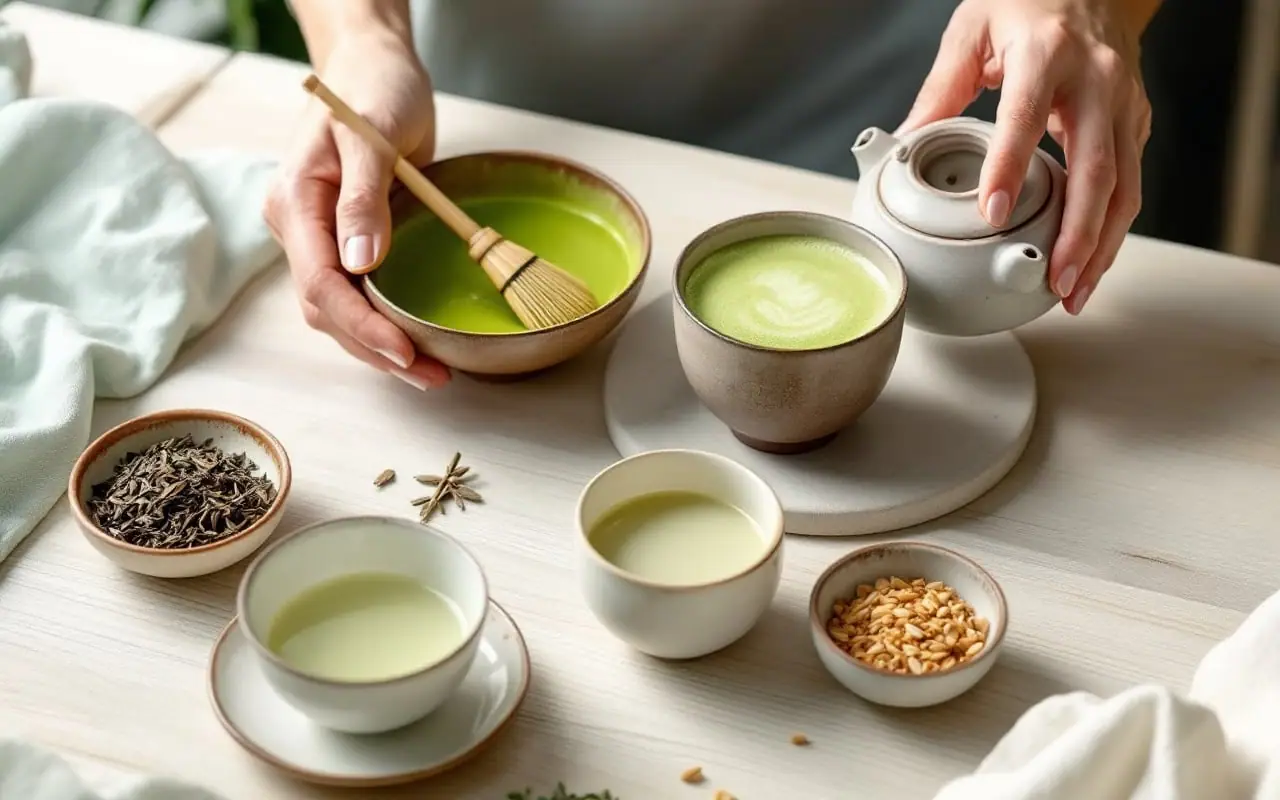
A shelf of Japanese tea can feel like a menu in a language you half know. Matcha green tea sits beside sencha, hojicha, genmaicha, tea bags and decaf, all green or brownish and all described as good for you. This guide is for anyone choosing a tea for a daily habit, whether that is a bowl of matcha in the morning or a mug at the desk. In my years behind the counter of a family pharmacy in Kumamoto, the useful questions were always the same three: how will you drink it, how much caffeine do you want, and how fresh is it? Those three settle most choices.
A note: links to Amazon here are affiliate links. As an Amazon Associate I earn from qualifying purchases.
If you only get one

Ceremonial-grade matcha
A small 40 g tin from Japan for whisking with water; use it within a few weeks of opening.
Amazon price at 18 Oct 2026, 21:46 UTC: $24.99
Product prices and availability are accurate as of the date/time indicated and are subject to change.
View on AmazonOr, if it suits you better: culinary-grade matcha or loose-leaf sencha, both on Amazon.
Matcha green tea vs sencha: what is the difference?
Both come from the same plant, Camellia sinensis, and both stay green because the leaves are heated soon after picking, in Japan usually by steaming, which stops the browning that turns other leaves into black tea. The difference lies in how the plant is grown and in what ends up in your cup.
For matcha, the tea bushes are shaded for several weeks before harvest. With less sun the leaves keep more theanine, an amino acid with a sweet, savory taste, and build up more chlorophyll, which gives the vivid color. The leaves are steamed and dried flat as tencha, the stems and veins are removed, and what is left is ground to a fine powder, traditionally in stone mills. You whisk the powder into water and drink all of it.
Sencha, the tea most people in Japan drink every day, grows in full sun. Its leaves are steamed, rolled into thin needles and dried. You steep them, pour the tea off and leave the leaves behind.
That last point matters most. With matcha you swallow the whole leaf, so a bowl carries more of everything in the leaf, caffeine included, than a cup of steeped sencha. The taste differs too: good matcha is thick, sweet and grassy; good sencha is clear, fresh and gently bitter.
Tea reached Japan as something closer to medicine than a drink. The Zen monk Eisai wrote Kissa Yojoki ("drinking tea for good health") in the early 1200s, the same yojo that gives this site its name. It is a charming book, but claims made eight hundred years ago are not evidence.
What matters when you choose
- How you will drink it. Whisked in a bowl, poured from a teapot, dunked as a bag at work, or stirred into milk. Each points to a different tea.
- Caffeine, and the time of day. Matcha and gyokuro (shaded, steeped tea) sit at the top; genmaicha and bancha (larger, later-harvest leaves) sit at the bottom.
- Freshness. Green tea fades with air, light, heat and moisture, and matcha fades fastest. Look for a harvest or packing date, a sealed foil pouch or tin, and an amount you will finish within a few weeks of opening.
- What the label tells you. A good label names the region (Kagoshima, Shizuoka, Uji in Kyoto, Nishio in Aichi and Yame in Fukuoka are all well known), the harvest (ichibancha or shincha means the first picking of spring, usually the sweetest) and the style, such as fukamushi. "Ceremonial" and "culinary" are selling terms, not official Japanese grades, so read them as hints.
- Color. Good matcha is a bright, almost luminous green and as fine as talc; dull olive or yellowish powder is older, from later leaves, or both. Good sencha needles are deep green and glossy, with little dust in the bottom of the bag.
- Water temperature. More green tea is spoiled by boiling water than by poor leaf. Most of the harsh bitterness in a cup of sencha comes from water that is too hot or a steep that runs too long.
The kinds of Japanese green tea and what each suits
Brewing and caffeine at a glance
| Tea | Leaf and water | Time | Caffeine, typical cup |
|---|---|---|---|
| Matcha (thin, usucha) | about 2 g whisked into 60 to 80 ml at 75 to 80°C (167 to 176°F) | whisk until frothy | about 64 mg per bowl |
| Good sencha | 2 to 3 g per 100 ml at 70°C (158°F) | 90 seconds | about 30 mg in 150 ml |
| Everyday sencha | 2 to 3 g per 100 ml at 90°C (194°F) | 60 seconds | about 30 mg in 150 ml |
| Gyokuro | 10 g for about 60 ml at 50 to 60°C (122 to 140°F) | 2 1/2 minutes | about 64 mg in 40 ml |
| Hojicha | 2 to 3 g per 100 ml at 95 to 100°C (203 to 212°F) | 30 seconds | about 30 mg in 150 ml |
| Genmaicha, bancha | 2 to 3 g per 100 ml at 95 to 100°C | 30 seconds | about 15 mg in 150 ml |
| US green tea bag | as the box says | as the box says | about 29 mg in 240 ml |
| Brewed coffee, for comparison | a 240 ml mug | about 96 mg |
Leaf amounts and temperatures follow the tea guide from Japan's Ministry of Agriculture, Forestry and Fisheries, with matcha from tea makers' guidance. Caffeine figures come from Japan's standard food composition tables (8th edition) and, for the tea bag and coffee, USDA FoodData Central. Real cups vary widely with the leaf, the water and the time, so treat these as rough guides. The green tea brewing chart scales the amounts to your own cups.
Two practical points. Leaves soak up about four times their weight in water, so heat a little more than you plan to drink. And if your kettle has no settings, pour freshly boiled water into an empty cup and then into the pot: each pour takes off roughly 5 to 10°C, so about three pours brings it near 70°C for good sencha.
Hojicha is often called low in caffeine, and a quick, light cup can be. In Japan's tables, though, hojicha brewed the standard way has about the same as sencha. It is mainly the leaf that decides: hojicha roasted from later-harvest leaf or stems is milder, while roasting itself does little.
Three small tools
A bamboo whisk (chasen) makes the fine foam on matcha that a spoon never will. Sift about 2 g of matcha (roughly a level teaspoon) into a wide bowl, add the water and whisk briskly from the wrist in a zigzag for 15 to 20 seconds, until fine bubbles cover the surface.
A kyusu, the side-handled Japanese teapot with a strainer built in, lets you pour off every last drop, so the leaves do not keep steeping and the second pot is still good. Pour a little into each cup in turn so every cup gets the same strength.
A kettle with temperature settings takes out the guesswork if you drink good sencha, gyokuro or matcha daily.
Decaf green tea and other low-caffeine choices
Decaf green tea is usually made by extracting caffeine with carbon dioxide or with a solvent called ethyl acetate. Some caffeine remains, so check the maker's figure if the amount matters to you. The process can take some flavor with it, so decaf often tastes flatter.
There are other ways to drink less caffeine without giving up tea. Genmaicha and bancha carry about half of what sencha does in Japan's tables. Cold-brewing, called mizudashi (leaves left in cold water in the fridge for a few hours), draws out less caffeine and less bitterness than hot water. And the summer standard in Japanese homes is mugicha, roasted barley tea, which is not tea at all and has no caffeine; being barley, it does not suit a gluten-free diet.
Caffeine, medicines and when to ask
The US Food and Drug Administration gives 400 mg a day as an amount healthy adults can usually have without dangerous effects. The American College of Obstetricians and Gynecologists advises staying under 200 mg a day in pregnancy, and the European Food Safety Authority considers single doses of up to 200 mg unlikely to worry healthy adults. It adds up faster than people expect: three cups of sencha (90 mg), two bowls of matcha (128 mg) and two mugs of coffee (192 mg) come to 410 mg, just over the line. The green tea caffeine calculator does this sum for your own day.
There is no set safe level for children in the US; Health Canada uses 2.5 mg per kilogram of body weight a day, which for a 20 kg child is 50 mg, less than one bowl of matcha.
From my pharmacy years, these are the situations where a doctor or pharmacist should hear about your tea habit:
- Pregnancy or breastfeeding, a heart rhythm problem or palpitations, anxiety or panic attacks, or poor sleep.
- Reflux that is worse at night, which caffeine late in the day can aggravate; there is more in acid reflux at night.
- Medicines. Some antibiotics and antidepressants slow the rate at which the body clears caffeine, and the US National Center for Complementary and Integrative Health notes that green tea can lower blood levels of nadolol, a beta-blocker.
- Warfarin. Because you eat the whole leaf, matcha carries vitamin K. People on warfarin are usually asked to keep vitamin K intake steady, so mention a daily matcha habit.
- Low iron. Tea with meals reduces how much iron you absorb from plant foods, so you may be told to drink it between meals.
Green tea extract capsules are a different matter from a cup of tea. They are far more concentrated, and rare cases of liver injury have been reported with them. Ask before taking one, and see a doctor promptly for yellowing skin or eyes, dark urine or pain under the right ribs. A racing or irregular heartbeat, chest pain, shaking or vomiting after a lot of caffeine needs urgent care.
At the shelf
- Decide how you will drink it before you choose.
- Look for a harvest or packing date and a sealed pouch or tin.
- Buy small. A tin you finish in a few weeks beats a large bag that goes stale.
- Matcha should be bright green; sencha needles deep green and glossy.
- Keep unopened tea somewhere cool and dark. If you keep it in the fridge, let the sealed pack come to room temperature before opening so moisture does not settle on the leaf.
How these picks were made
The kinds of tea and the tools in this guide were chosen from their specifications, origin and harvest details, materials, maker information and other published information. We did not taste or try them for this guide. The notes describe what each kind of tea is and who it tends to suit.
The writer
Keiko spent many years at the counter of a family-run pharmacy in Kumamoto that stocked kampo medicines. She writes about kampo, acupuncture and the old idea of yojo, carefully and with the evidence in view.